
Kalanchoe luciae
Kalanchoe luciae
Description
Growing requirements
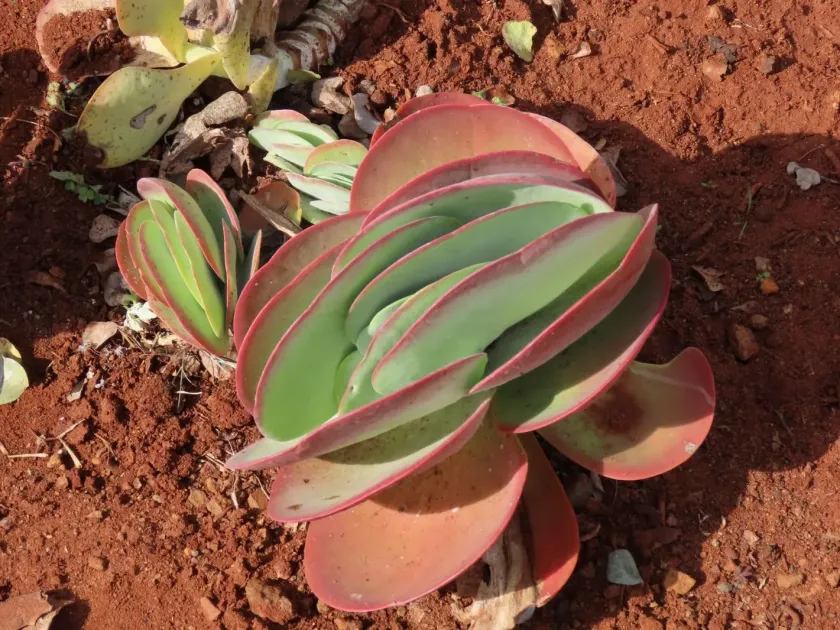
Kalanchoe luciae is a perennial succulent species belonging to the Crassulaceae family. Native to the rocky slopes of South Africa, it is highly valued in horticulture for its spectacular, paddle-shaped leaves that can turn deep red when exposed to strong sunlight.
This plant exhibits a robust structure with a basal rosette of leaves that store significant amounts of water. Botanically, it is adapted to high-light, arid environments, employing a crassulacean acid metabolism (CAM) to survive in regions with erratic rainfall and high temperatures.
Environmental requirements focus primarily on light exposure. To maintain its compact shape and vibrant leaf pigmentation, the plant requires full sun to partial shade. Lack of adequate light will lead to etiolation, where the plant stretches and loses its characteristic, attractive coloration.
The growing medium must be fast-draining to prevent root rot, which is the primary cause of mortality in cultivation. A standard mix should consist of coarse sand, perlite, or pumice mixed with quality potting soil. The pH should be slightly acidic to neutral to ensure nutrient availability.
Cultivation techniques involve a deep watering approach, where the soil is allowed to dry out completely between sessions. During the winter dormancy period, watering should be significantly reduced or suspended to prevent cold-moisture stress, which encourages fungal pathogen growth.
Main diseases and pests
Common pests associated with this species include mealybugs and aphids, which often hide within the tight leaf rosettes. Frequent inspection is recommended, and if an infestation is detected, it should be treated with neem oil or appropriate systemic insecticides.
Disease management is centered on avoiding overwatering. Fungal infections, such as root rot or botrytis, thrive in stagnant, wet soil conditions. Ensuring proper airflow and strictly controlling irrigation cycles are the most effective preventive measures against these pathogens.