
Kalanchoe rotundifolia
Kalanchoe rotundifolia
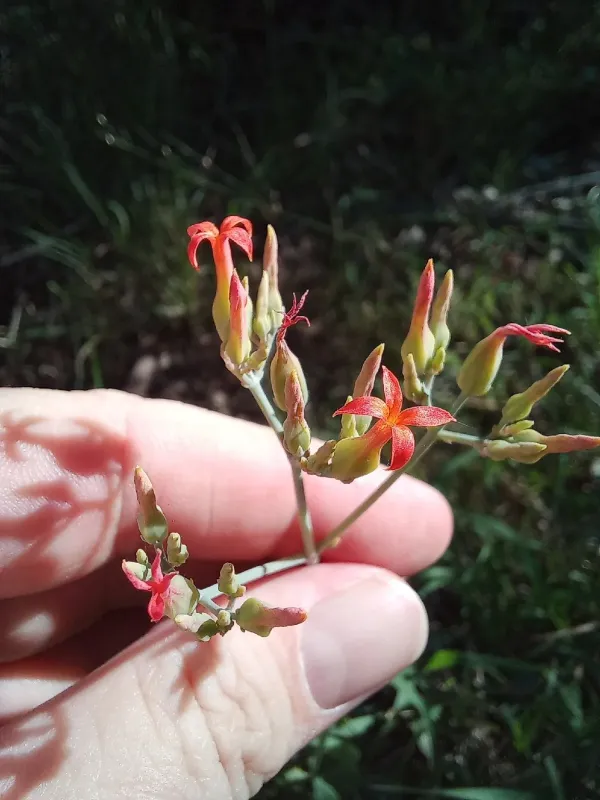
Description
Growing requirements
Kalanchoe rotundifolia is a perennial succulent species belonging to the Crassulaceae family. Originally native to the arid regions of Southern and Eastern Africa, it has evolved to thrive in harsh, dry environments with minimal water availability.
The plant is characterized by its succulent, round or obovate leaves arranged in opposite pairs on the stem. It develops slender flower stalks that produce clusters of small, orange-red tubular flowers during the active growing season.
For successful growth, this species requires a well-draining substrate composed primarily of grit, sand, or perlite. Soil waterlogging is the primary cause of failure, as the root system is highly sensitive to hypoxia and fungal decay.
It thrives in full sun exposure, which is necessary to maintain the plant's structural integrity and compact growth habit. In low-light conditions, the stems tend to become elongated, losing their natural decorative appeal and resilience.
The primary use of Kalanchoe rotundifolia is ornamental horticulture. It is frequently utilized in rock gardens and arid-themed landscapes where irrigation is limited, as well as being a popular choice for houseplant collections.
Main diseases and pests
Mealybugs and spider mites are the most common pests associated with this species. These pests thrive in dry indoor environments and can quickly colonize the plant's leaf axils and the undersides of the leaves.
Fungal diseases, specifically root rot, pose the greatest threat to plant health. These are usually triggered by excessive moisture retention in the growing medium, allowing pathogens like Phytophthora to flourish.
Integrated pest management is recommended, starting with mechanical removal of pests and moving to targeted applications of systemic insecticides if the infestation persists. Regular monitoring is crucial for early detection.
To prevent disease outbreaks, it is vital to ensure proper airflow around the plant and to allow the substrate to dry out completely between irrigation cycles. Using sterilized soil during the initial potting helps reduce the risk of soil-borne pathogens.
Maintenance of plant hygiene, including the removal of desiccated foliage, limits the niches where pests and fungi can establish. Keeping the crown of the plant dry during watering is a fundamental practice in succulent crop management.