
Lesser houseleek
Sempervivum minus
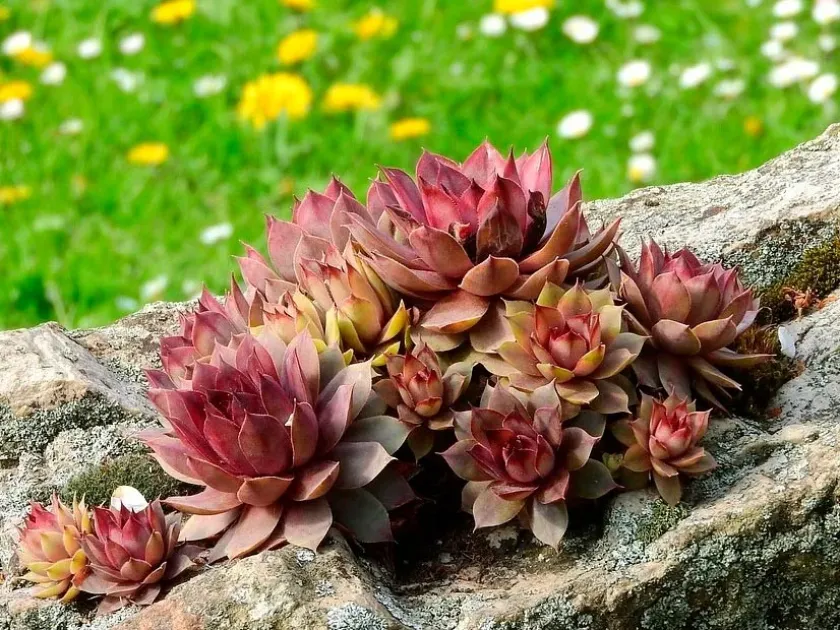
Description
Sowing dates
Propagation of Sempervivum minus is most effectively achieved through vegetative methods using offsets, which naturally form around the parent rosette. The best time for division is early spring or late summer when the plant is actively growing.
Seed propagation is possible but more challenging, requiring surface sowing on a lightweight, well-draining substrate. Seeds should be kept in a bright location with consistent moisture and protected from extreme heat until germination occurs.
When transplanting young rosettes, ensure the soil is loose and gritty to encourage healthy root development. Avoid planting too deep, as this can lead to crown rot, especially in cooler climates with higher humidity.
Spacing should be kept at 10 to 15 centimeters between plants to allow for the natural spread of offsets. Proper spacing is essential to ensure adequate air circulation and to prevent the development of mold or fungal diseases.
Once established, the plant requires very little supplemental watering. Watering should be done directly at the base, avoiding the foliage, to keep the rosettes dry and prevent unsightly water spotting or rot.
Growing requirements
The Lesser houseleek belongs to the Crassulaceae family, a group of succulent plants highly adapted to harsh environments. It is a hardy perennial known for its compact, low-growing form and high tolerance to extreme weather.
This species thrives in full sunlight, which is necessary to maintain the vibrant leaf coloration and compact rosette shape. Insufficient light results in elongated stems and diminished health of the plant.
Soil requirements are minimal; it thrives in poor, rocky, or sandy soil that drains water quickly. The presence of adequate mineral content and excellent aeration is more important for this crop than organic fertilization.
Temperature resilience is a key feature of this succulent, as it can withstand freezing winter temperatures. It is well-suited for rock gardens and exposed sites where other ornamental plants might struggle to survive.
Originating from mountainous regions of Europe, the plant has evolved to handle thin, nutrient-poor soil and high winds, making it an extremely low-maintenance addition to any agricultural or landscaping project.
Main diseases and pests
The primary concern for Lesser houseleek growers is root rot, which is almost exclusively caused by poor soil drainage. If the substrate remains waterlogged for an extended period, the roots will quickly succumb to decay.
Pests are generally not a major issue, but aphids may occasionally infest the flower stalks during the blooming season. If detected, aphids can be controlled with organic insecticidal soap applied sparingly to the affected area.
Slugs and snails may occasionally feed on the leaves, especially in damp, shaded corners of the garden. Creating a dry, gravel-based mulch layer is an effective mechanical deterrent against these common pests.
Fungal pathogens like botrytis can occur if air circulation is poor, particularly in tightly packed clusters. Prompt removal of decaying leaves helps maintain plant hygiene and prevents the spread of infection to healthier parts.
Prevention is the best strategy: ensure the site has a slope or gravel layer for drainage, and avoid using heavy nitrogenous fertilizers that stimulate succulent tissue to become soft and more susceptible to disease.