
Kalanchoe hybrids
Kalanchoe hybrids
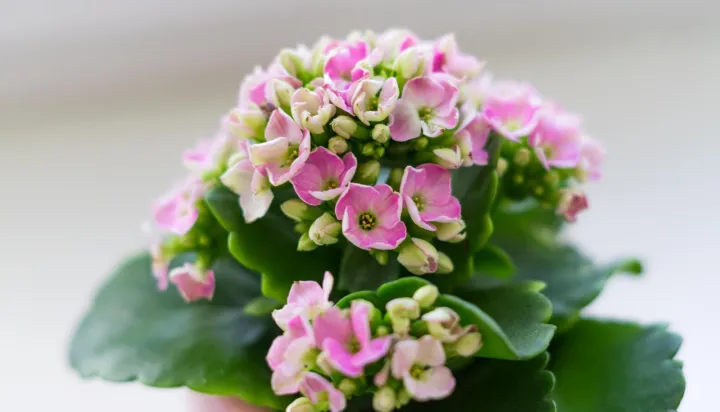
Description
Growing requirements
Kalanchoe hybrids represent a group of selected ornamental plants within the Crassulaceae family. These varieties are highly valued in modern floriculture for their compact habit, succulent foliage, and reliable, long-lasting bloom cycles under controlled environments.
Environmental conditions require bright, indirect light to maintain structural integrity and color intensity. Greenhouse production often involves light management techniques, specifically manipulating photoperiod to induce flowering and ensure uniform plant development across commercial batches.
The substrate must be highly porous and well-draining to prevent root asphyxiation. Standard potting mixes usually consist of peat moss amended with perlite or coarse sand, maintaining a slightly acidic to neutral pH level which is optimal for nutrient uptake in succulents.
Agrotechnical management focuses on precise irrigation schedules, allowing the medium to reach a near-dry state before the next watering cycle. Fertilization should be targeted, using low-nitrogen formulations during the vegetative stage to promote robust flowering stems rather than excessive foliage.
Economically, these hybrids serve as a staple of the pot-plant industry worldwide. Their ability to survive varied indoor conditions makes them a commercially viable crop, produced in massive quantities for year-round retail demand.
Main diseases and pests
Common pests include mealybugs and aphids, which frequently target the soft tissues of new shoots and flower buds. Integrated pest management strategies are crucial, often involving the use of systemic insecticides or biological controls to maintain plant health.
Fungal pathogens such as Botrytis cinerea and root rot are the primary threats, triggered primarily by poor air circulation and excessive substrate moisture. Maintaining strict hygiene protocols in production areas is essential to minimize the risk of outbreaks.