
Limestone houseleek
Sempervivum calcareum
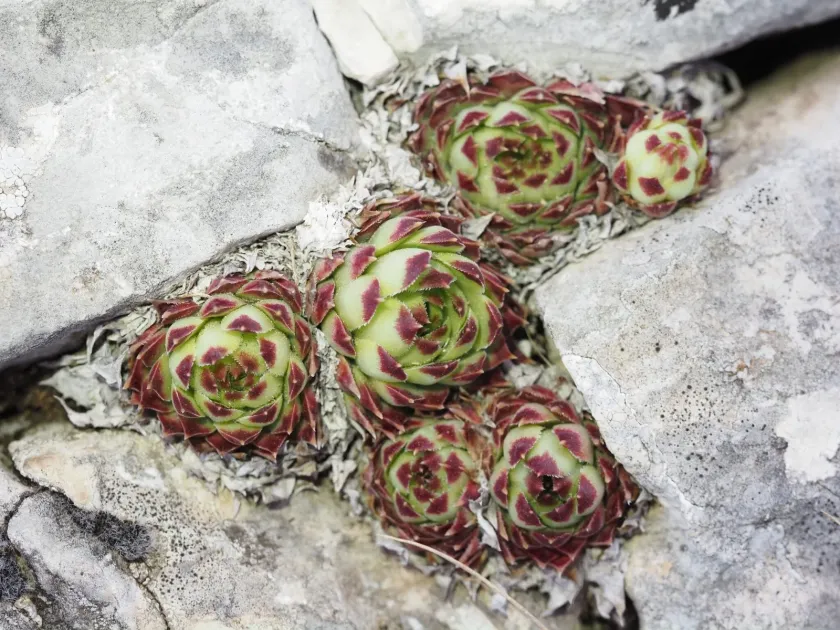
Description
Sowing dates
The propagation of Sempervivum calcareum is efficiently achieved through the division of offsets, also known as chicks, from the parent plant.
These offsets should be detached during the active growing season to ensure robust establishment and rapid root development.
Planting depth must be kept shallow to ensure the basal leaves of the rosette remain above the soil line, preventing rot.
Spacing typically ranges between 10 to 15 centimeters to allow for the expansion of the colony over the following growing seasons.
While seed sowing is botanically possible, it is commercially impractical due to the slow growth rate and the ease of vegetative division.
Growing requirements
This species belongs to the Crassulaceae family and is native to the calcareous outcrops of the French Alps, thriving in harsh environments.
Full sun exposure is mandatory for maintaining the plant's characteristic compact rosette shape and vibrant reddish leaf-tip coloration.
The ideal growing medium must be extremely well-draining, consisting of a gritty, gravelly, or sandy substrate with low organic content.
As the name suggests, the species prefers a neutral to alkaline soil pH, mirroring the limestone soil conditions of its natural habitat.
It is highly drought-tolerant and requires virtually no supplemental watering once established, making it a sustainable choice for xeriscaping.
Main diseases and pests
The primary concern in cultivating this succulent is moisture management, as waterlogged soil rapidly induces fatal root rot.
Poor air circulation between the dense leaves can lead to the development of fungal infections, particularly in high humidity environments.
Root-feeding pests such as vine weevil larvae may occasionally pose a threat by compromising the underground structure of the plant.
Aphid infestations may occur during the tender spring growth phase, requiring gentle physical removal or targeted soap-based interventions.
Effective prevention is rooted in proper site selection, specifically choosing slopes or raised beds that ensure quick water runoff.