
Kalanchoe daigremontiana
Kalanchoe daigremontiana
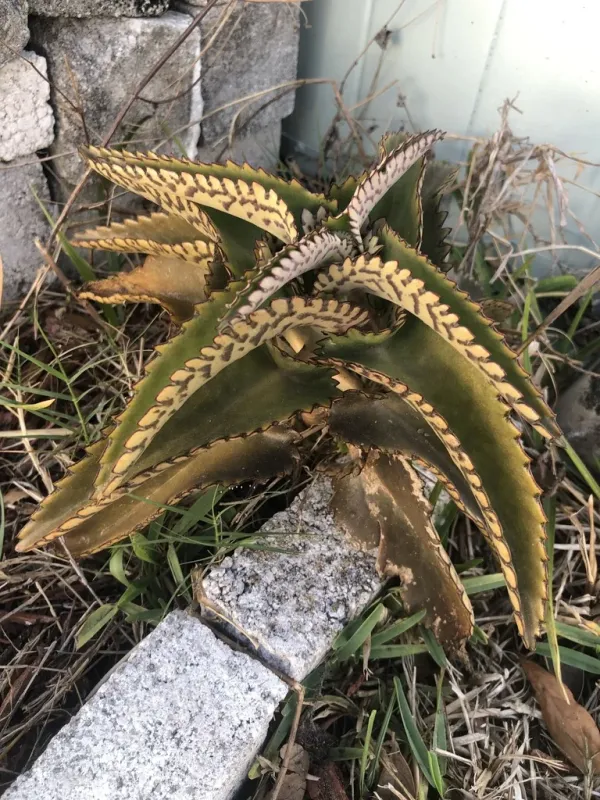
Description
Growing requirements
Kalanchoe daigremontiana, commonly known as the Mother of Thousands, belongs to the Crassulaceae family. It is a succulent perennial plant famous for its unique asexual reproduction method, producing plantlets along the serrated margins of its leaves.
Native to the island of Madagascar, this species has adapted to arid environments. It is widely cultivated across tropical and subtropical regions, serving both as an ornamental indoor plant and a source of medicinal extracts.
The plant requires bright, indirect light to maintain its structural integrity. While it can tolerate some full sun, prolonged exposure to harsh light can scorch the leaves, so careful positioning is necessary for healthy growth.
Well-draining, gritty soil is mandatory for successful cultivation. A mixture designed for cacti and succulents, containing sand, perlite, and loam, provides the necessary environment to prevent root rot and ensure proper aeration.
Irrigation should follow the "soak and dry" method. It is essential to allow the growing medium to dry out completely between waterings, as the plant stores moisture in its fleshy leaves, making it highly drought-tolerant.
Main diseases and pests
Common pests affecting Kalanchoe daigremontiana include mealybugs and scale insects. These pests often congregate at the base of the leaves and in the crevices where plantlets are formed, sucking vital plant fluids.
Fungal diseases are primary threats, especially when the plant is kept in high humidity or overwatered. These conditions favor the growth of molds and rots that can quickly compromise the plant's health.
Root rot is the most serious issue, usually caused by stagnant water in the substrate. Once the root system is affected, the plant may collapse rapidly, making early detection and soil correction essential.
Effective pest management involves regular visual inspections and the immediate removal of infested plantlets. For severe infestations, targeted application of appropriate insecticidal solutions may be required.
Environmental control is the best defense against diseases. Maintaining good airflow, avoiding overhead watering, and ensuring a proper substrate pH help create an environment where the plant can thrive without chemical intervention.
Harvesting
The primary economic and household use of Kalanchoe daigremontiana involves harvesting its leaves for their therapeutic properties. The leaves are rich in bioactive compounds used in traditional medicine for healing wounds.
Harvesting consists of manually plucking or cutting mature, healthy leaves. Younger leaves are typically left on the plant to continue the growth and reproduction cycle, ensuring a sustainable supply.
Post-harvest conditioning is often practiced by keeping the leaves in dark, cool storage for several days. This biological process stimulates the synthesis of secondary metabolites within the leaf tissues.
The processed material is typically pressed to extract juice or prepared as an infusion. Given the potency of its chemical components, handled material should be treated with care, especially if intended for dermatological use.
Continuous harvesting is possible due to the plant's aggressive reproductive strategy. Under optimal greenhouse conditions, a single mother plant can provide a steady supply of leaves throughout the active growing season.