
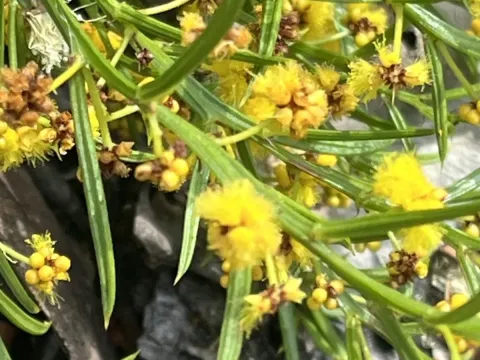
Acacia
Acacia
Sowing Acacia (Acacia) seeds is typically performed in the spring once soil temperatures reach 15–20 degrees Celsius. Because of their hard, impermeable seed coats, scarification is essential to ensure consistent germination rates.
What the section contains
 Acacia acanthoclada
Acacia acanthoclada
Acacia acanthoclada
 Acacia adunca
Acacia adunca
Acacia adunca
 Acacia ammobia
Acacia ammobia
Acacia ammobia
 Acacia anceps
Acacia argyrodendron
Acacia argyrodendron
Acacia anceps
Acacia anceps
Acacia argyrodendron
Acacia argyrodendron
 Acacia aulacocarpa
Acacia aulacocarpa
Acacia aulacocarpa
 Acacia brachystachya
Acacia catenulata
Acacia catenulata
Acacia brachystachya
Acacia brachystachya
Acacia catenulata
Acacia catenulata
 Acacia concurrens
Acacia concurrens
Acacia concurrens
 Acacia confusa
Acacia confusa
Acacia confusa
 Acacia conniana
Acacia conniana
Acacia conniana
 Acacia crassicarpa
Acacia crassicarpa
Acacia crassicarpa
 Acacia curvinervia
Acacia curvinervia
Acacia curvinervia
 Acacia cyclops
Acacia cyclops
Acacia cyclops
 Acacia deanei
Acacia deanei
Acacia deanei
 Acacia denticulosa
Acacia denticulosa
Acacia denticulosa
 Acacia doratoxylon
Acacia doratoxylon
Acacia doratoxylon
 Acacia dunnii
Acacia dunnii
Acacia dunnii
 Acacia ericifolia
Acacia ericifolia
Acacia ericifolia
 Acacia excelsa
Acacia excelsa
Acacia excelsa
 Acacia flexifolia
Acacia flexifolia
Acacia flexifolia
 Acacia heterophylla
Acacia heterophylla
Acacia heterophylla
 Acacia homalophylla
Acacia ingrata
Acacia ingrata
Acacia homalophylla
Acacia homalophylla
Acacia ingrata
Acacia ingrata
 Acacia iteaphylla
Acacia iteaphylla
Acacia iteaphylla
 Acacia ixiophylla
Acacia ixiophylla
Acacia ixiophylla
 Acacia leiocalyx
Acacia leiocalyx
Acacia leiocalyx
 Acacia ligulata
Acacia ligulata
Acacia ligulata
 Acacia lineata
Acacia lineata
Acacia lineata
 Acacia longifolia
Acacia longifolia
Acacia longifolia
 Acacia macracantha
Acacia macracantha
Acacia macracantha
 Acacia oshanesii
Acacia oshanesii
Acacia oshanesii
 Acacia oswaldii
Acacia oswaldii
Acacia oswaldii
 Acacia paniculata
Acacia paniculata
Acacia paniculata
 Acacia pennatula
Acacia pennatula
Acacia pennatula
 Acacia permixta
Acacia permixta
Acacia permixta
 Acacia polyphylla
Acacia polyphylla
Acacia polyphylla
 Acacia praecox
Acacia praecox
Acacia praecox
 Acacia redolens
Acacia redolens
Acacia redolens
 Acacia reficiens
Acacia reficiens
Acacia reficiens
 Acacia rigidula
Acacia rigidula
Acacia rigidula
 Acacia seyal
Acacia seyal
Acacia seyal
 Acacia sparsiflora
Acacia sphaerocephala
Acacia sphaerocephala
Acacia sparsiflora
Acacia sparsiflora
Acacia sphaerocephala
Acacia sphaerocephala
 Acacia spirocarpa
Acacia spirocarpa
Acacia spirocarpa
 Acacia spirorbis
Acacia spirorbis
Acacia spirorbis
 Acacia tenuifolia
Acacia tenuifolia
Acacia tenuifolia
 Acacia tenuispina
Acacia tenuispina
Acacia tenuispina
 Acacia tetragonophylla
Acacia tetragonophylla
Acacia tetragonophylla
 Acacia triptera
Acacia triptera
Acacia triptera
 Acacia truncata
Acacia unijuga
Acacia unijuga
Acacia truncata
Acacia truncata
Acacia unijuga
Acacia unijuga
 Acacia vernicosa
Acacia vernicosa
Acacia vernicosa
 Acacia welwitschii
Acacia welwitschii
Acacia welwitschii
 Alpine wattle
Acacia alpina
Alpine wattle
Acacia alpina
 Barrier Range Wattle
Acacia beckleri
Barrier Range Wattle
Acacia beckleri
 Blue bush wattle
Acacia covenyi
Boree
Acacia cana
Blue bush wattle
Acacia covenyi
Boree
Acacia cana
 Brigalow
Acacia harpophylla
Brigalow
Acacia harpophylla
 Burrow's Wattle
Acacia burrowii
Burrow's Wattle
Acacia burrowii
Acacia
Pre-sowing treatment involves soaking seeds in hot water or mechanically nicking the seed coat to allow water absorption. This process significantly accelerates the transition from seed to seedling in controlled nursery conditions.
Transplanting seedlings to their permanent location is recommended when they reach one to two years of age, ensuring the root system is sufficiently robust for field conditions.
In forestry and large-scale plantations, a structured planting grid is used to allow for proper crown development. Spacing between rows is usually maintained between 2 to 3 meters to facilitate maintenance machinery.
Mulching the root zone after planting is a critical agronomic practice, helping to retain moisture and suppress unwanted weed competition during the critical first year of growth.
Acacia is a genus within the Fabaceae family, recognized for its exceptional sun-loving nature and tolerance to drought. It is native to tropical and subtropical regions but widely cultivated globally.
The crop thrives in well-drained, light, sandy or loamy soils with a neutral to slightly acidic pH. Waterlogging is detrimental to the plant and frequently triggers root rot diseases.
Optimal climatic conditions involve long, warm growing seasons. While mature trees are hardy, young Acacia plants require protection from frost and severe cold snaps in their first few years.
A key biological feature is the ability to fix atmospheric nitrogen through symbiosis with root bacteria, allowing the plant to flourish in nutrient-poor soils and naturally enrich the land.
While seedlings require moderate irrigation, established Acacia trees are highly resilient, utilizing extensive root systems to access deep-seated groundwater in arid environments.
Acacia serves multiple industrial purposes, ranging from the production of highly durable timber to acting as a vital honey-producing crop for apiculture. Its yield is measured in biomass and nectar potential.
The wood of Acacia is celebrated for its density, hardness, and natural resistance to rot. It is widely used in high-end furniture manufacturing, construction, and outdoor flooring.
In terms of apiculture, Acacia plantations are highly productive, with potential nectar yields reaching up to 1000 kg per hectare. The resulting honey is premium-priced due to its clear color and slow crystallization.
The foliage and branches are occasionally utilized in fodder systems in semi-arid regions, providing a source of nutrition for livestock when other forage crops are unavailable.
As a forest-amelioration crop, Acacia contributes to overall agricultural productivity by preventing soil erosion and providing windbreak protection for sensitive adjacent crops.
Primary pests include defoliating insects such as sawflies and various moth larvae, which can inflict significant damage to the canopy during years of high population density.
Fungal diseases, including powdery mildew and leaf spot, are prevalent in environments with high humidity or poor ventilation. Maintaining proper spacing is a primary defense.
Root decay caused by various pathogens is a major concern in poorly drained soils. This condition can severely weaken the tree's structure and lead to total mortality in extreme cases.
Boring insects, such as longhorn beetles, pose a threat to the wood quality of weakened trees, necessitating consistent monitoring and sanitary management of the forest stand.
- Implementation of sanitary pruning to remove infected material.
- Application of bio-pesticides during peak pest activity seasons.
- Regular assessment of soil moisture levels to prevent root-zone saturation.