
Boree
Acacia cana
Description
Growing requirements
Boree (Acacia cana) is a drought-tolerant perennial species belonging to the Fabaceae family. Native to the semi-arid regions of eastern Australia, this shrub or small tree is adapted to harsh environments characterized by sporadic rainfall and high thermal fluctuations.
The plant thrives primarily in heavy clay or silty soils found in alluvial plains. It demonstrates significant tolerance to soil salinity, making it an ideal candidate for revegetation projects in degraded agricultural areas where other species might fail to establish.
Cultivation of this species requires full sun exposure to promote healthy development. In agricultural practice, spacing should be carefully managed to ensure adequate sunlight penetration and airflow, which are critical for the plant's physiological well-being.
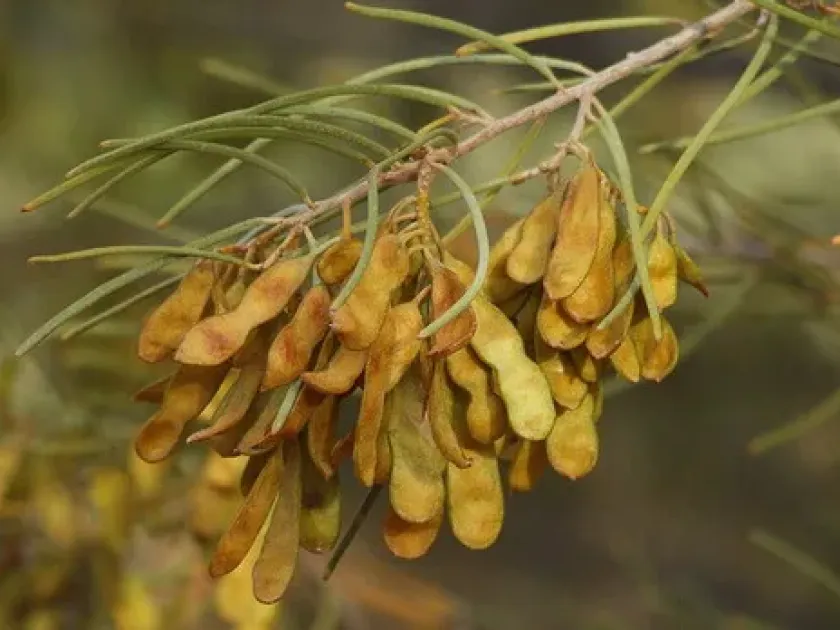
Botanically, it is recognized by its silvery-grey foliage covered with fine hairs, which serves as a protective mechanism against extreme sunlight and water loss. Its yellow, rod-like flower spikes appear during the flowering season and are typical of the genus.
In terms of хозяйство (farm) utility, it is widely recognized for its role in windbreak establishment and soil erosion control. Additionally, it serves as a valuable forage resource for livestock, providing essential nutrients during periods when green pasture is scarce.
Main diseases and pests
Common pests associated with Acacia cana include various seed-boring insects and foliage-eating caterpillars. These pests can significantly impact seed viability and early plant growth, requiring vigilant scouting in nurseries and young plantations.
Fungal root diseases represent a major threat, particularly when soil moisture levels remain consistently high. Ensuring good soil drainage is the most effective preventative measure against these types of infections, which can quickly lead to tree decline.
Damage from feral herbivores and livestock can suppress young growth. Providing physical protection for individual trees or fencing off cultivation areas is recommended until the plants have developed sufficient bark and height to withstand browsing.
While relatively hardy, older specimens can be susceptible to wood-boring beetles if the tree is weakened by other environmental stressors. Maintaining overall tree vigor through appropriate site selection is crucial for long-term health.
Integrated pest management strategies should focus on monitoring for early signs of infestation and maintaining the overall cleanliness of the cultivation site. Chemical control is generally reserved for severe outbreaks in nursery settings.