
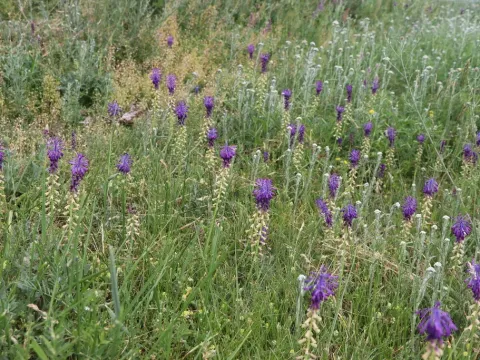
Leopoldia
Leopoldia
Leopoldia, a genus belonging to the Asparagaceae family, is typically propagated vegetatively using offsets or daughter bulbs. The optimal planting period for these bulbs in outdoor settings is late August through September.
What the section contains
Leopoldia
When propagating via seeds, sowing should be performed during the winter months in containers or cold frames to ensure the seeds undergo necessary natural stratification.
The planting depth for the bulbs generally ranges between 8 and 10 centimeters, depending on the bulb size and the texture of the growing medium to ensure stability.
Maintaining sufficient spacing between plants is vital to promote adequate airflow, which is the primary defense against the development of fungal infections in early spring.
Selecting a location with full exposure to sunlight is mandatory, as this plant thrives in bright conditions and performs poorly in shaded areas.
The crop performs best in loose, fertile, and well-drained soil. It is highly sensitive to waterlogging, so soil composition should ideally be sandy or loamy for optimal health.
While the plant exhibits moderate drought tolerance, consistent moisture is required during the active spring growth period to support healthy flower spike development.
Fertilization should be handled with care; using complex mineral fertilizers with low nitrogen content helps prevent excessive vegetative growth at the expense of bulb quality.
Winter hardiness is a notable feature of the genus, yet protection against excessive moisture during dormant phases is crucial to prevent rot in the bulbs.
In areas with heavy or clay-based soils, incorporating coarse sand or grit into the planting holes is recommended to provide the necessary drainage for root system longevity.
Fungal diseases, particularly basal rot and grey mold, pose the most significant threat to Leopoldia, often triggered by poor drainage and excessive soil humidity.
The onion fly is a common pest that targets the bulbs, where larvae feed on the basal plate, leading to rapid decay and the eventual death of the entire plant.
Leaf spot diseases, which emerge under damp conditions, can reduce the plant's overall photosynthetic capacity, impacting the energy reserves stored for the next growing season.
Proactive treatment of bulbs with wide-spectrum fungicides prior to planting is a standard and effective practice for maintaining a healthy and disease-free crop.
Effective weed control is essential not only for reducing nutrient competition but also for eliminating micro-environments where pathogens and pests typically thrive.