
Acacia homalophylla
Acacia homalophylla
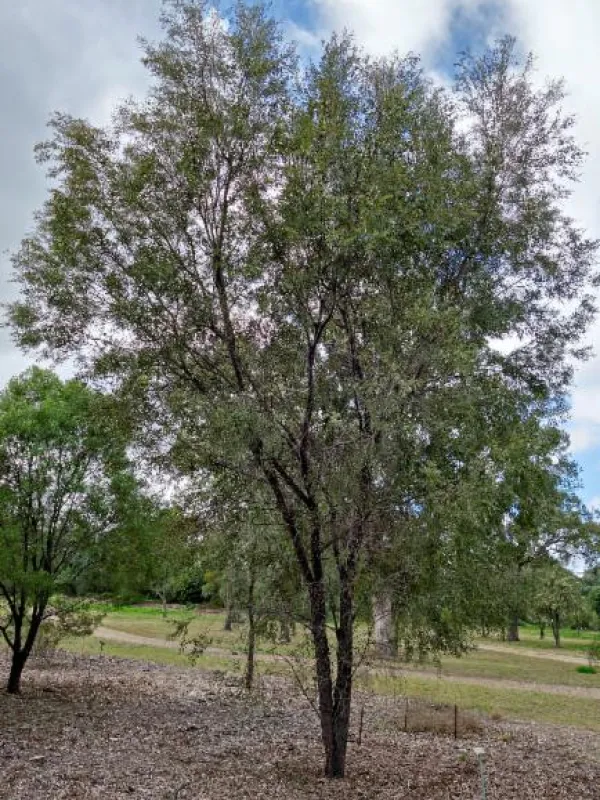
Description
Growing requirements
Acacia homalophylla, commonly known as Yarran, belongs to the Fabaceae family. This species is endemic to Australia and is primarily found in the arid and semi-arid regions of the continent's interior.
The plant is highly adapted to harsh environments with erratic rainfall, making it a robust choice for reforestation in semi-desert landscapes. It thrives in well-drained loamy or sandy soils and exhibits significant salt tolerance.
Botanically, it features phyllodes, which are flattened leaf stalks that perform photosynthesis. This adaptation is crucial for surviving long periods of drought, as it reduces water loss compared to traditional foliage.
In terms of agricultural and industrial utility, Yarran is highly valued for its dark, dense, and durable wood. It is extensively used in high-end joinery, ornamental woodturning, and as an excellent source of heating fuel.
The agrotechnical management of this species involves minimal intervention due to its hardiness. However, selecting appropriate planting sites with adequate sunlight and minimal moisture stagnation is essential for optimal growth.
Main diseases and pests
The primary insect threats include various species of borers and caterpillars that can penetrate the bark or consume the phyllodes, potentially weakening the tree structure.
Root rot is a major risk factor if the soil becomes waterlogged, which can quickly lead to the decline of young trees in nursery or plantation settings.
Fungal infections of the bark may occur, especially if the tree experiences stress from drought or physical damage, which creates entry points for pathogens.
Weed competition during the seedling stage is a critical issue that requires diligent management to ensure the young acacia plants are not outcompeted for soil nutrients and light.
While mature trees are quite resistant to environmental stresses, extreme cold or prolonged frost can cause tip dieback, requiring careful site selection in colder regions.