
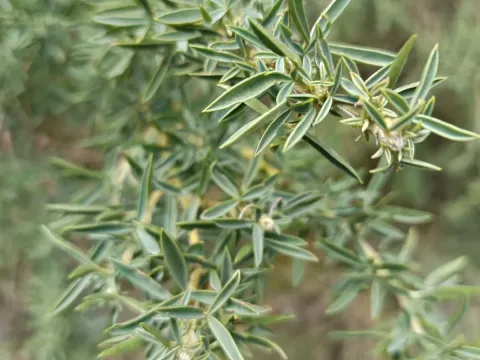
Adenocarpus
Adenocarpus
Sowing of Adenocarpus seeds is best performed in spring when the soil has sufficiently warmed. Due to the hard seed coat, seeds require scarification to ensure uniform and successful germination.
What the section contains
 Adenocarpus anagyrifolius
Adenocarpus anagyrifolius
Adenocarpus anagyrifolius
 Adenocarpus anisochilus
Adenocarpus anisochilus
Adenocarpus anisochilus
 Adenocarpus argyrophyllus
Adenocarpus argyrophyllus
Adenocarpus argyrophyllus
 Adenocarpus aureus
Adenocarpus aureus
Adenocarpus aureus
 Adenocarpus complicatus
Adenocarpus complicatus
Adenocarpus complicatus
 Adenocarpus decorticans
Adenocarpus decorticans
Adenocarpus decorticans
 Adenocarpus foliosus
Adenocarpus foliosus
Adenocarpus foliosus
 Adenocarpus lainzii
Adenocarpus lainzii
Adenocarpus lainzii
 Adenocarpus telonensis
Adenocarpus telonensis
Adenocarpus telonensis
 Adenocarpus viscosus
Adenocarpus viscosus
Adenocarpus viscosus
 Spanish adenocarpus
Adenocarpus hispanicus
Spanish adenocarpus
Adenocarpus hispanicus
Adenocarpus
The optimal period for direct sowing in open ground is throughout April or May. The seeds should be planted at a depth of no more than 1-2 centimeters, ensuring they receive enough oxygen for development.
Nursery cultivation often involves sowing in pots, which allows for better control of environmental conditions before transplanting to a permanent location. This practice minimizes the mortality rate of young seedlings during the establishment phase.
Preparing the substrate is a critical step; it must be light, porous, and well-draining. Seedlings often emerge unevenly, so maintaining steady moisture levels during the first weeks after sowing is essential.
Transplanting seedlings to their permanent spot is recommended at the age of one or two years. The root system is quite sensitive to disturbance, so a careful planting technique that preserves the root ball is highly advised.
Adenocarpus is a genus of deciduous or semi-evergreen shrubs belonging to the Fabaceae family. In their natural habitat, these plants are found across the Mediterranean region, the Canary Islands, and parts of Western Asia.
The culture thrives in sunny, well-lit areas protected from cold winds. Excess shade often results in etiolated growth and a significant reduction in the intensity and duration of flowering.
The plant is moderately undemanding regarding soil quality, preferring stony, sandy, or loamy soils with a neutral to slightly acidic pH. Excellent drainage is the most vital requirement for its long-term survival.
Adenocarpus exhibits high drought tolerance and low water requirements. Overwatering or poor drainage leading to waterlogged roots is extremely detrimental to the plant and frequently triggers root rot issues.
This shrub is well-adapted to nutrient-poor soils because it maintains a symbiotic relationship with nitrogen-fixing bacteria. This adaptation allows it to flourish in environments where other decorative species would suffer from malnutrition.
Common pests affecting Adenocarpus include aphids and spider mites, which tend to proliferate during hot and dry weather conditions. Heavy infestations can significantly stunt the growth of young shoots.
Fungal diseases, such as powdery mildew, may affect foliage if there is poor air circulation or high humidity. Regular pruning and thinning of the canopy serve as the most effective preventative measure.
Root rot occurs primarily due to poor site selection, particularly in heavy or water-saturated soils. In such instances, managing the pathogen is nearly impossible without correcting the underlying soil structure.
For pest control, systemic insecticides are generally recommended. It is important to complete all chemical treatments before the plant begins to flower to ensure the safety of essential pollinating insects.
Regular monitoring of the shrubs allows for early detection of diseases. Prompt removal and disposal of infected plant parts help contain outbreaks without the need for extensive chemical interventions.