
Burrow's Wattle
Acacia burrowii
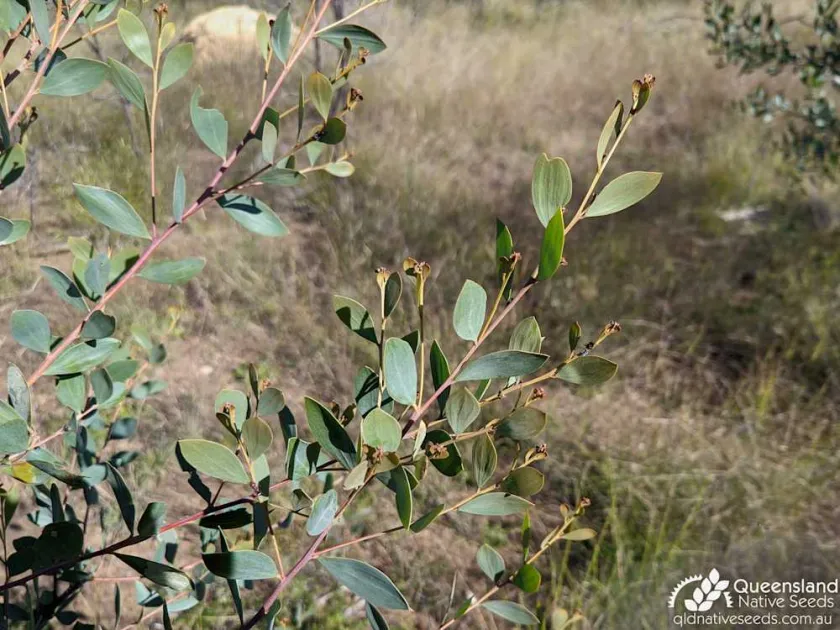
Description
Growing requirements
Burrow's Wattle (Acacia burrowii) is a distinctive leguminous tree species belonging to the Fabaceae family. It is native to the eastern Australian landscape, where it thrives in diverse environments, ranging from shrublands to open woodland ecosystems.
The tree exhibits specific morphological features, including phyllodes that are adapted to minimize water loss. This makes the species an ideal candidate for cultivation in semi-arid regions where water management is a significant challenge for agriculturalists.
Regarding soil requirements, this species favors well-drained sandy or loamy soils. It has an remarkable ability to colonize nutrient-poor substrates, partially due to its symbiotic relationship with nitrogen-fixing bacteria residing in the root nodules.
Climate adaptation is a core strength of Acacia burrowii. It prefers regions with distinct dry seasons and requires abundant direct sunlight to maintain its structural integrity and vitality. It is highly resistant to heat stress.
Agricultural management for this species is relatively low-intensity. Minimal intervention is needed once the trees are established, although protection from weeds during the first two years of development significantly enhances the survival rate.
Main diseases and pests
Fungal pathogens associated with waterlogged conditions pose the most significant threat to the health of Acacia burrowii. Ensuring appropriate site drainage is the primary defense strategy against root rot diseases in nursery and field settings.
Wood-boring insects can cause structural damage to mature trees. These pests often target already stressed individuals, suggesting that maintaining tree health through proper spacing and minimal physical damage is a preventive measure.
Folivorous insects, particularly larvae of various Lepidoptera species, can cause substantial defoliation. While established trees can typically recover, heavy infestations in young stands require integrated pest management techniques.
Browsing by herbivores, both domestic and wild, represents a threat to young seedlings. Effective fencing solutions are usually necessary in areas where populations of kangaroos or feral goats are dense.
Parasitic species, such as mistletoe, can occasionally infest the canopy. Although rarely fatal, heavy infestations can reduce the growth rate of the tree, necessitating occasional pruning to maintain plant vigor.