
Acacia cyclops
Acacia cyclops
Description
Growing requirements
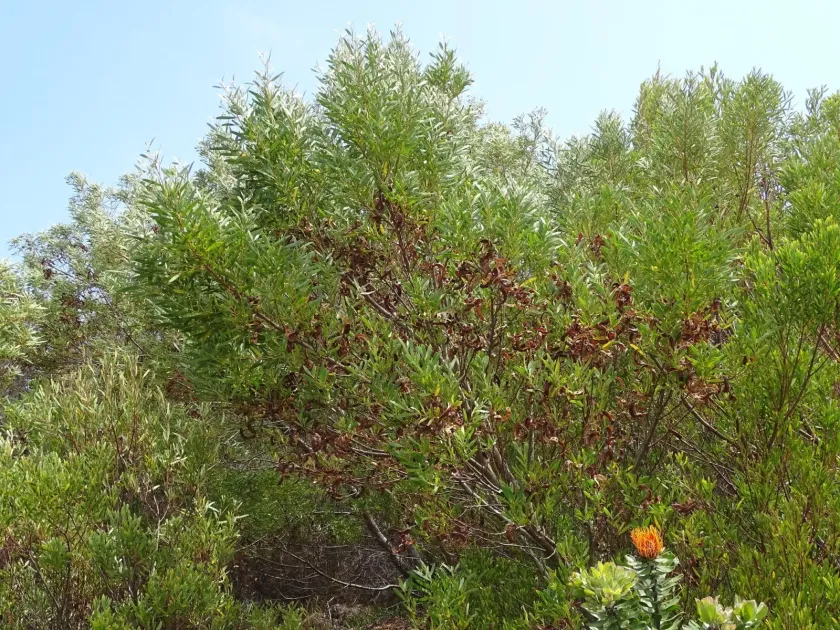
Acacia cyclops, commonly known as the coastal wattle, is a resilient shrub or small tree belonging to the Fabaceae family. It is renowned for its ability to thrive in extremely harsh environments where few other species can survive.
Originating from southwestern Australia, this species has successfully naturalized in many coastal regions worldwide. Its deep taproot system allows it to reach stable groundwater levels and withstand extended periods of drought.
The plant requires well-drained, sandy soils and is highly tolerant of saline conditions. It is frequently employed in coastal stabilization projects, where it acts as a windbreak and prevents the movement of sand dunes.
Botanically, it features phyllodes, which are flattened leaf-like petioles that minimize water loss through transpiration. This evolutionary adaptation is key to its success in high-sunlight and low-precipitation regions.
Economically, Acacia cyclops is valued for its dense wood, which makes excellent charcoal. Furthermore, its ability to fix nitrogen improves soil fertility, supporting the growth of surrounding vegetation in restoration projects.
Main diseases and pests
A primary threat to the longevity and propagation of Acacia cyclops is the infestation of seeds by weevils, particularly those from the Melanterius genus. These pests significantly diminish the viability of seed stocks.
Fungal root diseases can emerge in poorly drained soils where water stagnation occurs. Maintaining proper soil moisture levels through strategic site selection and drainage management is crucial for tree health.
Because of its rapid growth and high seed production, the species is often categorized as invasive. Effective management requires constant surveillance to prevent its spread into sensitive, non-target ecosystems.
Integrated management plans often include mechanical removal of mature stands and biological control methods. These strategies aim to balance the tree's utility with the conservation of local biodiversity.
Proper silvicultural practices, such as timely thinning and controlled pruning, are essential to maintain the vitality of the stand and prevent the development of widespread disease outbreaks within the plantation.