
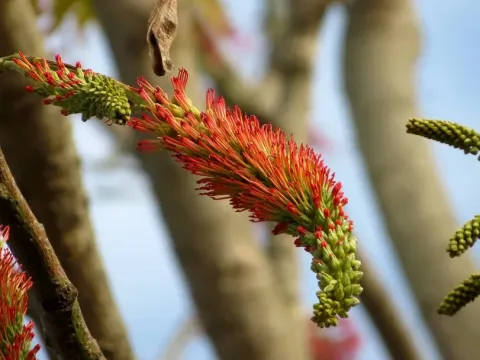
Acrocarpus
Acrocarpus
Sowing Acrocarpus (Acrocarpus fraxinifolius) seeds is best carried out at the beginning of the wet season, when stable temperatures ensure optimal germination rates.
What the section contains
Acrocarpus
Seeds require mechanical scarification or soaking in warm water for several hours to break dormancy and facilitate the germination process.
Nursery cultivation is standard practice: seeds are sown in pots or nursery beds with a nutrient-rich substrate, ensuring consistent moisture until seedlings are sturdy enough for transplanting.
Young plants typically reach a suitable size for field planting when they are 30–50 cm tall, which usually takes several months under proper care.
Spacing during planting is critical; for commercial timber plantations, a grid of 3x3 or 4x4 meters is generally recommended to allow sufficient room for vertical growth.
Acrocarpus thrives in tropical and subtropical climates, requiring consistent warmth and high humidity levels throughout its active growing season.
The ideal soil conditions include deep, well-drained, and fertile soils, although the species shows remarkable adaptability to various soil types in mountain regions.
As a light-demanding species, it requires full exposure to sunlight, which stimulates the growth of a straight and branch-free trunk suitable for high-quality timber.
The tree grows best at altitudes between 500 and 1500 meters, where moderate temperatures prevent excessive heat stress and support rapid biomass accumulation.
Protection against strong winds is necessary during the early stages of development, as the wood can be susceptible to bending or breaking in exposed locations.
Acrocarpus is recognized as one of the fastest-growing timber species in the tropics, often outperforming native species in plantation trials.
Under optimal conditions, trees can achieve significant height and diameter increases annually, leading to shorter rotation cycles compared to traditional hardwood species.
Beyond timber production, the tree is a valuable component of agroforestry systems because it contributes to soil fertility by fixing atmospheric nitrogen.
The yield of high-quality wood is largely dependent on silvicultural management, specifically pruning to maintain a clean bole and prevent lower branch growth.
Total plantation output depends on site quality and management intensity, making it a profitable option for long-term forestry investment.
Fungal diseases are a primary concern for Acrocarpus, especially when planting density is too high or in areas with poor drainage leading to waterlogged roots.
Insect pests, including various wood-borers and defoliators, can pose a risk to young plantations, necessitating regular health assessments of the trees.
Root rot represents a common health issue if the soil conditions are not well-managed; keeping the root zone free of excessive saturation is essential for survival.
Implementing a strict sanitation program, including the removal and destruction of infected parts, helps in preventing the spread of diseases within the plantation.
Biological control and maintaining ecological balance around the plantation site can significantly reduce the impact of pest outbreaks without chemical dependency.
Harvesting usually involves a clear-cut or selective logging system once the trees reach the target size and technical maturity, typically after 15 to 25 years.
Modern logging techniques ensure that the timber is processed efficiently, minimizing wastage and protecting the soil surface during transportation.
It is recommended to schedule harvesting during the dry season to minimize soil compaction and facilitate better access to the plantation site.
The wood produced is lightweight, strong, and highly appreciated in the furniture and construction industries for various interior applications.
Effective management includes assessing the site potential for replanting to ensure the sustainability of the forestry operation after the final harvest.