
Acacia ammobia
Acacia ammobia
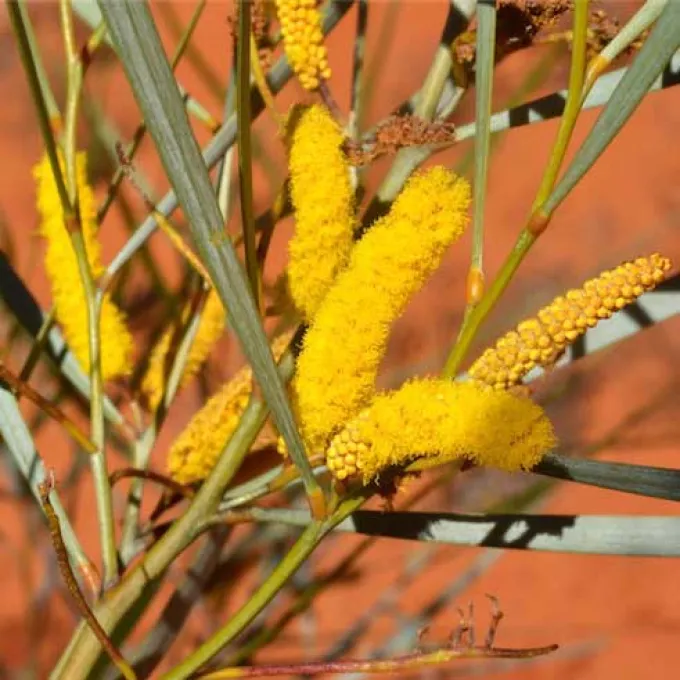
Description
Growing requirements
Acacia ammobia is a distinctive member of the Fabaceae family, native to the arid interior regions of Australia. It is well-recognized in botanical circles for its ability to thrive in extremely hostile environments where few other woody species can survive.
The plant is biologically adapted to deep sandy soils and is frequently found inhabiting sand dunes. This adaptation allows it to act as a pioneer species in colonizing and stabilizing mobile sandy substrates, which is critical for preventing soil erosion in arid zones.
Regarding site requirements, this species demands full sun exposure and excellent soil drainage. It is highly intolerant of waterlogging, making sandy or sandy-loam soils the only viable medium for its healthy growth and root development.
In terms of climate, Acacia ammobia requires a high-temperature environment. It is evolutionarily conditioned to withstand significant diurnal temperature fluctuations, which are typical of the Australian outback, and requires minimal moisture once established.
The primary economic and environmental application of this culture is land reclamation and soil conservation. By stabilizing dunes, the species creates micro-habitats that support the succession of other desert vegetation, playing a vital role in ecological restoration projects.