
Acacia lineata
Acacia lineata
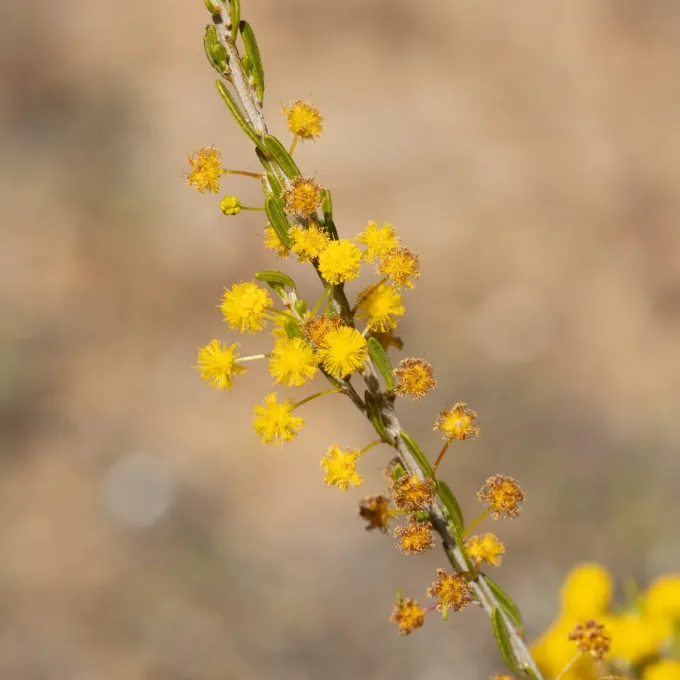
Description
Sowing dates
Acacia lineata, a member of the Fabaceae family, is typically propagated from seeds. Because of their hard seed coat, pre-sowing treatment is essential for consistent germination success.
The standard method involves scarifying the seeds or soaking them in near-boiling water for a few minutes, followed by a 24-hour soak in tepid water to soften the casing.
Seeds should be sown in a well-draining seed-raising mix. A light covering of soil or sand is sufficient, as they require warmth and consistent humidity to germinate effectively in a sheltered environment.
Seedlings are fragile and should be transplanted into individual pots once they develop their first set of true leaves. This ensures that root competition is minimized during the early growth stages.
Hardening off the plants before final transplantation is critical, especially when moving them from a greenhouse or nursery setting to an outdoor garden environment.
Growing requirements
Native to Australia, this species thrives in full sun. It requires a location where it can receive at least six to eight hours of direct sunlight daily to maintain its structural integrity.
The plant is highly specialized for well-drained, sandy, or gravelly soil profiles. It struggles in heavy clay soils where moisture retention can easily lead to root asphyxiation and decay.
Watering requirements are moderate; the plant displays excellent drought tolerance once established. However, during the intense heat of summer, young plants may require supplemental irrigation.
Acacia lineata is adapted to low-nutrient soils and generally does not require heavy fertilization. An application of low-phosphorus fertilizer in early spring is usually sufficient to support its needs.
In terms of climate, it is sensitive to severe frost. In temperate or colder regions, it is best managed as a container plant, allowing it to be moved indoors during extreme winter conditions.
Main diseases and pests
Common pests include scale insects and mealybugs, which often hide in the dense foliage. These pests can extract sap, leading to stunted growth and the development of sooty mold.
Root rot caused by Phytophthora species is the most significant disease threat, particularly when drainage is poor and soil remains waterlogged for extended periods.
Integrated pest management, including the use of horticultural oils, is effective for controlling sucking insects. Regular inspection of the stem and leaf axils is recommended.
Pruning is not only for aesthetics but also for health; removing dead or diseased branches improves airflow, which helps prevent the establishment of fungal spores in the foliage.
To ensure plant vigor, keep the area around the base of the shrub free from weeds and leaf litter, which can harbor pests or create an environment conducive to fungal pathogens.