
Adenanthera
Adenanthera
Propagation of Adenanthera is primarily achieved through seeds, which feature a tough coat that necessitates scarification or hot water soaking to ensure uniform germination.
What the section contains


Adenanthera
Seeds should be sown in a well-draining substrate, maintaining temperatures between 25 and 30 degrees Celsius to promote active embryo development.
In nursery settings, seedlings are protected from intense sunlight during the initial growth stages to foster a strong, healthy root system before field transplantation.
Optimal sowing occurs at the onset of the rainy season, allowing the plant to establish itself in the field using natural moisture levels for initial growth.
Seedlings are typically ready for transplanting once they reach a height of 30 to 50 centimeters, ensuring better survival rates in diverse soil environments.
Adenanthera belongs to the Fabaceae family and thrives in tropical climates characterized by high temperatures and distinct wet and dry periods.
The tree is highly photophilous, requiring full sun exposure to maintain vigorous growth, dense foliage development, and regular flowering patterns.
While adaptable to various soil types, the species performs best in fertile, deep, and well-draining soils where it can access sufficient water and nutrients.
The species is drought-tolerant once established, but supplemental irrigation during the peak growing season significantly improves biomass accumulation and timber density.
Environmental conditions at altitudes ranging from sea level to 1,000 meters are considered optimal for maximizing the ecological and economic potential of this crop.
The wood of Adenanthera, often marketed as red sandalwood, is highly valued in the furniture and woodworking industries for its durability and rich color.
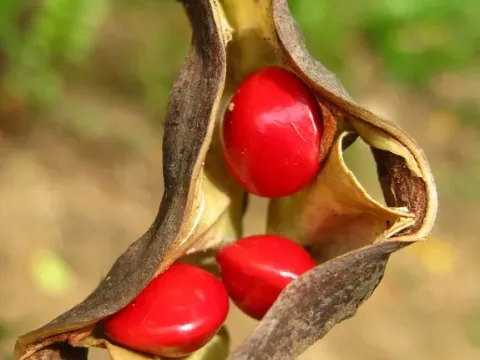
Its bright red seeds are commercially utilized in jewelry making and as traditional decorative elements due to their remarkable resistance to decay and consistent size.
As an nitrogen-fixing species, Adenanthera is integrated into agroforestry systems to enhance soil fertility, thereby benefiting companion crops and improving land quality.
The leaves and young shoots are documented in traditional systems for their therapeutic potential, serving as ingredients in various herbal preparations and local cuisine.
Industrial yields focus on high-quality timber for long-term investment, supplemented by short-term income from seed collection for specialized markets.
Seed-boring beetles, specifically bruchids, are the most significant pests affecting harvested seeds, necessitating stringent storage conditions to prevent infestation.
Seedlings are susceptible to fungal root rot, which typically develops in poorly drained soils where stagnant water promotes the growth of pathogens.
Defoliating insects can occasionally cause growth suppression in young plantations, requiring integrated pest management strategies to protect the foliage.
Mechanical damage to the bark creates entry points for various bacterial and fungal infections, which can weaken the tree and degrade the quality of the timber.
Maintaining proper spacing between trees is crucial to ensure adequate airflow and light penetration, effectively reducing the risk of disease outbreaks within the plantation.
Pod harvesting begins when the pods mature and turn a dark brown color, signaling that the seeds have developed their characteristic hardness and coloration.
Post-harvest processing involves drying the pods under shelter to reduce moisture content before mechanical threshing to extract the seeds cleanly.
Timber harvest is conducted in mature stands, typically 15 to 20 years after planting, depending on the desired stem diameter and wood density requirements.
Selective harvesting of foliage for organic fertilizer or fodder is possible, provided that the tree's physiological health is not compromised by excessive pruning.
Efficient storage of seeds requires cool, dry conditions to maintain viability for future planting or to preserve their appearance for industrial use.