
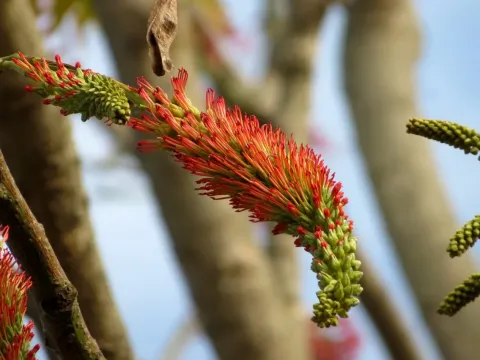
Acrocarpus
Acrocarpus Wight ex Arn.
Acrocarpus (Acrocarpus fraxinifolius) is a magnificent, fast-growing deciduous tree belonging to the Fabaceae family. Known for its impressive height, this tree can reach up to 60 meters, featuring a straight, tall trunk and a wide, spreading canopy.
What the section contains

Acrocarpus
The species is native to the tropical forests of South and Southeast Asia, including regions in India and Indonesia. Its natural habitat is characterized by high humidity and consistent tropical temperatures, where it plays a role as a dominant canopy tree.
For successful cultivation, Acrocarpus requires deep, fertile, and well-drained loamy soils. It thrives in regions with significant annual rainfall, as it needs consistent soil moisture to support its rapid growth rate during the juvenile phase.
The tree is extremely shade-intolerant and demands full sunlight for proper development. It is essentially a tropical species that cannot withstand frost or cold snaps, requiring an environment where temperatures remain above 20 degrees Celsius.
Economically, it is valued for its high-quality timber, often used in construction and furniture making. Furthermore, it is a staple in agroforestry, where it is planted to provide necessary shade for shade-grown coffee and tea plantations.
Young Acrocarpus saplings are susceptible to damage from termites, which can compromise the structural integrity of the roots. Effective site preparation is essential to reduce pest pressure before planting.
Root rot and stem fungal infections often occur in plantations with poor drainage or stagnant water conditions. Maintaining a proper slope or drainage system is crucial for the health of the wood lot.
Wood-boring beetles present a serious risk to mature trees, as their tunnels degrade the quality of the timber. Regular health inspections help in managing localized pest outbreaks.
Leaf-eating caterpillars can cause defoliation, which is particularly detrimental to young trees. Integrated pest management strategies are recommended to maintain the canopy density.
To ensure long-term productivity, growers must monitor for common pathogens and enforce strict phytosanitary practices, including the removal of dead or dying trees within the stand.