
Acacia acanthoclada
Acacia acanthoclada
Description
Growing requirements
Acacia acanthoclada is a perennial shrub belonging to the Fabaceae family, native to the arid inland regions of Australia. This plant has evolved to survive in extremely harsh environments, demonstrating remarkable resilience to heat and drought stress.
The culture thrives in well-drained, sandy, or gravelly soils. It is intolerant of waterlogged conditions, which can quickly lead to root rot. Full sunlight exposure is mandatory for healthy development, as the plant needs high solar radiation to maintain its metabolic activity.
Cultivation practices focus on low-input management. Once established, Acacia acanthoclada requires very little irrigation, making it an excellent candidate for xeriscaping or sustainable landscaping projects in Mediterranean or semi-arid climates.
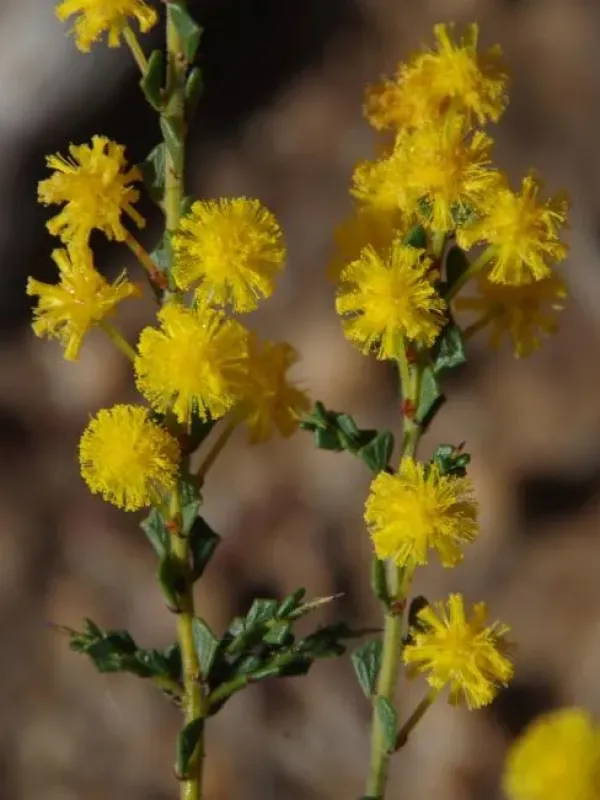
Botanically, the plant is distinguished by its intricate, thorny branches that serve as an effective defense mechanism against herbivores. The leaves are replaced by phyllodes, which are flattened petioles designed to optimize photosynthesis while reducing transpirational water loss.
Economically, this species is utilized for soil stabilization, land reclamation in arid areas, and as a structural element in ornamental gardening. Its ability to grow in nutrient-poor substrates makes it a versatile species for environmental restoration.
Main diseases and pests
The primary threat to the longevity of Acacia acanthoclada is excessive soil moisture. Proper drainage is the most critical factor; without it, the plant becomes highly susceptible to various soil-borne pathogens and root decay.
Common pests include sap-sucking insects like aphids and scale insects. These pests can cause chlorosis or deformation of the young phyllodes. Monitoring and the early application of horticultural oils or systemic insecticides are usually sufficient for control.
Fungal issues, particularly powdery mildew, can occur if the shrub is planted in areas with poor airflow and high humidity. Proper spacing between individual plants is essential to ensure adequate ventilation and to discourage fungal colonization.
It is important to avoid over-fertilizing, especially with high-nitrogen compounds, as this leads to succulent growth that is more attractive to insects and more prone to physical breakage under harsh weather conditions.
Regular inspection of the plant's structure is recommended to identify signs of stress. Removing any dead or dying branches helps maintain the plant's health and ensures that resources are directed towards productive growth.