
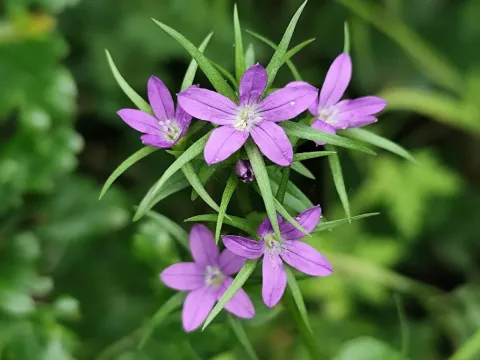
Legousia scabra
Legousia scabra
Legousia scabra is an annual herbaceous plant belonging to the family Campanulaceae. Native to the Mediterranean region and parts of Western Asia, this species is typically found in open meadows, rocky slopes, and grassland habitats where it thrives under temperate conditions.
What the section contains
Legousia scabra
The botanical characteristics of this plant include an upright, branching stem covered in fine, stiff hairs, which justifies its scientific specific epithet scabra. The leaves are generally sessile, elongated, and arranged alternately along the stems, providing a delicate appearance to the overall structure of the plant.
The flowering phase is the most distinctive period of the plant's life cycle. The flowers, shaped like elegant funnels or bells, typically display vibrant violet or purplish hues. These blossoms attract various pollinators, contributing to the biodiversity of the habitats where the plant is grown.
In terms of economic and practical use, Legousia scabra is primarily valued in ornamental horticulture. It is frequently selected for naturalistic garden designs, wildflower meadows, and rock gardens where low-maintenance and visually appealing floral displays are desired by landscape architects.
The cultivation of this plant is relatively straightforward, provided that environmental conditions mimic its natural habitat. While not a conventional agricultural crop, it remains a significant botanical subject for research and ornamental usage in temperate regions across the globe.
Sowing should take place in early to mid-spring, once the danger of severe frost has passed and the soil has started to warm up. Seeds are often broadcasted thinly on well-prepared soil surfaces, as they require minimal covering to ensure proper germination and access to necessary light.
Legousia scabra demands full sun exposure to maintain its vigorous growth and vibrant flowering. It performs best in well-draining, moderately fertile soils. Overly compacted or clay-heavy soils should be avoided or amended to prevent waterlogging, which the plant is highly sensitive to.
Climatic requirements involve a preference for mild temperatures and stable light levels. While the plant can handle short periods of drought once established, consistent moisture during the initial growth phase is essential for optimal plant development and the density of the floral canopy.
The main threats to Legousia scabra include various fungal pathogens such as powdery mildew, which can develop in areas with high humidity or poor ventilation. Implementing proper spacing between individual plants is the most effective cultural method to prevent the spread of such diseases.
Pests such as aphids and slugs can damage young foliage and tender stems. Regular monitoring of the garden plot is advised to identify early infestations. Using organic pest control methods or physical barriers can help mitigate these issues without disrupting the local garden ecosystem.