
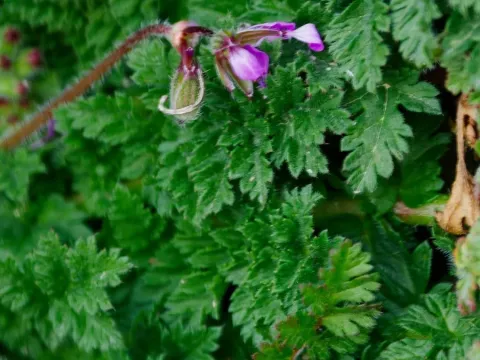
Storksbill
Erodium
Sowing of common Storksbill is typically performed in early spring as soon as the soil warms up to 5–8 degrees Celsius. The culture is characterized by high seed germination rates, and the seeds retain viability for several years.
What the section contains
 Alpine storksbill
Erodium alpinum
Alpine storksbill
Erodium alpinum
 Blue storksbill
Erodium crinitum
Blue storksbill
Erodium crinitum
 Chios storksbill
Erodium chium
Chios storksbill
Erodium chium
 Common stork's-bill
Erodium ciconium
Common stork's-bill
Erodium ciconium
 Corsican stork's-bill
Erodium corsicum
Corsican stork's-bill
Erodium corsicum
 Cutleaf stork's bill
Erodium laciniatum
Cutleaf stork's bill
Erodium laciniatum
 Erodium absinthoides
Erodium absinthoides
Erodium absinthoides
 Erodium aethiopicum
Erodium aethiopicum
Erodium aethiopicum
 Erodium beketowii
Erodium beketowii
Erodium beketowii
 Erodium boissieri
Erodium boissieri
Erodium boissieri
 Erodium brachycarpum
Erodium brachycarpum
Erodium brachycarpum
 Erodium carvifolium
Erodium carvifolium
Erodium carvifolium
 Erodium crassifolium
Erodium crassifolium
Erodium crassifolium
 Erodium daucoides
Erodium daucoides
Erodium daucoides
 Erodium foetidum
Erodium foetidum
Erodium foetidum
 Erodium glandulosum
Erodium glandulosum
Erodium glandulosum
 Erodium gruinum
Erodium gruinum
Erodium gruinum
 Erodium guttatum
Erodium guttatum
Erodium guttatum
 Erodium malacoides
Erodium malacoides
Erodium malacoides
 Erodium manescavii
Erodium manescavii
Erodium manescavii
 Erodium oxyrhinchum
Erodium oxyrhinchum
Erodium oxyrhinchum
 Erodium pelargoniiflorum
Erodium pelargoniiflorum
Erodium pelargoniiflorum
 Erodium reichardii
Erodium reichardii
Erodium reichardii
 Erodium rodiei
Erodium rodiei
Erodium rodiei
 Erodium ruthenicum
Erodium ruthenicum
Erodium ruthenicum
 Erodium stephanianum
Erodium stephanianum
Erodium stephanianum
 Erodium touchyanum
Erodium touchyanum
Erodium touchyanum
 Erodium variabile
Erodium variabile
Erodium variabile
 Gaussen's Storksbill
Erodium gaussenianum
Gaussen's Storksbill
Erodium gaussenianum
 Glaucous-leaved stork's-bill
Erodium glaucophyllum
Glaucous-leaved stork's-bill
Erodium glaucophyllum
 Hoefft's Storksbill
Erodium hoefftianum
Hybrid storksbill
Erodium hybrids
Hoefft's Storksbill
Erodium hoefftianum
Hybrid storksbill
Erodium hybrids
 Lebel's storksbill
Erodium lebelii
Lebel's storksbill
Erodium lebelii
 Longbeak stork's bill
Erodium botrys
Longbeak stork's bill
Erodium botrys
 Musk stork's-bill
Erodium moschatum
Musk stork's-bill
Erodium moschatum
 Neurad-leaved stork's bill
Erodium neuradifolium
Neurad-leaved stork's bill
Erodium neuradifolium
 Rock storksbill
Erodium rupestre
Rock storksbill
Erodium rupestre
 Salzmann's stork's-bill
Erodium salzmannii
Salzmann's stork's-bill
Erodium salzmannii
 Sea stork's-bill
Erodium maritimum
Sea stork's-bill
Erodium maritimum
 Stemless stork's-bill
Erodium acaule
Storksbill
Erodium hirtum
Storksbill
Erodium triangulare
Tel Aviv stork's bill
Erodium telavivense
Stemless stork's-bill
Erodium acaule
Storksbill
Erodium hirtum
Storksbill
Erodium triangulare
Tel Aviv stork's bill
Erodium telavivense
 Texas stork's bill
Erodium texanum
Texas stork's bill
Erodium texanum
 Tree storksbill
Erodium arborescens
Tree storksbill
Erodium arborescens
Storksbill
For establishing healthy stands or medicinal raw material plantations, a row-seeding method with spacing of 30–45 centimeters is recommended. This layout facilitates effective inter-row soil cultivation during the initial vegetation period.
The optimal seeding depth is 1–2 centimeters, ensuring rapid contact between the seed and the moist soil layer. In dry spring conditions, rolling is essential to improve capillary water rise.
In southern regions, late autumn (pre-winter) sowing is possible, allowing the crop to utilize winter moisture reserves effectively. This contributes to the early formation of a robust leaf rosette and increased biomass productivity.
Plant density must be managed based on cultivation goals: higher nutrition space is required for seed production, while closer planting is preferred for aerial biomass harvesting.
Storksbill belongs to the Geraniaceae family and is an undemanding plant adapted to various growing conditions. It thrives in both loose sandy soils and loams with a neutral or slightly acidic pH balance.
The plant exhibits high drought resistance due to a developed taproot system that reaches deep soil layers. It prefers well-lit areas, as shading significantly reduces the accumulation of biologically active compounds.
There are no strict soil fertility requirements, though significant biomass increase is observed in soils with sufficient nitrogen and phosphorus content. It does not tolerate waterlogging, so areas with high groundwater levels are unsuitable.
Climatic requirements include a moderate heat demand during germination and high light intensity during the flowering period. It successfully tolerates brief spring frosts, making it a promising crop for regions with unstable weather.
Agronomy is based on timely weed control during the seedling stage and maintaining soil aeration. Mineral fertilization is justified only on severely depleted soils, as nitrogen excess may lead to stem lodging.
The yield of Storksbill aerial mass depends directly on the vegetation period's moisture level and crop density. In favorable years with sufficient rainfall, one can obtain up to 1.5–2 tons of dry mass per hectare.
In industrial cultivation for seed material, yields reach approximately 300–500 kilograms per hectare, provided that drying and cleaning technologies are strictly followed. Seeds have a specific shape that complicates mechanized sowing without prior calibration.
Economic use includes medicinal raw material (hemostatic agent) and honey production during the intensive flowering phase. Biological value is at its peak at the beginning of the flowering stage.
To increase marketable output, phosphorus-potassium top-dressing during the budding phase is recommended. This contributes not only to biomass volume but also to higher concentrations of tannins and ascorbic acid.
The final yield also depends on the harvesting method, as Storksbill is prone to uneven seed maturation and shedding. The use of desiccants allows for synchronized maturation and minimizes losses during combining.
Storksbill is quite resistant to most common agricultural pests, although it may be affected by fungal diseases like powdery mildew in dense stands.
Among pests, aphids pose the greatest danger, damaging young leaves and inflorescences by sucking cell sap. Biological control agents or insecticides are used when the economic threshold is reached.
Root rots may occur due to systematic waterlogging or crop rotation violations. Important preventive measures include maintaining proper crop rotation intervals and avoiding replanting on the same site for at least three years.
Weed management in Storksbill fields is challenging; while the plant is competitive, it suffers from perennial rhizomatous weeds. Timely pre-emergence harrowing and early-stage weeding are key to success.
To prevent disease spread, it is necessary to strictly monitor the phytosanitary condition of seed material and perform seed treatment before sowing.
Medicinal raw material is harvested during the mass flowering phase by cutting the aerial part of the plant. It is critical to finish work before active fruit formation begins to preserve maximum active ingredient concentration.
Drying is carried out in dryers at temperatures not exceeding 45 degrees Celsius or in shaded, well-ventilated sheds. Direct sunlight exposure must be avoided to prevent vitamin degradation.
Seed crops are harvested upon fruit browning using direct combining or a two-phase harvest method. The mowed mass must be quickly moved to the storage area to minimize losses due to seed shedding.
After harvest, seeds require mandatory cleaning from plant debris and drying to a moisture content of no more than 12 percent. Under these conditions, they retain their germination quality for several seasons.
Transport of raw materials must be done in packaged form (bales or bags) to avoid mechanical damage and moisture absorption during transit to processing facilities.