
Rock storksbill
Erodium rupestre
Description
Growing requirements
The rock storksbill (Erodium rupestre) is a hardy perennial belonging to the Geraniaceae family. Native to high-altitude rocky regions, this species is uniquely adapted to thrive in nutrient-poor, mineral-rich environments where other vegetation often struggles to survive.
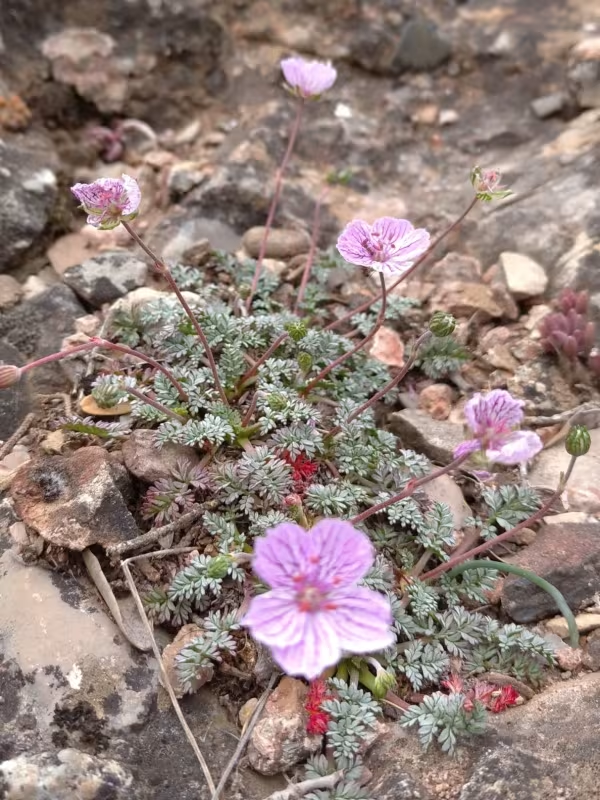
Botanically, the plant forms a basal rosette of finely divided leaves, providing a textural contrast in garden settings. Its flowers, typically featuring delicate petals with distinct veins, bloom from late spring into summer, adding aesthetic value to alpine rockeries.
Successful cultivation requires specific soil conditions, prioritizing excellent drainage. A gritty or sandy substrate is essential to prevent water accumulation near the root crown, which is the primary cause of decline in managed environments.
The species is highly photophilous and demands a site with full exposure to sunlight. Proper light levels are critical for maintaining the plant’s compact, low-growing habit and ensuring consistent flowering throughout the vegetative cycle.
Climate requirements involve resistance to significant temperature fluctuations. While the plant can withstand cold winters, it requires protection from excessive moisture during the dormant season, especially in regions with high winter precipitation.
Main diseases and pests
Root rot, induced by waterlogged soil, is the most critical threat to the longevity of Erodium rupestre. Maintaining a strict irrigation schedule and ensuring the planting medium is sufficiently permeable is crucial for plant health.
Pests such as spider mites may become problematic during periods of prolonged drought. Proactive monitoring and the application of targeted biological control agents can mitigate the impact of infestations on the delicate foliage.
Fungal infections, such as leaf spot, may arise if air circulation around the plants is inadequate. Providing sufficient spacing between individual plants prevents the buildup of humidity that favors fungal spore germination.
Gastropods, including slugs and snails, are frequent pests during the early growth stage. Using coarse aggregate mulch around the base of the plant can serve as an effective physical barrier against these mollusks.
Viral infections can be transmitted through contaminated tools or by insect vectors. Strict sanitation protocols, including the sterilization of pruning shears after working with diseased plants, are essential for maintaining a healthy nursery population.