
Erodium glandulosum
Erodium glandulosum
Description
Growing requirements
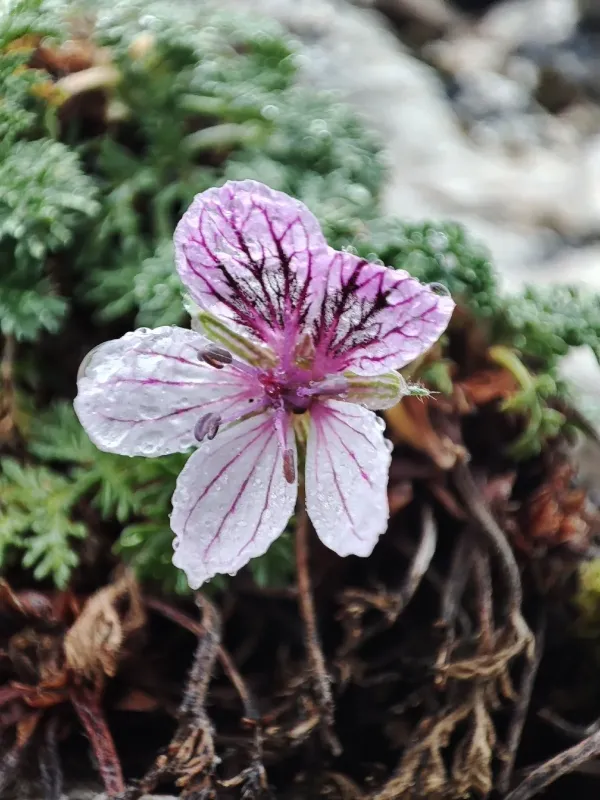
Erodium glandulosum is a perennial herbaceous plant belonging to the Geraniaceae family. Native to the Pyrenees, this species is highly valued for its compact, cushion-forming habit and unique glandular foliage.
Botanically, the plant is characterized by finely dissected, pubescent leaves and distinctively veined flowers. These traits allow it to thrive in nutrient-poor alpine environments, making it a specialized ornamental crop for temperate zones.
The cultural requirements are strict, primarily concerning drainage. The plant necessitates mineral-rich, stony, or calcareous soils that allow water to percolate rapidly, preventing root rot and physiological stress.
As a light-demanding species, it performs best in full sun. While it is hardy against cold, it requires protection from excessive summer humidity, which can lead to the deterioration of its dense growth structure.
In landscaping, Erodium glandulosum serves as a prime candidate for rockeries, troughs, and scree gardens. Its endurance and aesthetic appeal make it a classic choice for enthusiasts of high-altitude alpine flora.
Main diseases and pests
Root rot is the most significant threat to this crop. It is typically triggered by stagnant water in the root zone or poor drainage conditions, highlighting the need for a predominantly inorganic growing substrate.
Aphids and spider mites are potential pests, particularly during periods of heat stress or when air circulation is insufficient. Integrated pest management, focusing on early detection and targeted treatments, is advised.
The accumulation of debris and rotting organic matter around the base of the plant fosters an environment for fungal pathogens. Keeping the crown area clean is vital for maintaining the plant's long-term health.
Poor ventilation can lead to outbreaks of powdery mildew. In container cultivation, it is essential to ensure that the pots have proper spacing to facilitate adequate airflow around the foliage at all times.
Proactive monitoring is necessary to manage nutrient deficiencies, which can manifest as chlorosis on older leaves. Maintaining the correct soil pH is crucial to ensure that the plant can access all necessary micronutrients.