
Erodium guttatum
Erodium guttatum
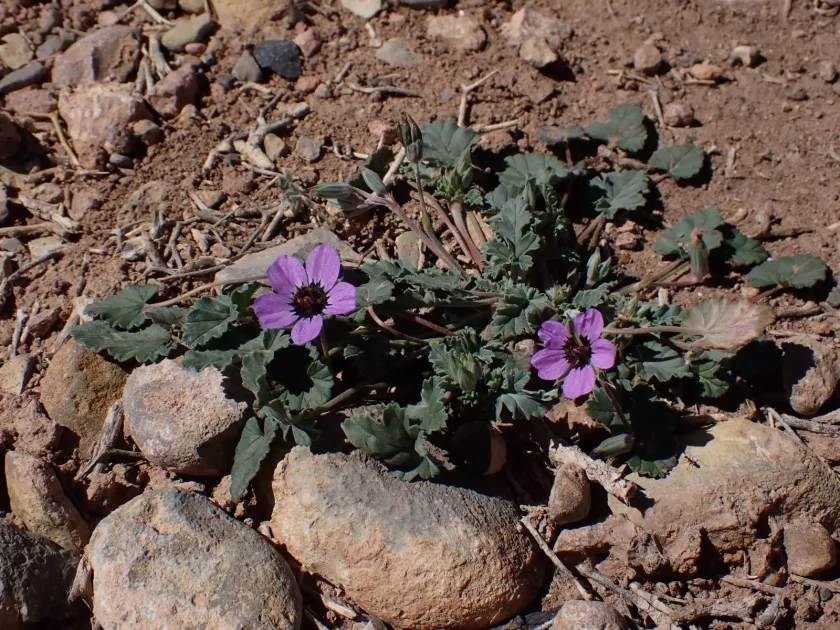
Description
Sowing dates
Sowing should be performed when the soil has sufficiently warmed up in early spring. Optimal soil temperature at a depth of 5 centimeters should be around 15 degrees Celsius to ensure rapid germination.
The field arrangement for Erodium guttatum should follow a wide-row spacing pattern. This ensures that each individual plant has sufficient space for root expansion and reduces competition for light.
Seeds should be placed at a shallow depth of 1 to 2 centimeters. Because the seeds are relatively small, deep burial can be detrimental to the energy reserves of the emerging seedling.
Soil preparation before sowing is essential. It should be thoroughly loosened and cleared of perennial weeds, which are the primary competitors for nutrients and water in the early stages of crop development.
Seed treatment with fungicides is recommended to protect the crop from soil-borne pathogens immediately after germination. Proper spacing during sowing is also key to preventing the spread of diseases.
Growing requirements
Erodium guttatum is a flowering plant belonging to the Geraniaceae family. It is known for its remarkable resilience and ability to thrive in harsh, arid environmental conditions.
The native distribution of this species includes the Mediterranean basin and North Africa. It is highly adapted to bright, sunny locations, typically found on sandy or stony ground that mimics its natural habitat.
Soil requirements for this crop are specific: it demands excellent drainage. Heavy, clay-rich soils are unsuitable as they trap moisture, which leads to root rot and other physiological disorders in the plants.
This species is exceptionally drought-tolerant. Its biological structure allows it to maintain metabolic processes even during extended periods of water scarcity, making it an ideal candidate for dryland farming.
The ideal climatic conditions involve warm temperatures and low humidity. It does not tolerate waterlogging, and it performs best in environments where air circulation is maintained around the foliage.
Main diseases and pests
The most common disease affecting this crop is powdery mildew, caused by excessive ambient humidity and poor ventilation. Symptoms include white powdery patches on the leaves and stunted growth.
Root rot is a major threat during rainy seasons or in fields with poor drainage systems. This condition often leads to rapid plant death and significant yield losses if not managed correctly.
Insect pests, such as aphids and spider mites, are frequently encountered. They feed on the succulent parts of the plant, weakening the overall structure and reducing the quality of the yield.
Integrated pest management (IPM) is highly encouraged for this crop. Regular monitoring allows for early detection of pest populations, which can often be managed with targeted biological controls.
Agricultural hygiene, including the removal of infected plant residues and weeds after the harvest, is a critical step in breaking the life cycle of pests and reducing the inoculum density for the next season.
Harvesting
Harvesting Erodium guttatum is typically timed according to the stage of the desired end product. If the plant is grown for biomass or botanical extracts, it should be cut before seed maturity.
Mechanical harvesting is feasible if the crop is planted in uniform rows. Cutting should take place during dry, sunny weather to ensure the harvested material contains minimal surface moisture, which prevents rotting during storage.
The plants are usually cut at a height of 5 to 10 centimeters above the ground level. This allows for potential regrowth or simply protects the soil surface from erosion.
Once harvested, the material must be dried quickly in a shaded, well-ventilated area to preserve the active compounds. Prolonged exposure to high heat can degrade the chemical quality of the biomass.
Efficient post-harvest processing is essential for maintaining product quality. Drying shelves or mechanical dryers with controlled temperature settings are recommended to ensure uniform moisture reduction throughout the bulk volume.