
Lebel's storksbill
Erodium lebelii
Description
Growing requirements
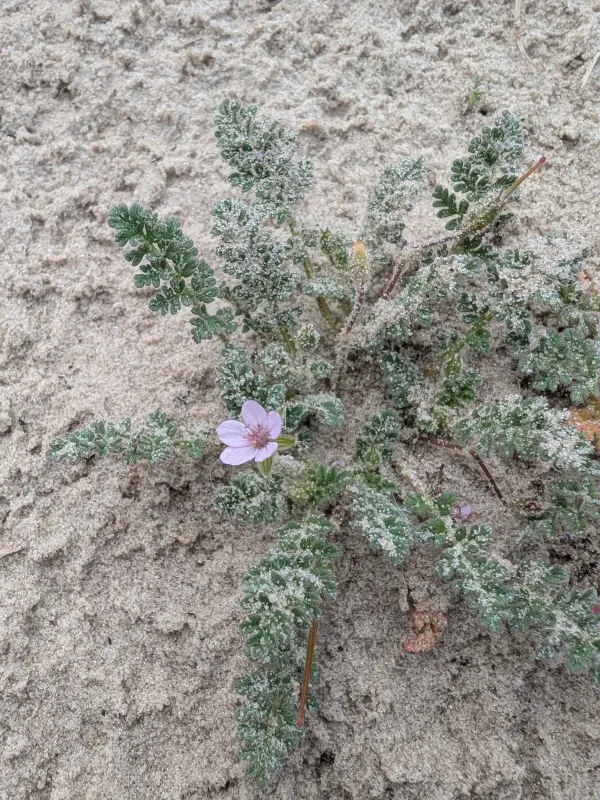
Lebel's storksbill (Erodium lebelii) is a herbaceous plant belonging to the Geraniaceae family. Its natural distribution is linked to coastal and sandy environments, which has shaped its specific botanical traits and resistance to environmental stress.
The plant thrives in well-drained, sandy soils and is highly adapted to areas where soil stability and aeration are critical for root health. It features a taproot system that allows it to maintain vigor during periods of low precipitation.
Climate requirements include a preference for open, sunny locations with adequate light exposure. The species is sensitive to shade and requires well-ventilated conditions to prevent excessive atmospheric humidity near the canopy.
Agronomic management involves maintaining neutral to slightly acidic soil pH levels to ensure nutrient availability. Proper soil preparation, including tillage, is essential to minimize compaction and promote deep root development.
Cultivation practices focus on balanced irrigation to avoid waterlogging, which is detrimental to this species. Its use in agricultural systems often serves as a beneficial component in specialized forage blends for sandy regions.
Main diseases and pests
Common fungal diseases, particularly powdery mildew, are the primary threats during high-humidity periods. Proper crop spacing is the most effective cultural method to reduce the incidence of these pathogens.
Root rot, driven by poor drainage, remains a significant challenge for growers. Managing the soil moisture levels and ensuring site suitability are crucial for maintaining a healthy stand of the plant.
Pests such as aphids are frequently observed, feeding on tender foliage and potentially transmitting viruses. Monitoring the population levels allows for timely intervention before significant damage occurs.
Nematodes can cause significant damage in sandy soils, hindering nutrient absorption and overall growth. Implementing appropriate crop rotation strategies helps in keeping the soil environment healthy for the plant.
Phytosanitary control is vital, including the removal of infected plant debris from the field. Regular inspection of the crop ensures that any outbreak is contained rapidly, preventing systemic loss of yield.