
Blue storksbill
Erodium crinitum
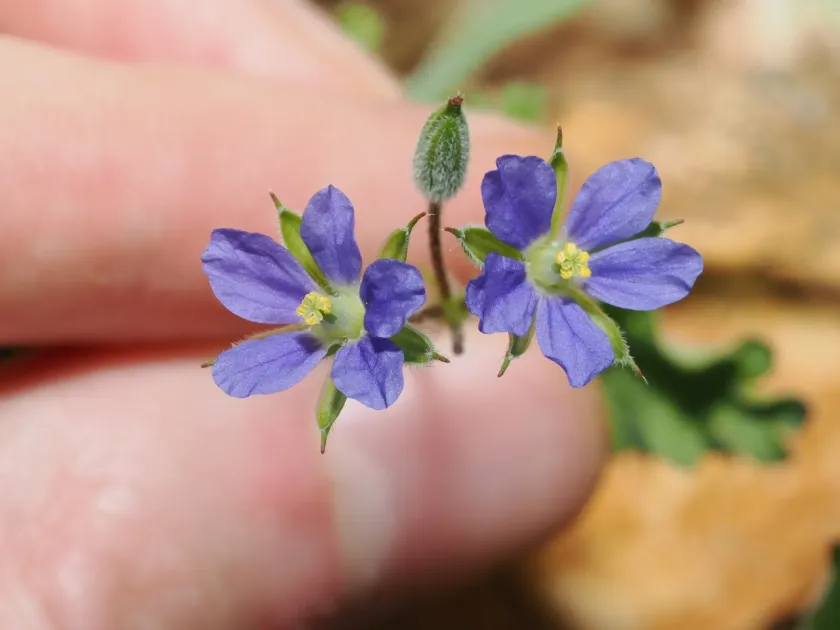
Description
Growing requirements
Blue storksbill (Erodium crinitum) is a member of the Geraniaceae family. Native to Australia, this plant has gained attention as a valuable species for pasture improvement, particularly in regions where drought resistance is a priority.
The plant thrives in temperate climates and prefers well-drained, fertile soils. Its ability to grow in various textures, from sandy loams to heavier clays, makes it a versatile species for agricultural land management.
Botanically, it is characterized by its basal rosette of deeply lobed leaves and distinctive long-awned seeds. These awns exhibit hygroscopic movement, actively drilling the seed into the soil, which facilitates successful recruitment of new plants.
Optimal cultivation requires adequate sunlight and moderate moisture levels. While it is tolerant to short-term dry spells, consistent productivity as a forage crop relies on balanced nutrient availability, specifically phosphorus, to support root development.
In terms of utilization, it is primarily grazed by livestock. Its nutritional value is high during the vegetative phase, making it a desirable component of diverse pasture swards that provide reliable feed across the growing season.
Main diseases and pests
The primary threats to blue storksbill include fungal pathogens that flourish in waterlogged conditions. Root rot and damping-off can be significant issues if the soil drainage is inadequate or during prolonged wet periods.
Pests such as aphids and various leaf-feeding caterpillars can reduce the yield of green biomass. Monitoring for these pests is essential, especially during the peak spring growth phase when the plant is most attractive to herbivores.
Weed competition represents a major limiting factor for establishment. Because blue storksbill develops slowly in the early seedling stage, it requires clean seedbeds or well-managed competition to ensure stand uniformity.
Nematode infestations can occasionally affect root health in sandy soils, leading to stunted growth. Crop rotation and using disease-free, high-quality seed are recommended practices to mitigate these soil-borne risks.
Integrated pest management strategies focusing on early detection and maintaining soil health remain the best approach for long-term successful cultivation and sustainable pasture production.