
Texas stork's bill
Erodium texanum
Description
Growing requirements
Texas stork's bill (Erodium texanum) is an annual plant belonging to the Geraniaceae family. It is a highly specialized plant adapted to the arid and semi-arid environments of the Southwestern United States.
The native range of this species extends across Texas, New Mexico, and parts of Northern Mexico. It thrives in open, sun-drenched habitats where moisture is limited and temperatures frequently soar.
In terms of soil requirements, this plant is not overly demanding. It prefers sandy or loamy soils with excellent drainage, which prevents the moisture accumulation that could be harmful to its roots.
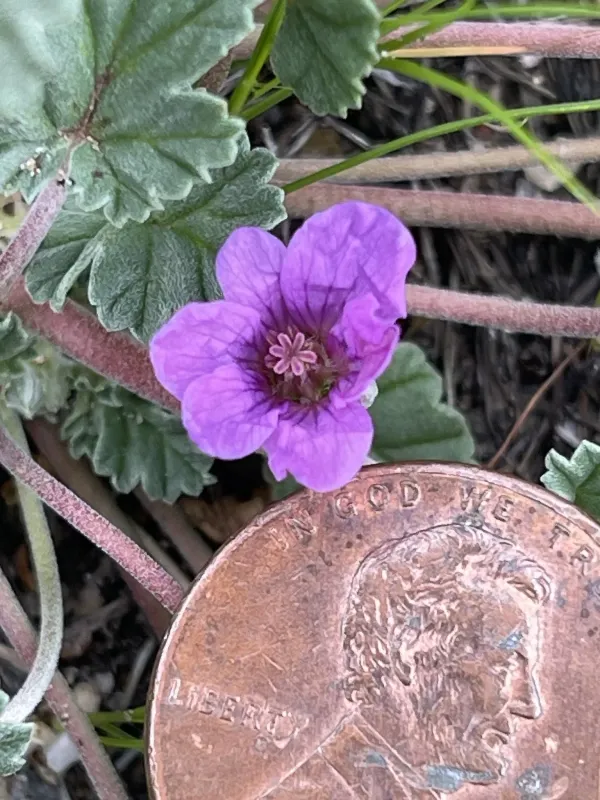
Botanically, Erodium texanum is identified by its distinctive beak-like fruits and small, vibrant flowers. The plant's deep taproot system allows it to reach moisture deep within the soil profile.
It plays a significant role as a forage crop in natural grazing lands. Livestock and wildlife rely on its nutritional value, especially during the early stages of the growing season after rainfall.
Main diseases and pests
The primary threats to the stability of Erodium texanum populations are related to habitat degradation. Overgrazing remains a significant concern, as it removes the plant before seed dispersal occurs.
Fungal pathogens such as leaf spot are frequently observed in regions with unexpected high humidity levels. These diseases reduce the photosynthetic area of the leaves, hindering growth.
Pest pressure from aphids is common during the blooming season. These insects feed on the succulent parts of the stem and flowers, potentially reducing seed set and future plant density.
Invasive weed species often outcompete Texas stork's bill for nutrients and space in disturbed landscapes. This shift in vegetation composition can lead to a decline in local biodiversity.
Soil compaction, often caused by heavy livestock traffic, inhibits the germination of seeds in the following cycle. Protecting soil structure is essential for the persistence of this annual species.