
Sea stork's-bill
Erodium maritimum
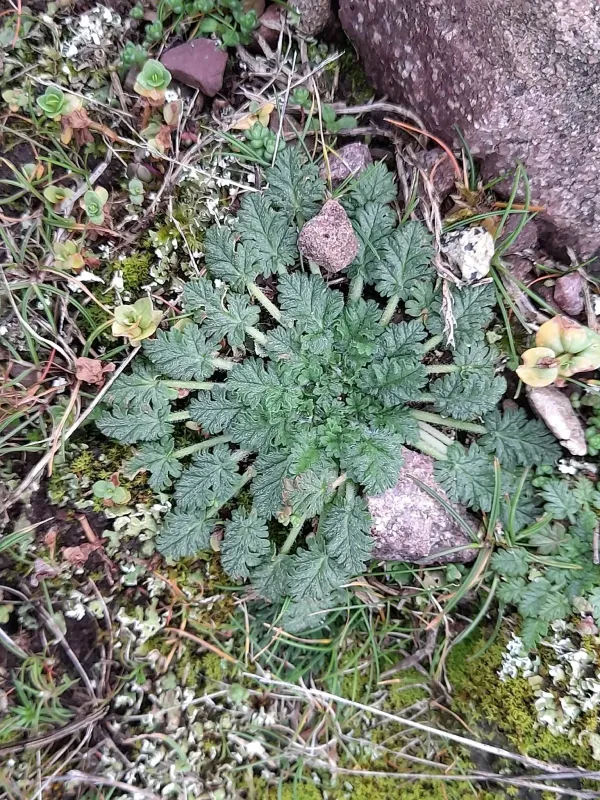
Description
Sowing dates
Sea stork's-bill (Erodium maritimum) is a distinctive member of the Geraniaceae family, typically found in coastal habitats. It is a low-growing, rosette-forming herb that demonstrates remarkable resilience in challenging environmental conditions.
Botanically, the plant is known for its pinnately lobed leaves and delicate small flowers. It is well-adapted to maritime conditions, often serving as a pioneer species in sand dune stabilization efforts due to its specialized root system.
When cultivating this species, direct seeding is typically performed in the spring once the frost risk has passed. The soil surface should be finely textured to ensure optimal contact between the soil particles and the small seeds.
Sowing depth is critical for this species; seeds should be covered with only a very thin layer of soil, no more than a few millimeters, as they require light and consistent moisture to break dormancy effectively.
Spacing should be managed to allow for adequate air circulation, which is vital for maintaining the health of the rosettes throughout the growing season.
Growing requirements
As a sun-loving plant, Erodium maritimum requires full exposure to solar radiation. It performs poorly in shaded areas, where it loses its compact growth habit and becomes susceptible to various pathogens.
The ideal growing medium is a well-draining, sandy, or gritty soil profile. This plant is highly intolerant of waterlogged conditions, which can lead to rapid root degradation and plant failure.
It is classified as a drought-tolerant species, capable of thriving in environments with low rainfall and high evaporation rates. Supplemental irrigation is only necessary during extreme periods of drought in the early development stages.
The plant prefers a neutral to slightly alkaline soil pH. Its ability to tolerate salt spray and salinity in the substrate is an evolutionary adaptation that distinguishes it from many other herbaceous crops.
Fertilization should be kept to a minimum. High nutrient levels often lead to excessive leaf production, which can make the plant more vulnerable to mechanical damage and disease pressure.
Main diseases and pests
The primary threats to this culture are fungal diseases, particularly those that thrive in stagnant, humid environments. Root rots and mildew are the most common issues observed in poorly managed plots.
Cultural practices should focus on preventive measures, such as providing adequate plant spacing to facilitate airflow and avoiding overhead irrigation that leaves foliage wet for extended periods.
Pest pressures primarily include aphids and mites, which can infest the tender leaves. These pests are often attracted to stressed or over-fertilized plants, highlighting the importance of balanced plant care.
Integrated pest management (IPM) strategies, including the use of neem oil or insecticidal soaps, are generally effective in controlling minor infestations without harming beneficial insects in the ecosystem.
Finally, weed control is essential for the healthy establishment of the crop. Manual weeding is often preferred to prevent root damage, which can occur with mechanical cultivation tools in sandy soils.