
Musk stork's-bill
Erodium moschatum
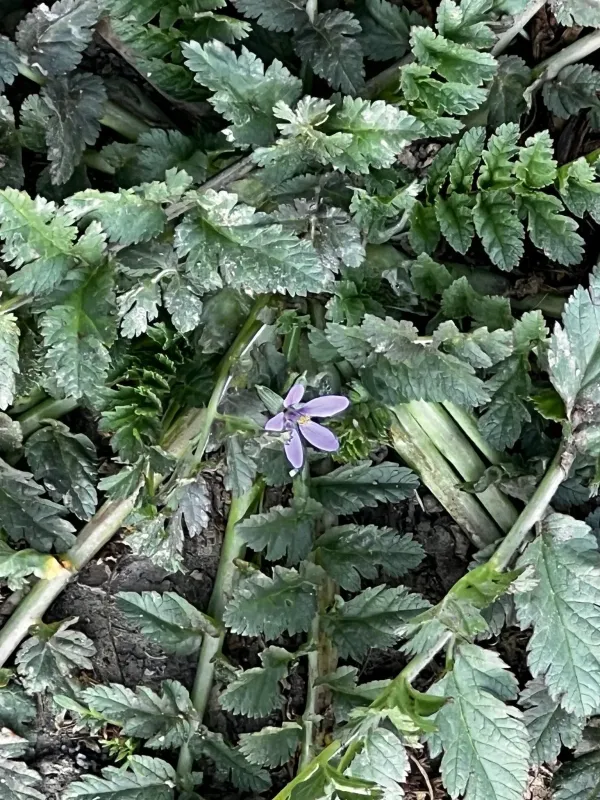
Description
Sowing dates
Musk stork's-bill (Erodium moschatum) belongs to the Geraniaceae family. It is recognized as a hardy, herbaceous plant that thrives in temperate climates and serves as a valuable component of grassland ecosystems.
Sowing is typically performed in the autumn to take advantage of cooler, moist weather conditions which facilitate germination. Seeds should be sown shallowly, ideally at a depth of 5 to 10 millimeters.
The plant demonstrates high vigor during establishment, provided the soil is loose and free of competitive weeds. Seedbed preparation should focus on achieving a fine, crumbly tilth to ensure uniform emergence.
In managed pastures, Musk stork's-bill is often interseeded with grasses. Its unique seed structure, which features a spirally coiled awn, allows the seed to naturally drill itself into the soil as humidity levels fluctuate.
Optimal plant density varies depending on the intended use; however, providing adequate spacing allows individual plants to develop robust basal rosettes, which are crucial for subsequent regrowth after grazing.
Growing requirements
Musk stork's-bill prefers well-drained, fertile soils ranging from sandy loams to loams. It does not tolerate prolonged waterlogging, which often leads to root health decline and reduced biomass production.
Light availability is a primary driver of productivity. While the plant can tolerate partial shade, its optimal growth is observed in open areas with full sun exposure throughout the day.
Regarding climate, the plant prefers regions with mild winters and cool, wet springs. It is moderately drought-tolerant once established due to its deep taproot, which accesses subsoil moisture.
Nutrient management should be balanced; excessive nitrogen can lead to succulent growth that is less hardy, while moderate phosphorus levels are beneficial for root architecture and overall plant resilience.
Regular monitoring of soil pH is recommended; the plant performs best in neutral to slightly alkaline soils. Acidic soils may require liming to achieve optimal growth rates and nutrient uptake.
Yield
As a forage crop, Musk stork's-bill provides high-quality grazing material for sheep and cattle during early spring when other forage may be scarce. Its nutritional value is highest before flowering.
Productivity is largely dependent on the frequency of grazing or cutting. With appropriate management, the plant can regenerate quickly, provided the growing points remain intact during harvesting operations.
The biomass quality decreases significantly as the plant transitions to the reproductive stage and begins seed formation. Early harvesting is essential to maintain high protein levels and palatability.
Yields are maximized in rotational grazing systems where the vegetation is allowed to recover between grazing events. Overgrazing can deplete plant energy reserves and reduce long-term sustainability.
Data suggests that integrating this species into perennial pasture systems enhances the overall botanical diversity and improves the seasonal spread of available livestock fodder.
Main diseases and pests
Erodium moschatum is generally resistant to major agricultural pests. However, in humid environments with poor air circulation, powdery mildew can emerge, affecting the foliage quality.
Occasional infestations of generalist insects, such as aphids or lepidopteran larvae, may occur, but they rarely reach economic injury levels that would require intensive chemical control.
The greatest threat to a healthy stand is competition from aggressive grasses or broadleaf weeds. Weed management during the initial growth stages is critical for successful crop establishment.
Root rots associated with Phytophthora or Pythium species can become an issue if soil drainage is compromised. Ensuring adequate site selection remains the best defense against these pathogens.
Viral diseases are uncommon but can be transmitted by insect vectors. Maintaining field hygiene and controlling weed reservoirs are effective strategies for mitigating these potential risks.
Harvesting
Forage harvesting should be scheduled during the late vegetative phase or early budding phase. This timing ensures the harvest is devoid of hardened seeds, which pose a mechanical injury risk to livestock.
When cutting for hay, ensure the material is spread thinly to allow for rapid moisture loss. The succulent nature of the stems requires careful turning to prevent molding during the curing process.
Harvester height should be set carefully, typically 5–8 centimeters above the ground, to avoid damaging the basal rosette and to encourage rapid recovery of the crop after the harvest event.
After mechanical harvesting, lightly harrowing the field can help remove debris and stimulate air exchange in the soil surface, promoting vigorous regrowth for the next cutting cycle.
The final harvest of the season should be planned to allow the plants to accumulate sufficient energy reserves in their roots before the onset of the cold season, ensuring winter survival.