
Erodium boissieri
Erodium boissieri
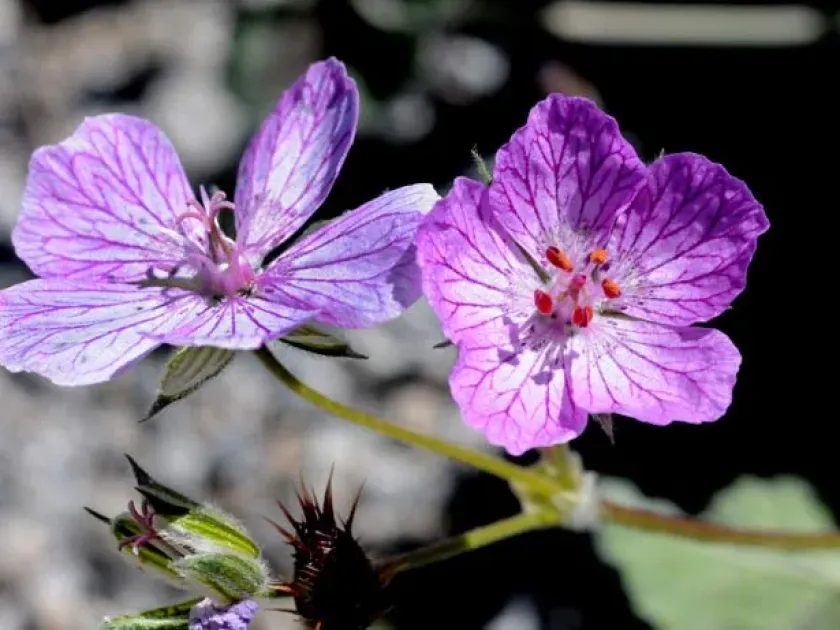
Description
Growing requirements
Erodium boissieri is a perennial herbaceous plant belonging to the Geraniaceae family. It is native to the mountainous regions of the Iberian Peninsula, where it thrives in rocky, calcareous environments under typical Mediterranean climate conditions.
The plant is highly adapted to arid conditions and acts as a specialized xerophyte. It requires well-drained, sandy or stony soils with a neutral to alkaline pH to prevent root rot and ensure proper gas exchange in the rhizosphere.
Optimal cultivation involves sites with full sun exposure, as the species is sensitive to shade and excess humidity. Its biological structure, featuring a deep taproot, allows it to access deeper soil moisture reservoirs during the hot and dry summer months.
Agrotechnical management requires minimal intervention in terms of fertilization, as the species is evolutionarily adapted to nutrient-poor soils. Excessive nitrogen can lead to succulent growth, making the plant more vulnerable to frost and pathogens.
The cultural use of this species is largely decorative in rock gardens and ecological restoration projects. Due to its limited natural range, conservation efforts are focused on maintaining the genetic purity of the species in its habitat.
Main diseases and pests
The most significant threat to Erodium boissieri in cultivation is the development of fungal infections such as Fusarium and Pythium, which occur primarily due to poor drainage and waterlogging.
Pests such as spider mites and aphids can infest the plants during prolonged dry spells, leading to stunted growth and damage to the flowering stems.
Weed competition is a critical factor during the initial establishment phase; young plants cannot compete with vigorous grass species for light and soil nutrients.
Physical damage to the crown or root system during weeding or transplanting serves as an entry point for various secondary pathogens, which can be fatal to the specimen.
Inappropriate soil moisture management is the primary cause of plant failure, particularly in regions where winter precipitation levels are consistently high without adequate soil permeability.