
Erodium oxyrhinchum
Erodium oxyrhinchum
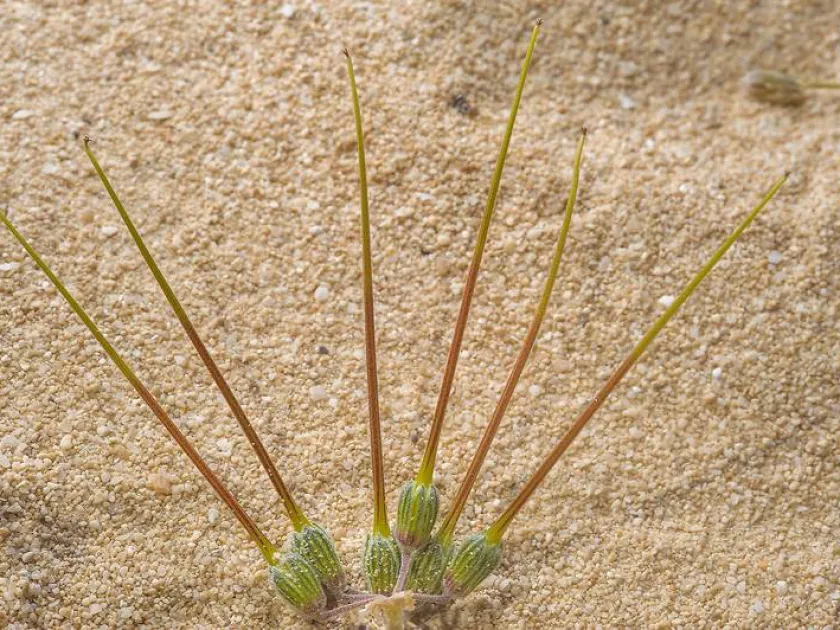
Description
Sowing dates
Erodium oxyrhinchum is an ephemeral plant, meaning its sowing schedule is strictly dictated by seasonal rainfall patterns. In its natural habitat, seeds germinate during the cool, moist months to establish a strong root system before the dry season begins.
For agricultural cultivation, seeds should be sown in late autumn or early spring, as soon as soil temperatures reach 5–8°C. Ensuring good soil-to-seed contact is essential for rapid and uniform emergence in arid environments.
The optimal sowing depth is 1 to 2 centimeters. Planting deeper than this can significantly reduce germination rates, as the seeds have limited energy reserves to penetrate through a thick layer of soil.
Row cropping with a spacing of 15–20 centimeters is recommended. This setup reduces intra-species competition during the early growth phase and allows for easier mechanical or manual weeding in the inter-row spaces.
Given the species' high potential for self-seeding, farmers must carefully manage the harvest window. Failure to harvest on time often results in significant seed shattering, making the plant behave more like an invasive weed in subsequent cycles.
Growing requirements
As a member of the Geraniaceae family, Erodium oxyrhinchum shows remarkable adaptation to xerophytic conditions. It thrives in well-drained sandy or loamy soils and cannot tolerate waterlogged areas, which lead to root rot.
The plant is highly heliophilic and requires full exposure to sunlight. Shading from other crops or dense weeds will immediately stunt its growth and reduce the final accumulation of biomass, affecting its yield potential.
While the plant tolerates extreme heat, its active metabolic phase occurs during cooler temperatures. During the peak of summer, it typically enters a dormant state, completing its biological cycle by the time heat becomes excessive.
Soil pH should ideally be neutral or slightly alkaline. Acidic soils inhibit root development and limit the bioavailability of essential nutrients, which is detrimental to the plant’s ability to thrive in challenging environments.
Fertilization should focus on phosphorus and potassium to strengthen the plant's structure and improve its resilience against drought. Excessive nitrogen should be avoided, as it may lead to weak, succulent stems prone to fungal infection.
Yield
The biomass yield of Erodium oxyrhinchum is heavily dependent on the water availability during the early spring growth phase. In favorable seasons, it forms a dense forage layer suitable for livestock grazing.
Because of its ability to regenerate after grazing, this species is considered a valuable component of pasture management in arid and semi-arid regions, providing early green feed when other grasses are still dormant.
Seed yields can reach up to 2–3 centners per hectare under optimal agronomic conditions. Synchronized fruit maturity is a critical factor for successful mechanical harvesting in larger production fields.
Beyond its feed value, the crop acts as a soil builder. Its roots improve the structure of loose, sandy soils, and as the plant dies back, it returns valuable organic matter to the upper soil horizon.
To maximize yields, inter-row cultivation during the rosette phase is highly recommended. This practice retains soil moisture by disrupting capillaries and provides the plants with more room to expand their leaf area.
Main diseases and pests
The primary fungal threats to this crop include powdery mildew and various leaf spot diseases. These are most common during periods of high humidity and poor air circulation within the field.
Insect pests, particularly aphids and various weevil species, often target the tender foliage and developing seeds. Regular monitoring from the seedling stage is essential to intervene before populations become uncontrollable.
Weed competition is the most significant threat during the early life stages. Since the plant starts as a small rosette, it is easily outcompeted by aggressive weeds, necessitating early mechanical weeding or mulching.
Integrated Pest Management (IPM) using biological controls is preferred to maintain the quality of the forage. Chemical pesticides should be treated as a last resort to minimize residues on the plant material.
Proactive prevention of root rot is achieved by ensuring proper field drainage. Farmers should avoid over-irrigating and ensure that the root collar remains dry, especially in soils that tend to compact easily.
Harvesting
Harvesting for seeds must occur at the stage of full physiological maturity, indicated by the dark brown color of the fruit. Harvesting too late will lead to severe losses due to the plant's natural seed dispersal mechanism.
Mechanical harvesting is best performed using combine harvesters with precise drum settings. Low rotation speeds are necessary to prevent mechanical damage to the seeds, which could lower germination viability.
When harvesting for green forage, the crop should be cut before the onset of massive flowering. This ensures the highest concentration of proteins and minerals in the leaves and prevents the stems from becoming too fibrous.
Once harvested, seed material must be cleaned and dried at temperatures not exceeding 35°C. Proper drying is the most effective way to prevent post-harvest mold and ensure longevity during storage.
Stored seeds should be kept in cool, dry, and well-ventilated containers. Under these conditions, the seed stock can maintain high viability for up to three years, providing a reliable source for subsequent planting seasons.