
Erodium brachycarpum
Erodium brachycarpum
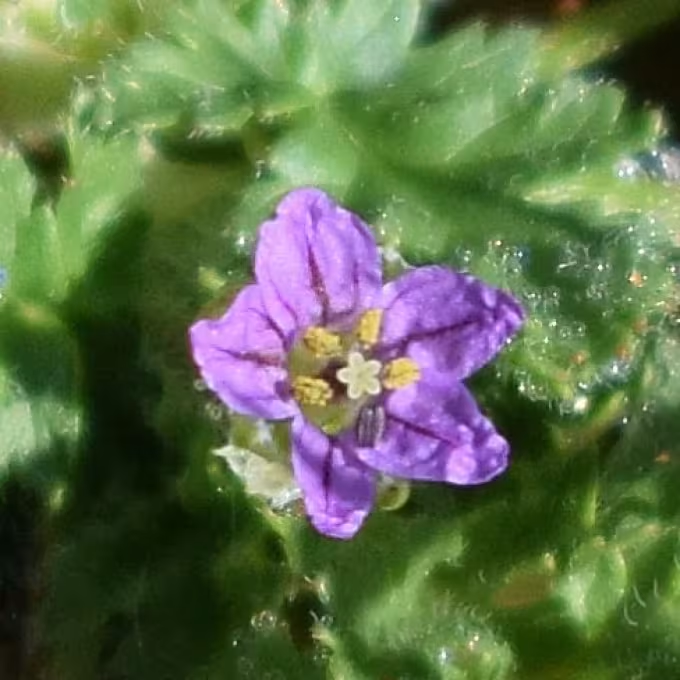
Description
Sowing dates
Erodium brachycarpum belongs to the Geraniaceae family. Although it is often categorized as a wild species, it has gained attention as a valuable forage component in specific agricultural regions due to its rapid growth.
The optimal sowing time is early spring when soil temperatures stabilize at around 8–10 degrees Celsius. Planting seeds at a depth of 1–2 centimeters is recommended for achieving uniform seedling emergence.
Proper spacing between rows is essential for this crop to prevent overcrowding, which can reduce air circulation and promote fungal issues. Moderate seed density leads to better plant architecture.
The crop is known for its high germination energy, allowing it to quickly establish itself even in fields where competition from other weeds might be present during the early stages.
Care must be taken to ensure the seeds are planted in prepared soil beds to maximize contact and ensure steady moisture absorption during the initial development phase.
Growing requirements
This plant thrives in full sun exposure. While it can tolerate partial shade, productivity significantly drops, and stems tend to become weak, making them difficult for harvesting.
Soil requirements focus on good drainage. Sandy or sandy-loam soils are ideal, as they prevent waterlogging, which is a major limiting factor for healthy root development in this species.
The plant prefers neutral to slightly alkaline soil pH levels. Highly acidic soils should be amended with lime before sowing to ensure optimal nutrient uptake by the plants.
Its drought tolerance makes it a suitable candidate for regions with unpredictable rainfall patterns. The root system effectively utilizes soil moisture from deeper layers during dry spells.
Balanced fertilization, particularly the inclusion of phosphorus, contributes to better root structure and stronger flowering, which is essential for both biomass production and seed set.
Main diseases and pests
Powdery mildew is the most common fungal disease affecting this crop, particularly when humidity levels remain high for extended periods, reducing the photosynthetic capacity of the leaves.
Root rot occurs if soil drainage is inadequate. This condition is often fatal to young seedlings and can spread rapidly across a field if water management practices are not strictly followed.
Pests such as aphids and spider mites frequently target the succulent parts of the plant. These pests suck essential nutrients and can transmit secondary viral infections to the host.
Weevils may also pose a threat during the flowering stage, as they feed on reproductive structures, leading to a significant reduction in the total seed harvest potential.
- Regular monitoring of foliage for signs of pest infestations.
- Application of systemic pesticides when pest thresholds are exceeded.
- Crop rotation to break the life cycles of soil-borne pathogens.
Harvesting
The harvest for forage purposes is best timed at the onset of mass flowering, which ensures the highest concentration of digestible protein and trace minerals in the green mass.
For seed production, harvesting must be precise, as the pods are prone to splitting once fully mature. Harvesting when pods just start to turn brown is critical to avoid total loss.
Immediate drying of the harvested material is necessary to maintain quality. Proper ventilation prevents mold formation and preserves the nutrient content for long-term storage.
When using mechanical harvesters, machine settings such as cylinder speed must be carefully calibrated to avoid crushing the seeds, which are relatively delicate at the stage of harvest.
Storage should be conducted in climate-controlled environments where low humidity and cool temperatures are maintained to ensure the seed remains viable for future planting seasons.