
Erodium malacoides
Erodium malacoides
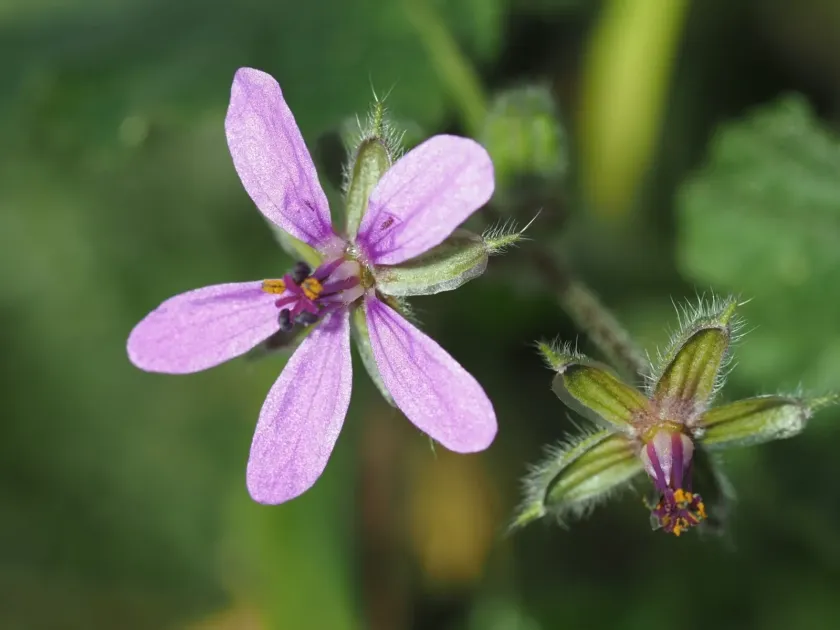
Description
Sowing dates
Erodium malacoides is typically grown as an annual forage crop. The sowing process begins in early spring when soil temperatures consistently reach 10-12 degrees Celsius to ensure rapid germination.
For high-quality forage production, seeds should be sown at a depth of 1-2 cm using a standard grain drill. The spacing between rows should be kept at 15 to 20 cm to allow for sufficient plant development.
Seedbed preparation is crucial; the soil must be fine-tilled and firm to ensure uniform moisture contact. Rolling the field after sowing helps improve seed-to-soil contact and boosts emergence rates.
In Mediterranean climates, autumn sowing is also a viable practice. This allows the plants to establish a robust root system during the cool, wet months and provides an early biomass yield in spring.
Planting density is typically maintained at around 400 plants per square meter. This density is sufficient to provide a dense canopy that helps suppress weed competition during the early growth stages.
Growing requirements
As a member of the Geraniaceae family, this species is highly adaptable to a variety of environmental conditions. It thrives best in well-drained, slightly alkaline soils that provide good aeration for the roots.
The plant is heliophilic, meaning it requires full sun exposure to reach its maximum productivity. Shady conditions will result in elongated stems and significantly reduced biomass yield.
Regarding moisture, Erodium malacoides is remarkably drought-tolerant once established due to its deep taproot. However, consistent moisture during the early vegetative stage is essential for a high-quality forage harvest.
Fertilizer application should be balanced, with a focus on phosphorus to support root health and potassium to increase the overall resilience of the plants against environmental stress.
Proper soil pH is vital for nutrient uptake. If the soil is too acidic, it is recommended to apply agricultural lime before planting to bring the pH level to a range of 6.5–7.5.
Main diseases and pests
The primary threats to this crop include fungal infections that thrive in high humidity conditions. Leaf spot and powdery mildew are the most common diseases encountered in dense stands.
Insect pests, such as aphids and specialized weevils, can cause significant damage to the foliage. Monitoring programs should be implemented to detect infestations before they reach economic damage thresholds.
Root rot caused by stagnant water or pathogens in the soil is a major risk factor. This is often linked to poor drainage management or overly dense planting patterns that prevent soil drying.
Effective weed management is essential during the first 30 days after germination. Mechanical cultivation between rows is often preferred over chemical herbicides to maintain forage purity.
Integrated Pest Management (IPM) practices, including the use of resistant varieties and crop rotation, are strongly encouraged to keep disease and pest populations under control naturally.
Harvesting
Harvesting is typically performed when the plants reach the peak of vegetative growth, just before the seed pods begin to mature and release seeds. This ensures maximum protein content in the forage.
Cutting the crop for hay or silage should be timed with dry weather to prevent degradation of the plant material. The use of modern mowing equipment helps maintain a consistent cutting height.
After cutting, the biomass should be dried until the moisture content drops to approximately 15-18% if it is intended for long-term hay storage to prevent mold growth.
In cases where the crop is used as pasture, controlled grazing intervals are necessary to allow for potential regrowth if the plant is harvested before reaching the reproductive stage.
Timely harvest also aids in preventing the plant from becoming woody, which significantly reduces the palatability and nutritional value of the biomass for livestock.