
Glaucous-leaved stork's-bill
Erodium glaucophyllum
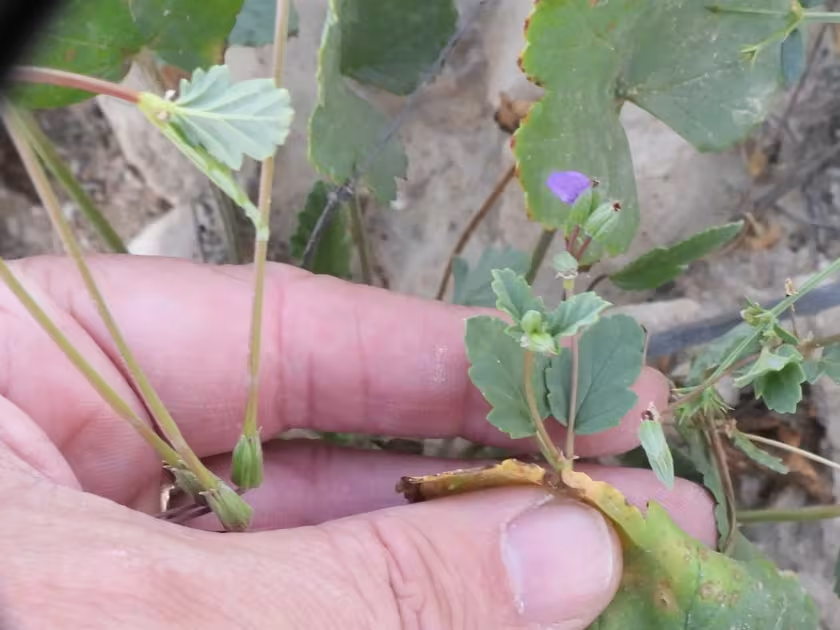
Description
Growing requirements
The glaucous-leaved stork's-bill (Erodium glaucophyllum) belongs to the Geraniaceae family. This species is highly specialized for life in arid and semi-arid desert environments.
Its botanical structure includes a deep taproot system that ensures water uptake from deep soil profiles, and leaves covered with fine hairs, which give it a characteristic glaucous (bluish-grey) color.
This crop prefers sandy or loamy soils with high drainage capabilities. It is noted for its high salinity tolerance, making it an excellent candidate for rehabilitating degraded desert rangelands.
The plant thrives under intense sunlight and high-temperature conditions. It has evolved to enter a dormant state during periods of extreme moisture stress to survive until the next rainy cycle.
Proper establishment requires minimal soil disturbance and careful seed management, as natural recruitment depends heavily on consistent moisture pulses in the seedbed.
Yield
The primary agricultural use of Erodium glaucophyllum is as a reliable forage source for livestock, including camels, sheep, and goats in harsh desert regions.
The green foliage provides a balanced profile of minerals and proteins that are often scarce in dryland rangelands during the summer season.
Biomass production fluctuates significantly based on precipitation patterns. However, in managed rangelands, it acts as a key component of sustainable desert grazing systems.
Beyond forage, the plant is valued for its role in soil stabilization, as its root structure binds sandy particles and prevents soil erosion in arid landscapes.
Recent studies are exploring the bioactive compounds in the plant for medicinal use, potentially adding value to the crop beyond its role as animal feed.
Main diseases and pests
The plant faces pressure from desert-adapted insects, primarily locusts and other Orthoptera species that can cause significant damage to the photosynthetic foliage during outbreaks.
Root pathogens are rare but can occur under conditions of excessive moisture or improper drainage in experimental agricultural plots.
Overgrazing remains the greatest threat to the survival of this species. Uncontrolled livestock pressure prevents the plants from reaching reproductive maturity and replenishing the soil seed bank.
Invasive weed encroachment can hinder the establishment of Erodium glaucophyllum by outcompeting it for limited soil nutrients during the early stages of growth.
Effective management requires rotational grazing strategies to allow the plants to regenerate and seed, ensuring the long-term viability of the crop in arid farming systems.