
Common stork's-bill
Erodium ciconium
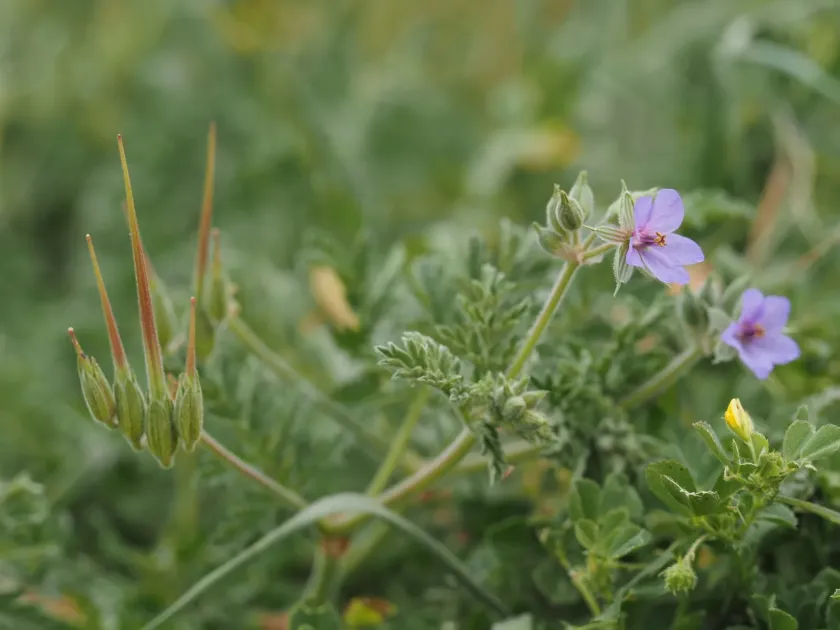
Description
Sowing dates
The planting of Erodium ciconium, a member of the Geraniaceae family, is typically scheduled for early autumn or spring, depending on the regional climate. The seeds require a soil temperature of at least 8 to 10 degrees Celsius for optimal germination.
Seeds should be sown at a shallow depth of 1 to 2 centimeters. Because the seeds are relatively small, precise depth control is essential to ensure uniform emergence and to prevent the seedlings from exhausting their energy reserves.
Seeding rates range from 10 to 12 kilograms per hectare for forage production. The crop establishes quickly, providing good ground cover that competes effectively with weeds during the early vegetative phase.
Row planting is recommended for seed production plots to improve aeration and facilitate easier monitoring for potential pests during the growing season.
Integrating Erodium ciconium into mixed pastures with other forage legumes can significantly enhance the overall nutritional value of the livestock diet while maintaining soil integrity.
Growing requirements
This species is highly regarded as a xerophyte, demonstrating remarkable tolerance to severe drought and prolonged exposure to high temperatures that would be fatal to less resilient crops.
It performs exceptionally well on sandy or light loam soils and is well-adapted to degraded or eroded landscapes, where it helps in soil stabilization through its strong taproot system.
Maximum solar exposure is critical for this plant; it thrives in open areas and is not suitable for cultivation in shaded environments or underneath forest canopies where growth would be stunted.
The plant prefers soils with a neutral pH level but is tolerant to various conditions, including alkaline soils, provided there is no long-term waterlogging or poor drainage.
Minimal fertilization is required due to the plant's efficient nutrient uptake, making it a low-input crop suitable for sustainable agricultural systems in arid regions.
Main diseases and pests
Fungal diseases, specifically powdery mildew, can pose a risk during periods of high humidity or excessive rainfall, which can impede the plant's overall health and vitality.
Insect pests, such as weevils and aphids, may occasionally affect the crop by damaging the stems, leaves, or reproductive structures during particularly dry and warm spring seasons.
Integrated pest management strategies are recommended, focusing on crop rotation and weed control rather than immediate chemical intervention to maintain ecological balance.
Proper field management, including the removal of debris and the prevention of overly dense canopy formation, is the most effective way to limit the spread of pathogens.
Regular monitoring during the peak flowering stage is crucial to detect early signs of infestation and to apply corrective measures before the damage becomes widespread.
Harvesting
For high-quality forage, the harvest should take place during the peak flowering stage, which ensures the highest concentration of proteins and minerals before the plant turns lignified.
Harvesting for seed production requires careful timing; since the fruits tend to dehisce upon maturation, cutting must be done when the majority of pods are mature but not yet shattered.
Using a mower-conditioner set to a height of 5 to 7 centimeters is ideal to preserve the crown of the plant, which promotes quick regrowth and ensures the longevity of the stand.
After cutting, the biomass should be dried quickly under favorable weather conditions to preserve its nutritional value and prevent the formation of mold during storage.
Proper cleaning and moisture control of the harvested seeds are necessary to ensure high viability for subsequent planting seasons and to prevent spoilage during storage.