
Erodium carvifolium
Erodium carvifolium
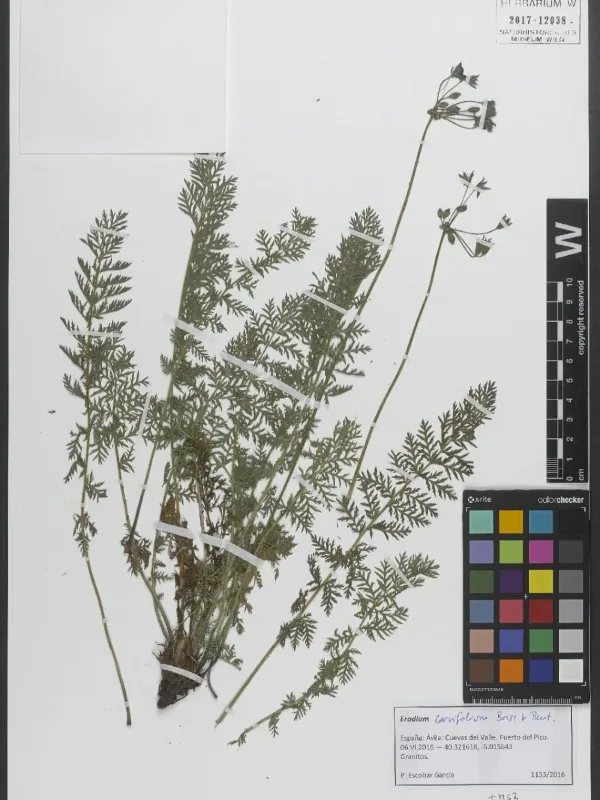
Description
Sowing dates
Erodium carvifolium, a species belonging to the Geraniaceae family, requires careful site preparation to ensure successful establishment. The optimal sowing time is typically in early spring when soil temperatures stabilize above 10 degrees Celsius.
Seeds should be planted at a shallow depth of approximately 1 to 2 centimeters to provide sufficient protection while ensuring light can reach the germinating seeds. Proper seedbed preparation, involving fine soil particles, is essential for consistent emergence.
Row planting is the recommended method, with spacing between rows maintained at 30 to 45 centimeters to allow for mechanical weeding and air circulation. Excessively dense seeding should be avoided to prevent competition for essential nutrients and moisture.
In arid climates, light irrigation immediately after sowing can significantly improve germination rates. The use of a light roller post-sowing helps to improve soil-to-seed contact, facilitating faster root penetration into the soil profile.
Fall planting is generally not recommended unless in regions with extremely mild winters, as young plants may be damaged by frost before they establish a deep and resilient root system.
Growing requirements
This crop thrives in well-drained, sandy or light loamy soils. It is particularly sensitive to waterlogging, which can lead to root rot and significant yield losses, so selecting an site with good slope or natural drainage is vital.
Erodium carvifolium is a sun-loving plant that requires full exposure to sunlight throughout the growing season. Shaded areas often result in etiolated plants with reduced vegetative biomass and poor development of reproductive organs.
The plant prefers a neutral to slightly alkaline soil pH. Acidic soils should be amended with lime well in advance of planting to create an optimal environment for growth and nutrient uptake.
While the species exhibits moderate drought tolerance, adequate moisture during the vegetative stage is necessary to maximize productivity. Controlled irrigation during dry spells can drastically improve biomass yields in commercial farming.
Fertilization should focus on phosphorus and potassium to encourage robust root growth and flowering. Excessive nitrogen applications should be avoided as they often promote weak vegetative stems at the expense of seed quality.
Main diseases and pests
The crop may be susceptible to fungal infections such as powdery mildew, especially if air circulation is poor or humidity levels remain high for extended periods. Preventive measures include ensuring optimal plant spacing.
Root-knot nematodes can occasionally pose a threat in sandy soils, which calls for crop rotation practices. Avoiding the cultivation of Erodium species in the same plot for consecutive years helps to break the pest life cycle.
Aphids can infest the tender shoots during the early growth stages, leading to stunted development. Regular scouting and the application of biological controls are recommended if pest populations exceed economic thresholds.
Weed competition is a significant concern during the first weeks after germination. Keeping the field free from weeds through manual or mechanical weeding is crucial to ensure the crop has space to develop its canopy.
Occasionally, moisture-related physiological disorders may occur, such as leaf yellowing or necrosis. These are usually symptoms of improper irrigation management or poor drainage rather than direct pest attacks.
Harvesting
Harvesting for green biomass is best performed when the plants enter the full flowering stage. This is when the concentration of desirable biochemical compounds is at its highest, ensuring a high-quality final product.
Seed harvest requires careful timing; the characteristic stork-bill-shaped fruits can dehisce and release seeds upon drying. It is recommended to harvest just as the fruits turn brown but before they completely break open.
After mechanical cutting, the biomass must be dried in a ventilated area, away from direct sunlight, to prevent the breakdown of essential oils or volatile organic components. Proper drying preserves the plant's structure and quality.
Seed cleaning should involve high-precision mechanical separators to remove chaff and debris. Once processed, seeds must be stored in cool, low-humidity environments to maintain high viability over the storage period.
For operations aiming for multiple cuttings per season, maintaining a stubble height of 5 to 7 centimeters is essential. This protects the crown of the plant and stimulates rapid regrowth of new shoots for subsequent harvests.