
Tree storksbill
Erodium arborescens
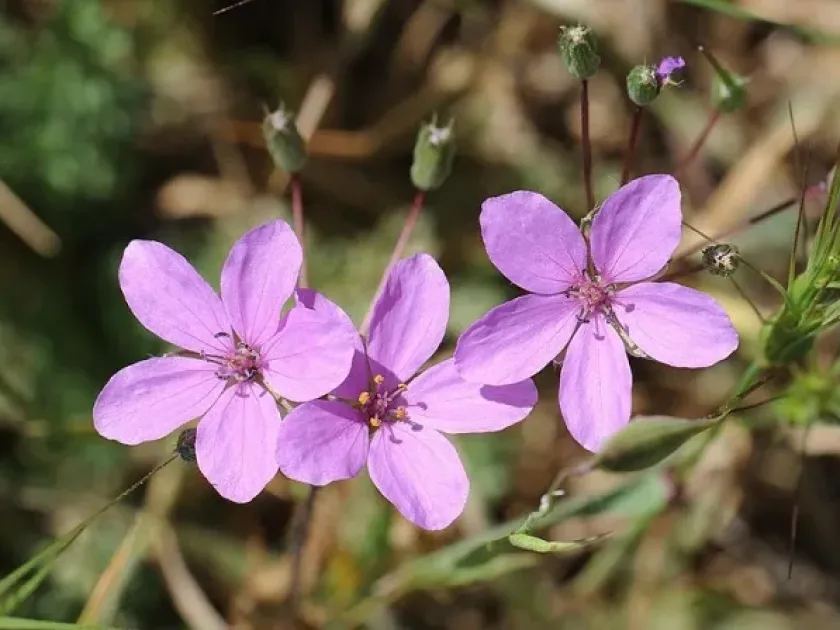
Description
Sowing dates
Sowing of Erodium arborescens should be performed in early spring once the soil temperature consistently reaches 12 degrees Celsius. For propagation, seeds are ideally sown in trays indoors in late winter to ensure optimal germination rates.
The seeds require light to germinate, so they should be sown on the surface and only lightly pressed into the soil. Maintaining high humidity is crucial during the first two weeks until the seedlings emerge uniformly across the tray.
Once the risk of frost has completely passed, the young plants can be transplanted into the open field. Proper spacing of 40 centimeters apart is essential to promote healthy air circulation and prevent the development of fungal diseases.
For direct sowing in southern climates, it is recommended to prepare the soil by removing weeds and ensuring it is fine-textured. This allows the roots to penetrate the soil quickly, establishing a robust foundation for the plant's growth.
Early season sowing can be facilitated by the use of plastic covers, which maintain warmth and protect seedlings from cold spring winds. Once established, the plants demonstrate significant vigour in their subsequent development.
Growing requirements
Belonging to the Geraniaceae family, the Tree storksbill is a drought-tolerant species that flourishes in warm, sun-drenched environments. It is well-adapted to Mediterranean-type climates where drainage is naturally provided by sandy or rocky substrates.
The soil should have a neutral to slightly alkaline pH, which mimics the natural conditions of its native habitat. Poor drainage is the most significant limiting factor, as the species is highly susceptible to root rot in saturated conditions.
The plant thrives under full sun, requiring at least six to eight hours of direct light daily. Sufficient solar exposure is necessary for the development of its characteristic woody stem and subsequent flowering intensity throughout the season.
Nutrient requirements are modest; excessive fertilization should be avoided as it leads to weak, spindly growth. A balanced, slow-release fertilizer applied once in early spring is usually sufficient to support the entire growth cycle.
Regular weeding is necessary during the establishment phase, as the young plants are poor competitors against invasive weeds. Once fully grown, the plants create a dense canopy that naturally suppresses weed growth beneath them.
Main diseases and pests
Root rot caused by Phytophthora species represents the primary threat to this plant, especially in regions with heavy, clay-rich soils. Managing water input through smart irrigation systems is the best way to prevent this issue.
Powdery mildew may occur if air circulation is restricted around the foliage, especially during humid spells. To mitigate this risk, thinning out branches or ensuring appropriate distance between plants is highly recommended.
Sap-sucking insects like aphids are the most common pests, often clustering on the tender tips of the branches. Integrated pest management, including the use of neem oil or natural predators, provides effective control without chemicals.
In some regions, soil-borne nematodes can pose a danger by attacking the roots, leading to plant decline. Maintaining healthy soil biodiversity and avoiding mono-cropping helps to naturally keep nematode populations at low levels.
Finally, keeping the area around the base of the plant free of debris and fallen leaves reduces the risk of fungal spores overwintering in the soil. Consistent monitoring ensures the long-term health of the plantation.