
Storksbill
Erodium triangulare
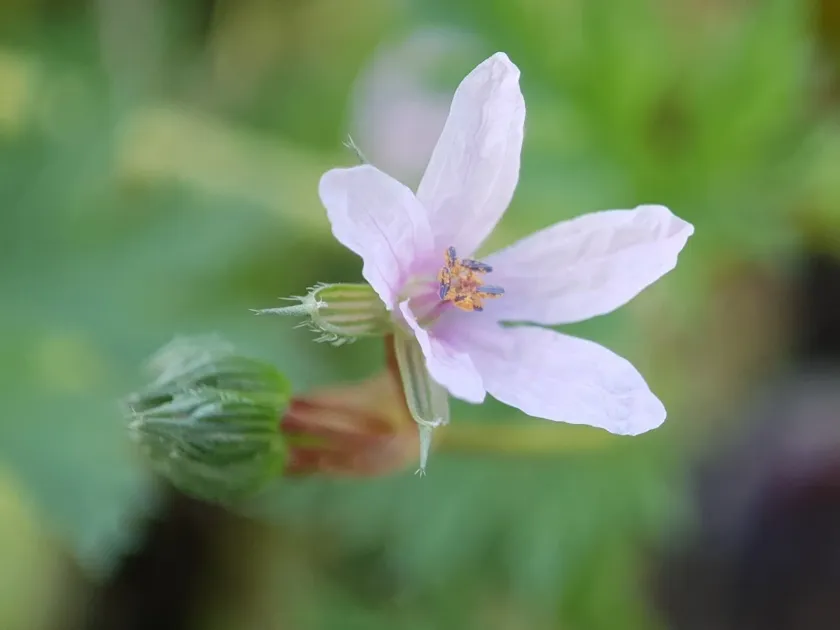
Description
Growing requirements
Erodium triangulare, commonly known as a type of storksbill, is an annual herbaceous plant belonging to the Geraniaceae family. It is recognized as a resilient species that plays a significant role in semi-arid pastoral ecosystems.
The plant thrives in well-drained, sandy, or loamy soils. It demonstrates remarkable adaptability to low-fertility sites, making it a pioneer species that can stabilize soil in degraded areas while providing ground cover.
Climate requirements for this culture include high levels of solar radiation and low to moderate rainfall. The plant is drought-tolerant, utilizing its deep taproot system to access subsoil moisture during peak summer temperatures.
Botanically, Erodium triangulare is distinguished by its basal rosettes and unique, spiral-shaped fruit structures. These structures are adapted to drill themselves into the soil, which is a specialized survival strategy for arid environments.
Economically, it is valued as a forage source for livestock. It provides early-season biomass, which is particularly beneficial for small ruminants such as sheep, providing essential nutrients during early growth stages.
Main diseases and pests
The most common diseases affecting this species are rusts and powdery mildew. These fungal infections are typically triggered by high humidity levels or poor air circulation within dense plant populations.
Pest pressures often come from sap-sucking insects like aphids, which can cause significant stunted growth if left unmanaged. Mining flies may also create tunnels within leaves, reducing the plant's overall photosynthetic capacity.
Integrated pest management (IPM) for this culture involves maintaining healthy soil structure and avoiding nitrogen over-fertilization, which can make the tissue more susceptible to herbivore attacks.
Weed management in areas where storksbill is present requires a careful approach, as it can be competitive in thin stands. Mowing or controlled grazing are the primary mechanical tools used to manage its distribution.
Future monitoring should focus on early detection of leaf spots during the spring vegetative phase to prevent significant reduction in biomass yield and nutritional quality of the forage.