
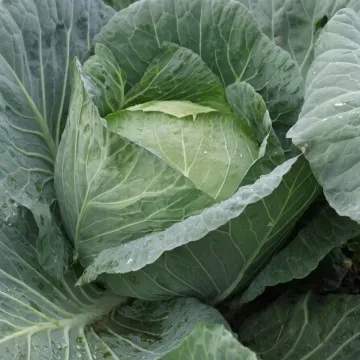
Disease · affects Indian mustard, Turnip, Winter rapeseed
Especially harmful
Black rot
Xanthomonas campestris
Description
Symptoms
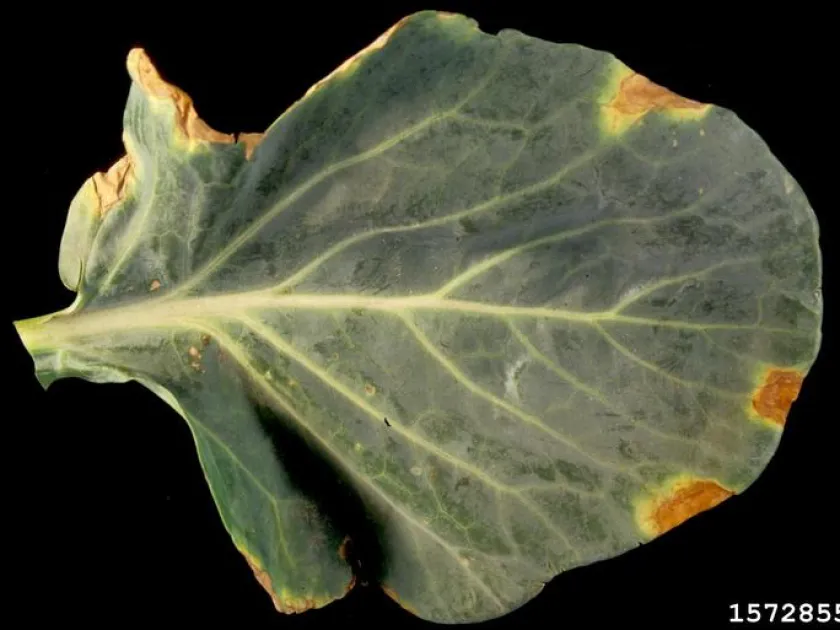
The most characteristic symptom of black rot is the appearance of chlorotic, V-shaped lesions starting from the leaf margins. As the disease progresses, these lesions turn yellow and then brown.
A distinctive sign is the darkening or blackening of the leaf veins within the chlorotic area, which provides a stark contrast to the surrounding tissue.
If you cut a petiole or a stem of an infected plant, you will observe a dark, discolored ring where the vascular bundles have been colonized and plugged by the bacterial biomass.
Under high humidity, infected tissues may become soft and mushy, though the primary characteristic remains the vascular discoloration rather than extensive rot.
In advanced stages of the disease, the entire plant may show signs of stunting, wilting of lower leaves, and eventually necrosis of the head or root system.
Pathogen
The causative agent of black rot is the bacterium Xanthomonas campestris pv. campestris. It is a highly specialized plant pathogen that primarily infects species within the Brassicaceae family, including rapeseed, mustard, and turnip.
The bacteria are systemic, meaning they move through the plant's vascular tissue (xylem). This movement prevents the upward transport of water and essential nutrients, ultimately causing the plant to wither and collapse.
The pathogen can persist in the soil on decaying plant debris for several seasons, making contaminated fields a long-term risk for subsequent cruciferous plantings.
Infection primarily occurs through hydathodes, which are specialized pores along the leaf margins, although entry via wounds caused by insects or machinery is also very common.
Once inside, the bacteria multiply rapidly. The genetic diversity of different strains of Xanthomonas campestris allows the pathogen to adapt to various environmental conditions, complicating control efforts.
Conditions for development
Black rot thrives in warm and humid climates. The optimal temperature range for the rapid multiplication of the bacteria is between +25 and +30 degrees Celsius.
Wet weather conditions, such as frequent rains or heavy dew, provide the necessary moisture for the bacteria to exit the plant and spread to healthy tissue via splashing droplets.
Overhead irrigation systems can inadvertently create the perfect environment for the pathogen to spread across a field, especially in closely spaced crops.
Plants under stress due to nutrient imbalances or poor soil aeration are generally more susceptible to successful colonization by Xanthomonas campestris.
The presence of wild cruciferous weeds like wild mustard or shepherd's purse serves as a reservoir for the bacteria, allowing it to survive and propagate throughout the growing season.
Why it matters
Black rot is a devastating disease for crops such as winter rapeseed, Indian mustard, and turnip, frequently causing severe economic losses in both yield and quality.
Infected crops exhibit significantly reduced vigor, leading to poor seed fill and reduced oil content in oilseed crops, which directly impacts the producer's profitability.
The disease weakens the overall physiological state of the plants, making them more vulnerable to winter kill and other secondary infections or environmental stressors.
Infection in seed-producing fields is particularly damaging, as the pathogen can be seed-borne, potentially leading to widespread outbreaks in new, previously healthy locations.
- Significant reductions in biomass and marketable yield.
- Decreased viability and quality of seeds.
- Increased susceptibility to post-harvest decay.
- Higher production costs due to mandatory sanitation measures.
Protection
The most effective strategy is the use of disease-free, certified seeds and the application of appropriate seed treatments to prevent early-season infections.
Implementing a strict crop rotation schedule is essential; planting non-cruciferous crops for at least three to four years allows for the natural decomposition of infected plant debris.
Integrated pest management (IPM) is crucial, as controlling insects that cause mechanical wounds on leaves effectively limits the entry points for the bacteria.
Sanitation practices, including the deep plowing of crop residues immediately after harvest, help reduce the amount of inoculum available to infect subsequent crops.
While chemical control options are limited, copper-based bactericides can be used under certain conditions to suppress the spread of the pathogen during the growing season if early symptoms are identified.
In brief
3
Affects crops
Biology
Pathogens and affected parts
Content graph
Affects crops · 3
Reference
Connections · Black rot
Most often together:
Marketplace
Products · 104













Community
Discussion
No discussions yet — be the first.