
Xanthomonas campestris
Xanthomonas campestris
Description
How to identify
Xanthomonas campestris is a Gram-negative, rod-shaped, motile bacterium that belongs to the family Xanthomonadaceae and is a significant plant pathogen.
It is classified based on its host range into various pathovars, with X. campestris pv. campestris being the most economically important one for cruciferous vegetables.
The bacterium is a vascular pathogen, meaning it primarily colonizes and multiplies within the xylem vessels of the host plant, obstructing nutrient and water transport.
In laboratory cultures, this species produces a yellow, water-insoluble pigment called xanthomonadin, which serves as a key identifying biochemical characteristic.
As an aerobe, it thrives in the internal environment of plant tissues, utilizing plant-derived sugars and nutrients to rapidly proliferate after initial entry through natural openings or wounds.
What it damages
The primary hosts of this pathogen include members of the Brassicaceae family, such as broccoli, cauliflower, cabbage, kale, radish, and oilseed rape.
Infection results in systemic vascular symptoms that stunt plant growth, cause wilting of leaves, and reduce the overall quality and marketability of the produce.
If the infection reaches the vascular system of the main stem, the entire plant may collapse, leading to significant yield losses in large-scale agricultural production.
The pathogen can also induce soft rot in harvested produce during transit and storage, especially under conditions of high temperature and relative humidity.
Seedlings infected at the early stage often die before transplanting, which causes gaps in the fields and necessitates costly replanting operations.
When it appears
The development of the disease is highly dependent on environmental conditions, with warm weather (25–30°C) and high humidity being the most conducive factors.
Infection is frequently disseminated by splashing water, rain, or overhead irrigation, which carries the bacteria from soil or infected debris onto healthy plants.
The bacteria enter the plant through hydathodes (natural pores at the leaf margin) or through insect-induced wounds, as well as damage caused by agricultural machinery.
Outbreaks are most severe during rainy seasons when water films on leaf surfaces provide the necessary medium for bacterial motility and entry.
The pathogen can survive in soil, crop residues, and perennial weeds, acting as a constant threat that bridges the gap between consecutive planting seasons.
Signs of infestation
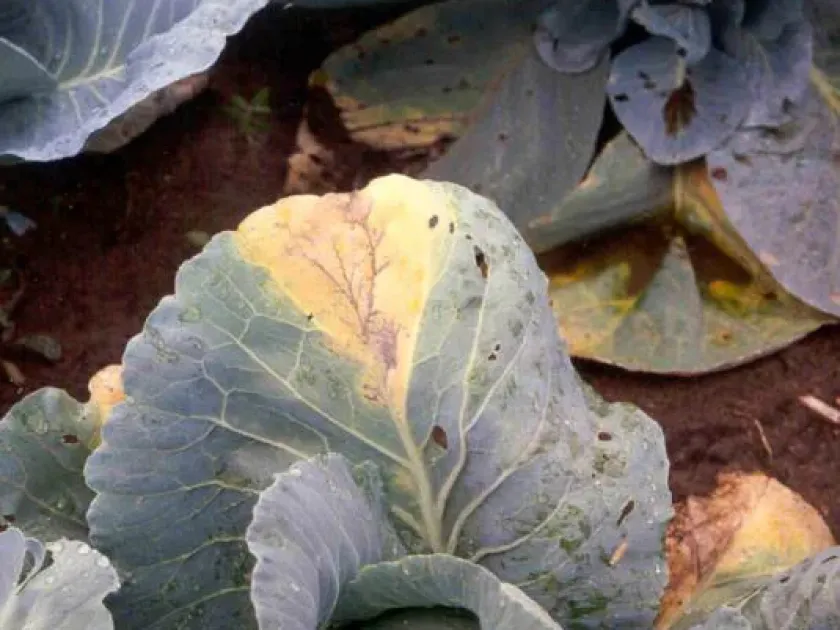
The most characteristic symptom is the development of V-shaped chlorotic lesions at the leaf margins, which gradually turn necrotic and dark brown.
A diagnostic sign of black rot is the distinct blackening of leaf veins within the yellowed areas, creating a clearly visible vein pattern.
As the infection progresses, the black necrosis moves inward towards the main veins and the midrib, eventually leading to systemic collapse of the plant foliage.
Upon cross-cutting the petiole or stem, one can observe dark, discolored vascular bundles, which is a definitive indicator of systemic vascular infection.
Under humid conditions, the damaged tissues may become soft and mushy due to the action of pectinolytic enzymes, often accompanied by a foul, rotting smell.
Control measures
Implementing a strict crop rotation of at least three years, avoiding Brassicaceae crops, is the most fundamental step in preventing disease outbreaks.
Using high-quality, certified, and pathogen-free seeds is critical, as the bacteria can be both surface-borne and internally transmitted via seeds.
Sanitation practices, including the removal and deep burial or destruction of all infected crop residues, are necessary to eliminate the pathogen's primary overwintering sources.
Copper-based bactericides can be applied as a preventive measure to protect plants during periods of high humidity and risk of pathogen spread.
- Effective weed control, particularly of wild mustard and other related crucifers.
- Managing insect pests to minimize physical wounds that allow bacterial entry.
- Selecting and planting resistant cabbage and broccoli varieties where available.
Causes diseases · 4
Discussion
No discussions yet — be the first.