
Description
Symptoms
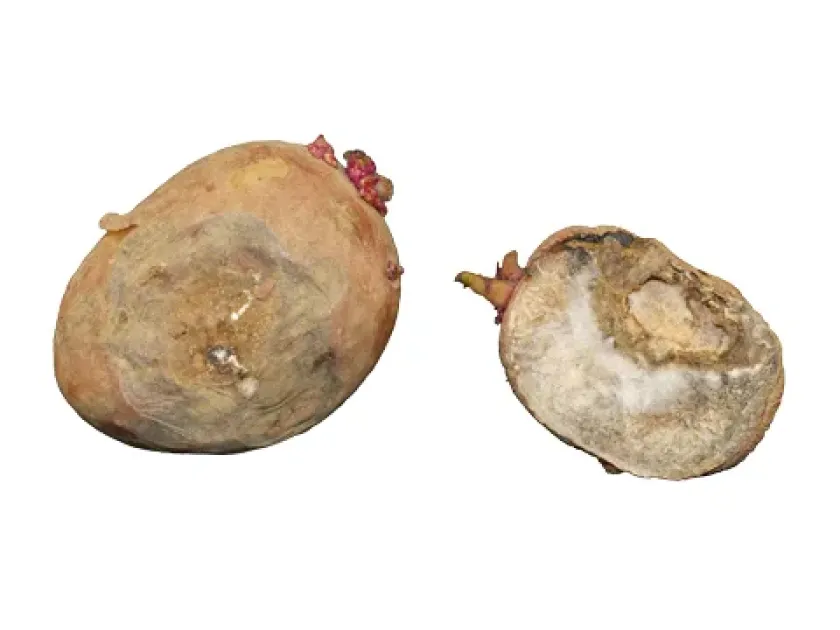
Dry rot caused by Fusarium is identified by sunken, brownish lesions on the tuber surface. As the disease progresses, the skin becomes shriveled and wrinkled, often cracking under pressure.
Inside the tuber, the affected tissue turns into a dry, friable rot, often containing cavities filled with white, pink, or yellow mycelial growth. The tuber eventually loses weight and becomes hollowed out.
Bacterial soft rot manifests as a wet, slimy decay of the tuber tissue, accompanied by a distinct, foul odor. The tuber structure breaks down into a soft, mushy consistency, often while the surface skin remains temporarily intact.
Late blight tuber rot shows firm, slightly sunken, leaden-grey or brown spots on the surface. When sliced, the internal tissue exhibits a characteristic rust-brown discoloration spreading from the skin inwards.
Visual identification of tuber rot is crucial during the sorting process. Any discoloration, softness, or abnormal odor indicates a potential focus of infection that must be isolated to protect healthy tubers.
Pathogen
Potato tuber rot is a complex group of diseases caused by various fungi, bacteria, and oomycetes. The most frequent culprits include Fusarium species (dry rot) and soft rot bacteria such as Pectobacterium carotovorum.
These pathogens persist in the soil, on crop residues, and within infected seed tubers. They typically invade the tuber tissue through wounds, bruises, or natural openings like lenticels, exploiting weakened plant defense mechanisms.
Understanding the specific biology of each pathogen is essential for effective management. For instance, bacterial soft rot relies on enzymatic degradation of cell walls, while fungal rot often involves a more gradual colonization of the tuber parenchyma.
The infection cycle is often initiated in the field, where environmental stress or primary leaf diseases like late blight can predispose the tubers to secondary rot infections during harvest or storage.
Biotic factors, combined with abiotic stressors, facilitate the establishment of these pathogens, making them a significant challenge for potato production systems worldwide.
Conditions for development
High moisture levels in the soil and storage environment are the primary drivers for tuber rot. Excess rainfall at harvest time significantly increases the risk of infection by expanding tuber lenticels.
Temperatures ranging from 15°C to 25°C create an ideal environment for the rapid multiplication of most fungal and bacterial pathogens. Storage temperature management is critical to slowing down these biological processes.
Mechanical injuries sustained during harvesting, such as cuts and bruises, provide entry points for pathogens. These wounds must heal naturally; improper drying or curing leads to higher infection rates during long-term storage.
Poor ventilation in storage facilities causes moisture condensation, which triggers bacterial activity. Once a single tuber starts to rot, it can easily spread the infection to adjacent tubers through direct contact or contaminated liquids.
High nitrogen fertilization can lead to excessively succulent tuber tissues with thinner skins, making them significantly more susceptible to mechanical damage and microbial colonization.
Why it matters
The economic impact of potato tuber rot is substantial, with losses during storage frequently reaching 30–50% if conditions are not managed correctly. This reduces both the volume and the profitability of the potato harvest.
Seed tubers infected with rot pathogens can cause significant yield gaps by failing to sprout or by harboring soil-borne diseases that affect the subsequent crop, leading to long-term field contamination.
In addition to direct losses, the costs associated with sorting, disposing of infected produce, and disinfecting storage facilities place a heavy financial burden on agricultural enterprises.
The nutritional and processing quality of the potatoes is severely compromised. Many pathogens produce mycotoxins, making the produce unsafe for both human consumption and livestock feed.
Large-scale outbreaks in storage can lead to the total loss of valuable potato lots, threatening the stability of the supply chain and forcing growers to seek expensive alternatives for crop replacement.
Protection
The primary control measure is a sound crop rotation strategy, ensuring potatoes are not grown in the same soil more than once every 3–4 years. The use of high-quality, disease-free seed tubers is paramount.
Fungicide treatments applied to seed tubers before planting, or post-harvest treatments, can help prevent the onset of infection. Proper drying and curing after harvest are essential for wound healing.
Storage management should focus on maintaining temperatures between 2°C and 4°C with humidity levels around 85–90% to prevent the activation of decay organisms.
- Strict hygiene and disinfection of storage facilities.
- Careful harvesting to minimize mechanical damage.
- Choosing resistant or tolerant potato varieties.
- Regular monitoring and sorting of stored potato stocks.
Immediate removal of any rotting tubers and the surrounding healthy produce is necessary to prevent the spread of the infection within the storage pile.
Content graph
Connections · Potato tuber rot
Most often together:
Marketplace
Products · 12




Community
Discussion
No discussions yet — be the first.