

Description
Symptoms
The first symptoms of Oomycete root rot often appear as generalized stunting, yellowing, and wilting of plants, which growers may incorrectly attribute to drought or nutrient deficiency.
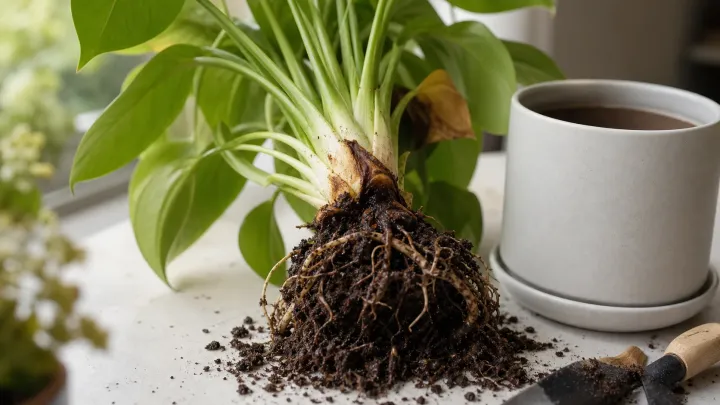
Upon careful inspection, the root system shows signs of decay, appearing brown, soft, and mushy. In advanced stages, the outer layer of the root (epidermis) easily slips away from the inner vascular cylinder when pulled.
Fine feeder roots are typically the first to be destroyed, which severely limits the plant's ability to uptake water and nutrients, leading to rapid decline during periods of peak growth.
In many cases, the plant may exhibit wilting during the hottest part of the day, with partial or full recovery at night until the damage to the root system becomes too severe for recovery.
Above-ground, leaves may become chlorotic and eventually necrotic. In row crops, the disease often manifests as patches or spots of stunted plants that gradually expand across the field.
Pathogen
Oomycete root rot is caused by members of the class Oomycetes, commonly known as "water molds." Key genera responsible for this disease include Pythium, Phytophthora, and Aphanomyces.
Although they resemble fungi, Oomycetes are biologically distinct, being more closely related to algae. Their life cycle features motile zoospores that can swim through soil water films to reach new hosts.
These pathogens produce long-lasting resting structures called oospores, which allow the organism to survive in the soil for several years even in the absence of a host crop.
Infection is primarily spread through infested soil particles, contaminated water, agricultural tools, and infected plant propagules (seeds, bulbs, or seedlings).
Once they reach a root, zoospores encyst and penetrate the host tissue, where they secrete enzymes that break down plant cell walls, leading to rapid necrosis and colonization.
Conditions for development
The presence of free water in the soil is the most critical environmental factor for the development of Oomycete root rot, as it facilitates the motility of zoospores.
Poor soil drainage, low-lying field areas, or over-irrigation are common precursors to severe outbreaks, as these conditions create the oxygen-depleted environment preferred by many Oomycetes.
Temperature plays a significant role; while most species thrive in moderate conditions (15–25°C), some species are well-adapted to cooler soil temperatures, often impacting early-spring plantings.
Soil compaction restricts root growth and inhibits water drainage, creating localized anaerobic zones where pathogens can proliferate aggressively without competition.
High humidity and prolonged rainfall increase the inoculum potential, making it difficult for plants to recover if the root system has already been compromised by the pathogen.
Why it matters
The primary harm caused by Oomycete root rot is a substantial reduction in crop yield and quality, often resulting in complete crop failure if left unchecked.
Plants that survive the initial infection stage often remain stunted and unproductive, exhibiting a weak growth habit and increased vulnerability to secondary pests and pathogens.
Economic losses are compounded by the costs of emergency fungicide applications, the need for replanting, and the loss of marketable nursery or greenhouse products.
In perennial crops, the disease can lead to a gradual decline in the orchard or vineyard, forcing early removal of trees or vines and causing long-term financial deficits.
The disease's ability to survive in the soil for extended periods creates a long-term management challenge, often limiting the choice of future crops for the infested land.
Protection
The foundation of control is water management; installing drainage systems and avoiding over-irrigation significantly reduces the environmental pressure from these pathogens.
- Application of specialized fungicides such as metalaxyl, mefenoxam, or fosetyl-aluminum to protect roots during susceptible stages.
- Use of biological control agents like Trichoderma harzianum or Bacillus subtilis to establish a protective barrier around the rhizosphere.
- Strict implementation of crop rotation cycles to starve the pathogen by removing host plants.
- Sanitation protocols, including cleaning farm equipment and disinfecting tools to prevent cross-contamination between field blocks.
- Selection of resistant or tolerant cultivars that are less susceptible to specific strains of local Oomycete pathogens.
Maintaining optimal soil fertility and pH levels helps plants maintain strong, resilient root systems that can better withstand low-level pathogen attacks.
In greenhouse settings, using steam-sterilized media and ensuring good hygiene in propagation areas are essential steps to prevent introducing the pathogen to a clean system.
Content graph
Connections · Oomycete root rot
Most often together:
Marketplace
Products · 15





Community
Discussion
No discussions yet — be the first.