
Description
Symptoms
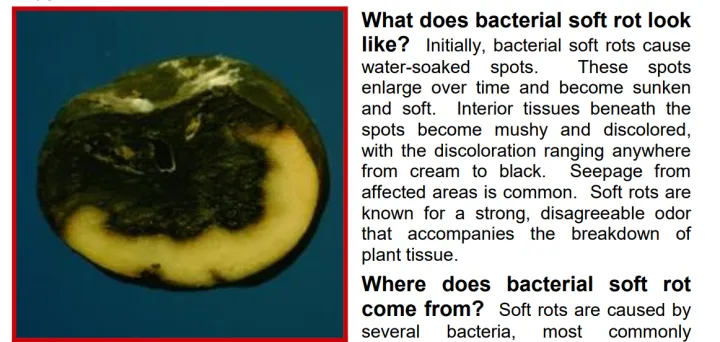
The initial symptoms usually appear as small, water-soaked, translucent spots on the plant surface. These spots rapidly enlarge, darken, and become soft to the touch.
In advanced stages, the internal tissues of the fruit or root vegetable are converted into a foul-smelling, mushy, semi-liquid mass. The outer epidermis may remain intact for a short period before rupturing.
When an infected plant part is cut, a clear, sharp boundary is often visible between the necrotic, macerated tissue and the healthy, firm tissue.
In humid conditions, the infected tissue may ooze a bacterial exudate, which serves as an inoculum for further spread of the infection to adjacent healthy vegetables.
On leafy vegetables like cabbage, the infection often manifests as the softening and rotting of outer leaves, which eventually turn into a slimy mass and emit a pungent odor.
Pathogen
Wet bacterial rot is primarily caused by bacteria of the genus Pectobacterium (formerly known as Erwinia carotovora). These are highly motile, gram-negative, facultative anaerobic bacteria.
These pathogens produce potent extracellular enzymes, specifically pectinases, which degrade the pectic substances in the middle lamella of plant cell walls. This destruction causes cells to dissociate, leading to tissue maceration.
The bacteria are ubiquitous and can survive in the soil, in infected plant residues, and on the surfaces of storage containers for extended periods.
Infection is often spread by water splashes, insects, and contaminated tools. Once a single plant part is infected, it can rapidly transmit the disease to neighboring healthy tissues through direct contact.
The pathogen thrives on opportunistic behavior, frequently entering the host plant through wounds, natural openings, or necrotic areas created by other diseases or insect activity.
Conditions for development
Wet bacterial rot development is favored by high humidity and warm temperatures, typically ranging from 20°C to 30°C (68°F to 86°F).
Poor soil aeration and waterlogged conditions create anaerobic environments, which are ideal for the multiplication of these facultative anaerobic bacteria.
Physical injuries during harvest, handling, and transport are the most significant factors facilitating infection. Any mechanical wound provides a direct point of entry for the bacteria.
Inadequate ventilation in storage facilities promotes the condensation of moisture on produce surfaces, which triggers rapid bacterial multiplication and subsequent rot outbreaks.
Cultivation practices that result in dense canopies or poor drainage contribute to high micro-humidity levels, thereby increasing the risk of an epidemic.
Why it matters
The primary damage caused by wet bacterial rot is the total loss of marketability and nutritional value of the affected harvest. It is a major cause of post-harvest loss worldwide.
The disease can destroy entire storage facilities within a few weeks if conditions are not strictly controlled, leading to catastrophic economic losses for farmers.
When seeds or tubers are infected, the disease leads to poor emergence and seedling blight, which disrupts the stand and necessitates costly replanting efforts.
Affected produce is often contaminated with bacterial toxins and by-products of decay, making it completely unsuitable for consumption or industrial processing.
Because the disease can spread rapidly through contact, even small infections can escalate into widespread epidemics, causing significant logistical and management failures.
Protection
An integrated approach is required for management. Crop rotation (with non-host crops) is essential to reduce the population of bacterial inoculum in the soil.
Careful harvesting is paramount to prevent mechanical damage. Producers should avoid harvesting when conditions are wet, as moisture significantly increases the risk of spreading the infection.
- Maintaining proper hygiene in storage: disinfecting facilities and tools with approved agents.
- Ensuring optimal storage conditions: low temperatures and high-quality aeration to dry out moisture.
- Implementing rigorous sorting processes to remove symptomatic produce before it enters storage.
- Using disease-resistant cultivars and healthy, certified seed material.
- Monitoring fields for insect pests and managing them to minimize wounds.
Chemical control options are generally limited and often ineffective once the bacteria have deeply colonized the host tissue, emphasizing the need for preventative cultural practices.
Regular scouting during the growing season and the prompt removal and destruction of symptomatic plants are critical to limiting the spread of the disease across the field.
Reference
Connections · Wet bacterial rot
Most often together:
Marketplace
Products · 24







Community
Discussion
No discussions yet — be the first.