
Xanthomonas campestris
Xanthomonas campestris
Description
How to identify
Xanthomonas campestris is a Gram-negative, aerobic, rod-shaped bacterium belonging to the Xanthomonadaceae family. It is recognized primarily as a serious plant pathogen that exhibits high host specificity through its various pathovars, which are adapted to infect specific crop species.
The bacterium is characterized by a single polar flagellum that allows for motility in water films. It produces a distinctive yellow, water-insoluble pigment known as xanthomonadin, which provides protection against UV radiation and is a key diagnostic feature for lab identification.
The organism secretes copious amounts of extracellular polysaccharides (EPS), which are crucial for its pathogenicity. By colonizing the xylem of the host plant, these polysaccharides create blockages that impede water transport, leading to the characteristic wilting observed in infected plants.
Systemically, the species is divided into numerous pathovars, including pv. campestris which targets cruciferous vegetables, and pv. phaseoli which affects common beans. Each pathovar utilizes specific molecular machinery, such as Type III secretion systems, to manipulate host plant defenses.
In laboratory settings, the bacterium can be identified via selective culture media, serological testing, and molecular methods like PCR. These techniques allow researchers and agronomists to distinguish Xanthomonas species from other common soil-borne bacteria and secondary opportunistic infections.
What it damages
The primary economic damage is caused by the infection of Brassicaceae crops, such as cabbage, cauliflower, broccoli, and kale. The pathogen can devastate entire fields, resulting in significant losses for both small-scale and commercial agricultural producers.
The infection begins when the bacteria enter the plant through hydathodes or mechanical wounds. Once inside, the pathogen migrates into the vascular system, spreading rapidly throughout the stem and leaves, ultimately leading to systemic failure of the plant's transport mechanisms.
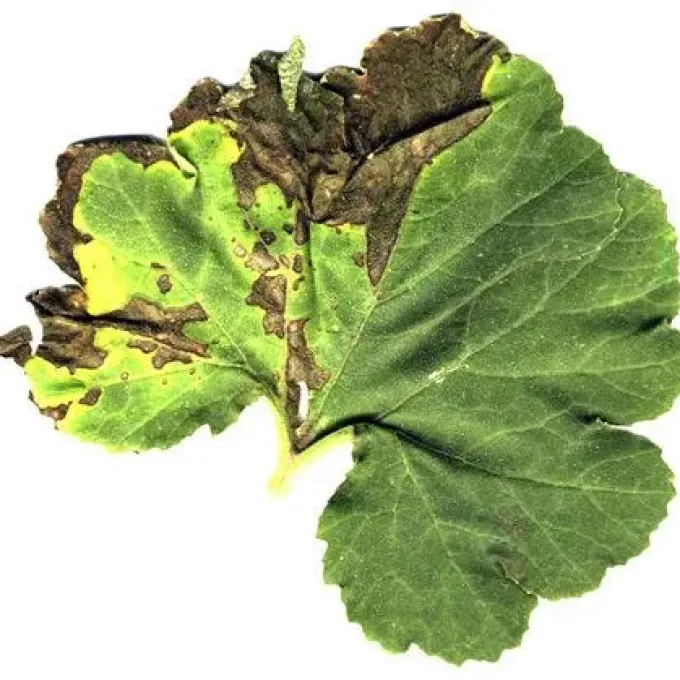
Direct damage manifests as localized necrosis, chlorosis, and vascular browning. As the disease progresses, the plant becomes unable to transport essential nutrients and water, leading to stunting, leaf drop, and, in severe cases, the complete death of the plant.
Post-harvest damage is also a major concern, as infected heads of cabbage or stored produce are highly susceptible to secondary rotting organisms. This reduces the shelf life and market value of the vegetables, often leading to total disposal of batches in trade environments.
Furthermore, the presence of this pathogen in a farming region can impose strict quarantine measures. These regulations can restrict the movement and export of seedlings and produce, creating indirect economic pressure on farmers and the regional supply chain.
Signs of infestation
The most iconic symptom of Xanthomonas campestris infection is V-shaped chlorotic lesions appearing at the margins of the leaves. As the disease advances, these spots turn brown, and the veins within the affected area become distinctly black, indicating vascular necrosis.
A cross-section of the stem or petiole of an infected plant reveals a dark, blackened ring in the vascular tissue. This internal discoloration is a definitive diagnostic sign of systemic vascular bacteriosis and is easily observable during field inspections of suspected crops.
Under conditions of high humidity, bacterial ooze may be visible on the surface of leaf lesions. This exudate contains a dense population of bacteria that can be easily spread by rain splashes, wind, or agricultural equipment, facilitating rapid secondary spread within the field.
Affected plants often display wilting during the hottest parts of the day. While the plants may appear to recover at night, the progressive damage to the xylem eventually renders them incapable of maintaining turgor pressure, leading to permanent wilting and tissue collapse.
In mature crops, such as headed cabbage, the interior of the head may decay and develop an unpleasant odor. This internal rotting makes the product entirely unsuitable for human consumption and renders it visually unappealing, leading to direct crop loss.
Control measures
The foundation of effective management is the use of pathogen-free seeds and transplants. Seed treatments, including hot water immersion or chemical disinfection, are highly recommended to ensure the starting material is free from latent Xanthomonas infections.
Crop rotation remains a primary cultural control method. By avoiding Brassicaceae crops for at least three years, producers can significantly reduce the bacterial population in the soil, allowing time for crop residues to decompose and the pathogen's activity to diminish.
Sanitation practices, such as the removal and destruction of crop debris after harvest, are essential. Deep plowing can also help incorporate residues into the soil, speeding up the breakdown of the plant matter that serves as an overwintering site for the bacteria.
Copper-based bactericides are commonly used in integrated pest management programs to protect plants from infection during periods of high risk, such as warm and wet weather. These sprays provide a barrier on the leaf surface that inhibits bacterial penetration.
Effective control of insect vectors that cause mechanical wounding of leaves is critical. By maintaining healthy plants and minimizing mechanical injuries through careful field management, farmers can drastically reduce the entry points for the pathogen and limit disease outbreaks.
Causes diseases · 2
Discussion
No discussions yet — be the first.