

Description
Symptoms
The initial symptoms include the development of water-soaked, brown lesions on the stem base or root crown. The tissue softens and turns dark, eventually leading to decay.
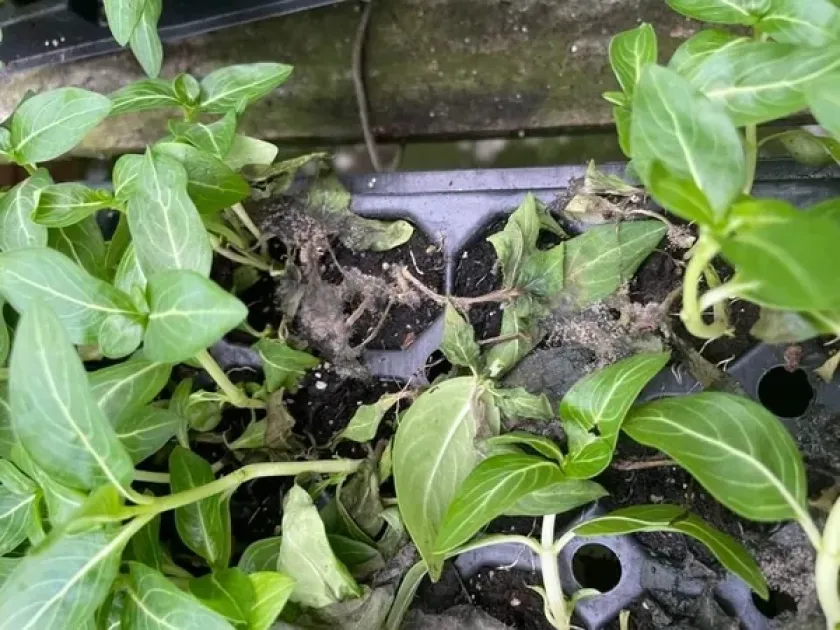
Under high humidity, a characteristic gray, fuzzy mycelial growth appears on the affected plant parts. This is a mass of spores that can infect neighboring healthy tissues if left unchecked.
Plants affected by the rot show signs of wilting, yellowing, and stunted growth because the damaged root system can no longer transport water and nutrients effectively to the rest of the plant.
For ornamental species such as Anemone coronaria, the pathogen can destroy the tubers. The tissue becomes soft and mushy, and eventually, the plant collapses at the soil line.
Seedlings may suffer from pre- or post-emergence damping-off, where the base of the stem becomes thin, dark, and brittle, causing the small plant to fall over and die.
Pathogen
The causal agent of this disease is the fungus Botrytis cinerea, which is a highly versatile pathogen capable of attacking a wide array of host plants. It is commonly associated with gray mold symptoms.
The pathogen persists in the soil and on plant debris primarily as sclerotia, which are dense, dark masses of fungal mycelium. These structures can remain viable in the soil for several years.
When environmental conditions become favorable, the sclerotia germinate to produce conidiophores bearing conidia. These spores are wind-borne or splash-dispersed by water, facilitating the rapid spread of the disease.
The fungus produces a variety of enzymes and toxins that degrade plant cell walls, allowing the mycelium to penetrate and colonize host tissues effectively. This causes localized tissue necrosis.
Infection often occurs through physical wounds or natural openings on the plant stems and root crowns, making plants susceptible during transplanting or after damage from pests and equipment.
Conditions for development
High relative humidity and wet soil conditions are the most significant factors that trigger the development and spread of Botrytis infections in agricultural settings.
The pathogen thrives at moderate temperatures, typically ranging from +15°C to +22°C. These conditions frequently coincide with spring seasons, leading to outbreaks in young plantings.
Poor aeration in greenhouses or overly dense planting patterns prevents moisture evaporation. This creates a stagnant microclimate where spores can germinate and infect plants within hours.
Over-irrigation or inadequate drainage leads to root stress, which reduces the plant's natural defenses and creates an environment where fungal colonization of the root system occurs more rapidly.
Excessive use of nitrogenous fertilizers results in succulent, thin-walled plant tissues that are more vulnerable to the penetration and enzymatic attack of the fungus.
Why it matters
The economic impact of Botrytis root rot is substantial, as it can kill high-value crops, leading to total yield losses in specific planting beds or greenhouse compartments.
In ornamental production, the disease renders plants unsalable. Even if the plant survives, its aesthetic value is ruined by wilting and necrotic lesions on the stem and foliage.
The pathogen is difficult to eradicate once established in the soil. Its ability to form sclerotia means that the disease can persist for multiple seasons, threatening future crops.
Increased management costs arise from the need for fungicide applications and labor-intensive sanitation practices, such as removing and disposing of infected plant material.
In storehouses, infected tubers or bulbs can spread the rot to healthy material through direct contact, causing major storage losses and reducing the availability of planting stock.
Protection
Effective management begins with strict sanitation: remove and destroy all infected plants and debris to reduce the initial inoculum level in the growing environment.
Improve environmental management by ensuring proper plant spacing to allow airflow and keeping humidity levels within a range that is not conducive to fungal sporulation.
Apply systemic or contact fungicides according to the local regulations. It is essential to rotate fungicide groups to prevent the pathogen from developing resistance to chemical treatments.
- Maintain good soil drainage.
- Avoid overhead irrigation.
- Use certified disease-free planting material.
- Apply preventative soil drench treatments where appropriate.
Cultural practices such as mulching can help create a barrier between the soil and the plant's stem, preventing moisture from facilitating the initial contact of the pathogen with the host.
In brief
1
Affects crops
Biology
Pathogens and affected parts
Affected plant parts
whole plant
Content graph
Affects crops · 1
Content graph
Connections · Botrytis root rot
Most often together:
Marketplace
Products · 20


Community
Discussion
No discussions yet — be the first.