
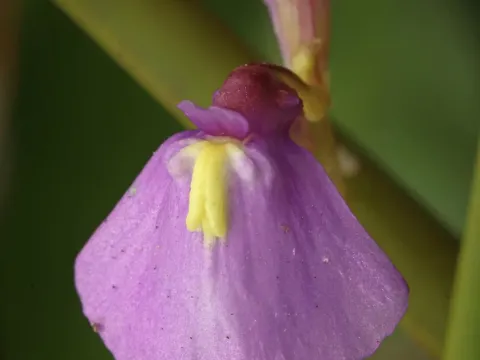
Bladderwort
Utricularia
Bladderwort (Latin: Utricularia) belongs to the Lentibulariaceae family. It is a unique genus of carnivorous plants found globally, excluding Antarctica. Most species are aquatic, floating on or submerged in the water column, although some species are terrestrial, growing in constantly moist soil.
What the section contains
 Blue Bladderwort
Utricularia caerulea
Blue Bladderwort
Utricularia caerulea
 Bremi's bladderwort
Utricularia bremii
Bremi's bladderwort
Utricularia bremii
 Climbing bladderwort
Utricularia scandens
Climbing bladderwort
Utricularia scandens
 Common bladderwort
Utricularia vulgaris
Common bladderwort
Utricularia vulgaris
 Dotted bladderwort
Utricularia punctata
Dotted bladderwort
Utricularia punctata
 Florida bladderwort
Utricularia floridana
Florida bladderwort
Utricularia floridana
 Golden bladderwort
Utricularia aurea
Golden bladderwort
Utricularia aurea
 Grass-leaf bladderwort
Utricularia graminifolia
Grass-leaf bladderwort
Utricularia graminifolia
 Hairy bladderwort
Utricularia hirta
Hairy bladderwort
Utricularia hirta
 Horned bladderwort
Utricularia cornuta
Horned bladderwort
Utricularia cornuta
 Humped bladderwort
Utricularia gibba
Humped bladderwort
Utricularia gibba
 Intermediate bladderwort
Utricularia intermedia
Intermediate bladderwort
Utricularia intermedia
 Lesser bladderwort
Utricularia minor
Lesser bladderwort
Utricularia minor
 Olive bladderwort
Utricularia olivacea
Olive bladderwort
Utricularia olivacea
 Pale bladderwort
Utricularia ochroleuca
Pale bladderwort
Utricularia ochroleuca
 Purple bladderwort
Utricularia purpurea
Purple bladderwort
Utricularia purpurea
 Small swollen bladderwort
Utricularia radiata
Small swollen bladderwort
Utricularia radiata
 Starry bladderwort
Utricularia stellaris
Starry bladderwort
Utricularia stellaris
 Striped bladderwort
Utricularia striatula
Striped bladderwort
Utricularia striatula
 Stygian bladderwort
Utricularia stygia
Stygian bladderwort
Utricularia stygia
 Swollen bladderwort
Utricularia inflata
Swollen bladderwort
Utricularia inflata
 Utricularia affinis
Utricularia affinis
Utricularia affinis
 Utricularia arenaria
Utricularia arenaria
Utricularia arenaria
 Utricularia australis
Utricularia australis
Utricularia australis
 Utricularia baouleensis
Utricularia baouleensis
Utricularia baouleensis
 Utricularia bifida
Utricularia bifida
Utricularia bifida
 Utricularia brachiata
Utricularia brachiata
Utricularia brachiata
 Utricularia dichotoma
Utricularia dichotoma
Utricularia dichotoma
 Utricularia firmula
Utricularia firmula
Utricularia firmula
 Utricularia foliosa
Utricularia foliosa
Utricularia foliosa
 Utricularia furcellata
Utricularia furcellata
Utricularia furcellata
 Utricularia inflexa
Utricularia inflexa
Utricularia inflexa
 Utricularia livida
Utricularia livida
Utricularia livida
 Utricularia minutissima
Utricularia minutissima
Utricularia minutissima
 Utricularia muelleri
Utricularia muelleri
Utricularia muelleri
 Utricularia odorata
Utricularia odorata
Utricularia odorata
 Utricularia reticulata
Utricularia reticulata
Utricularia reticulata
 Utricularia sandersonii
Utricularia sandersonii
Utricularia sandersonii
 Utricularia subulata
Utricularia uliginosa
Utricularia uliginosa
Utricularia subulata
Utricularia subulata
Utricularia uliginosa
Utricularia uliginosa
Bladderwort
The core biological feature of this culture is the presence of specialized bladders that function as vacuum traps. When small organisms touch the sensory hairs on the trap's valve, the prey is instantly sucked inside along with water. This mechanism allows the plant to supplement nitrogen and phosphorus, which are typically scarce in its nutrient-poor aquatic habitats.
The plant prefers stagnant or slow-moving water, commonly found in peat bogs, ditches, and lakes with an acidic pH. Bladderwort is highly sensitive to chemical water pollution and light intensity. Optimal cultivation conditions require bright, diffused light, which promotes active flowering and the development of healthy plant structures.
In aquatic gardening and botanical collections, bladderwort is valued for its unique appearance and carnivorous nature. Successful cultivation requires water with low mineral salt content and a stable temperature range typically between 18 and 25 degrees Celsius.
The economic and practical importance of bladderwort is largely confined to ornamental horticulture and biological control of small invertebrates. In nature, it plays a vital role in cleaning the water environment by absorbing organic waste and regulating populations of small crustaceans like daphnia.
The primary threats to bladderwort are linked to human-induced ecological changes. Eutrophication of water bodies, characterized by nutrient overload, triggers the rapid growth of algae, which displaces the plants and blocks light access to their bladder traps.
Among the diseases, fungal infections are common, often arising from an imbalance in water chemistry or the decay of organic matter around the plant. These microorganisms can damage the sensitive valve mechanisms, directly impacting the plant's ability to feed and survive.
Pests, such as certain insect larvae or snails, may feed on the delicate stems, causing significant physical damage to the plant colonies. Uncontrolled growth of filamentous algae is also a major growth inhibitor, as it entangles the trapping apparatus, effectively rendering the plant incapable of capturing prey.
Chemical herbicides are highly toxic to bladderwort. Even trace amounts of pesticides introduced through agricultural runoff or industrial wastewater can cause the entire colony to perish rapidly.
Preserving bladderwort populations requires maintaining stable hydrological conditions and preventing fertilizer-laden runoff from entering their aquatic habitats, which is essential for the sustainable cultivation and protection of the genus.