
Utricularia furcellata
Utricularia furcellata
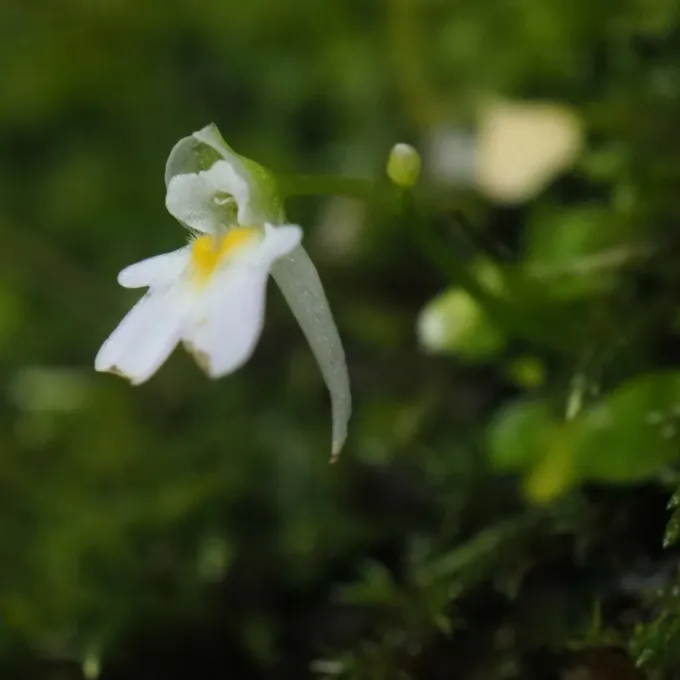
Description
Growing requirements
Utricularia furcellata is a member of the Lentibulariaceae family. It is a highly specialized carnivorous plant that has evolved to thrive in specific, nutrient-poor aquatic or semi-aquatic habitats.
The plant is distinguished by its sophisticated trapping mechanism consisting of small bladders. These organs allow it to capture minute prey, supplementing its nutrition in environments where soil or water is deficient in nitrogen.
Geographically, this species is native to tropical regions in Asia. It prefers humid conditions and is often found in specialized niches where water availability is consistent throughout the seasons.
Cultivation of this species requires mimicking its natural environment. This involves providing soft, mineral-poor water and maintaining a stable, high-humidity microclimate that prevents desiccation of the delicate structures.
While not a traditional agricultural crop, Utricularia furcellata is a subject of significant botanical interest. Its complex physiology provides insights into how plants adapt to extreme and competitive ecological settings.
Main diseases and pests
The primary threat to Utricularia furcellata is the degradation of its natural wetland habitats. Drainage projects and land development are actively reducing the number of sites where this plant can survive.
Water pollution, particularly the runoff of agricultural fertilizers, creates eutrophic conditions that the plant cannot tolerate. Excess nutrients encourage the growth of algae, which effectively shades out the bladderwort.
In captive conditions, the species is susceptible to various fungal pathogens. Poor airflow and stagnant water can lead to rapid rot, which quickly decimates the fragile colonies of the plant.
Invasive plant species pose a major risk as they often outcompete Utricularia for space and light. Their rapid spread can lead to the total displacement of the native populations in contaminated or disturbed water bodies.
Furthermore, the loss of natural insect populations in surrounding areas can indirectly affect the species by reducing the availability of prey, thereby limiting its ability to store energy for flowering and reproduction.