
Utricularia brachiata
Utricularia brachiata
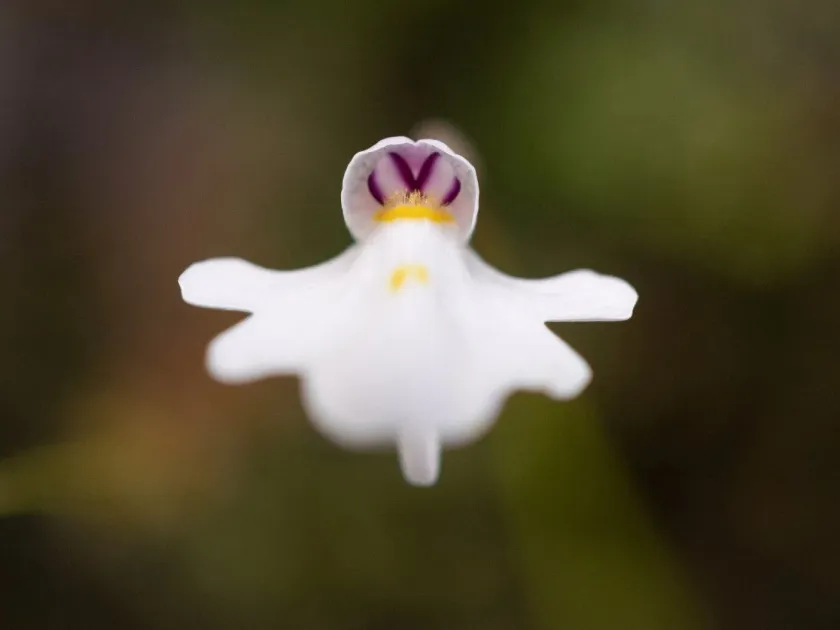
Description
Growing requirements
Utricularia brachiata is a fascinating species belonging to the Lentibulariaceae family. Unlike the majority of the genus that thrives in aquatic environments, this specific plant has evolved as an epiphyte or lithophyte, typically found growing on mossy surfaces in high-altitude regions.
The plant originates from the Himalayan range, spanning across India, Nepal, and Bhutan. Its natural habitat is defined by cool temperatures, constant mist, and high atmospheric humidity, which are essential factors for the survival of this delicate, small-sized species.
Its botanical structure is highly specialized. The plant forms tiny bladders capable of trapping microscopic organisms, providing necessary nutrients in environments where traditional soil nutrition is unavailable. It lacks true roots, relying instead on its stems to cling to surfaces.
Cultivation requirements for this species are demanding. It requires a stable environment with high humidity levels and cool temperatures, usually mimicking its montane origin. Maintaining the moss substrate in a constant, damp, but not waterlogged state is critical for its health.
While not a commercial agricultural crop, Utricularia brachiata is highly regarded in the world of specialized botanical collections. Its importance lies in ecological research and the preservation of rare plant species, making it a subject of great interest for enthusiasts of carnivorous flora.