
Grass-leaf bladderwort
Utricularia graminifolia
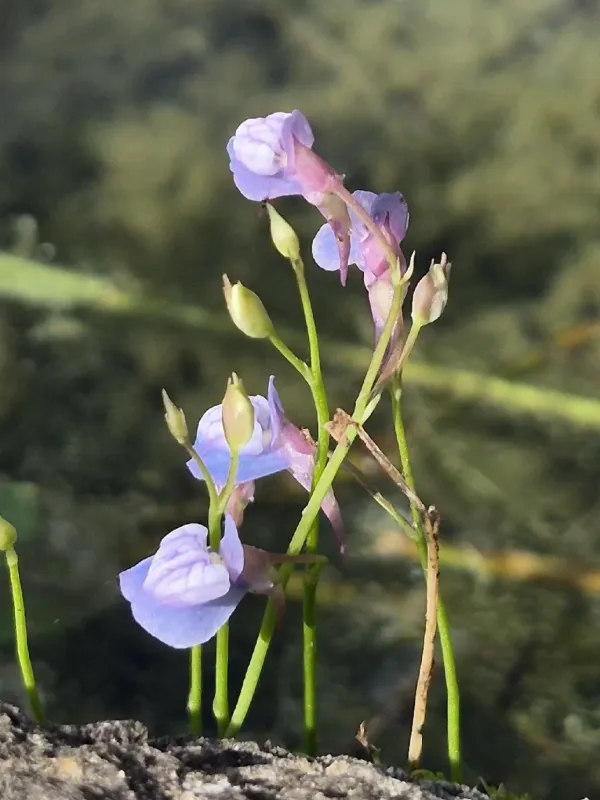
Description
Growing requirements
Grass-leaf bladderwort (Utricularia graminifolia) is a carnivorous perennial plant species belonging to the Lentibulariaceae family. It is native to tropical regions of Asia, where it typically inhabits marshes, wet grasslands, and shallow water bodies in environments ranging from India to Southeast Asia.
Botanically, this species is defined by its grass-like, bright green leaves that grow in a dense, compact carpet. Despite its small size, it features specialized tiny bladder-like traps on its underground stems, which it uses to capture microorganisms, a classic adaptation of carnivorous flora.
Optimal growth requires high light intensity, which is essential to maintain its compact, lawn-like form. When the light intensity is insufficient, the plant tends to grow vertically, becoming sparse and losing its desired ground-cover appearance in aquascaping setups.
Water chemistry is a critical factor for this species; it thrives in soft, acidic water with consistent CO2 supplementation. Stability is paramount, as the plant is highly sensitive to fluctuations in pH and nutrient concentration, specifically excess nitrates, which can trigger algal growth.
The substrate must be fine-grained and nutrient-rich, providing a stable base for the plant's spreading stolons. Regular maintenance, including substrate cleaning and proper water circulation, is necessary to prevent the accumulation of debris that can inhibit the plant's respiration and growth.
Main diseases and pests
The primary threat to the health of grass-leaf bladderwort is the aggressive colonization of filamentous or blue-green algae. Because the plant is relatively slow to establish, algae can easily outcompete it for nutrients and light if water conditions are not strictly controlled.
Sensitivity to mineral imbalances often results in leaf chlorosis or melting of the carpet. Excessive levels of trace elements, particularly iron or heavy metals, can lead to tissue damage and necrosis if not carefully managed through precise dosing.
Bacterial decay is a significant risk if the substrate becomes compacted or anaerobic. This typically happens in stagnant zones, necessitating the use of proper filtration to maintain oxygenated water movement throughout the root zone of the plant.
Rapid changes in water temperature can induce metabolic shock, leading to leaf drop. It is recommended to keep the temperature steady between 22 and 26 degrees Celsius to prevent stress and maintain vigorous vegetative development.
Improper cleaning techniques or sharp tools can damage the delicate underground network of the plant. Since the stolons are fragile, any physical disturbance in the planting area must be performed with extreme care to avoid disrupting the plant's growth pattern.