
Utricularia muelleri
Utricularia muelleri
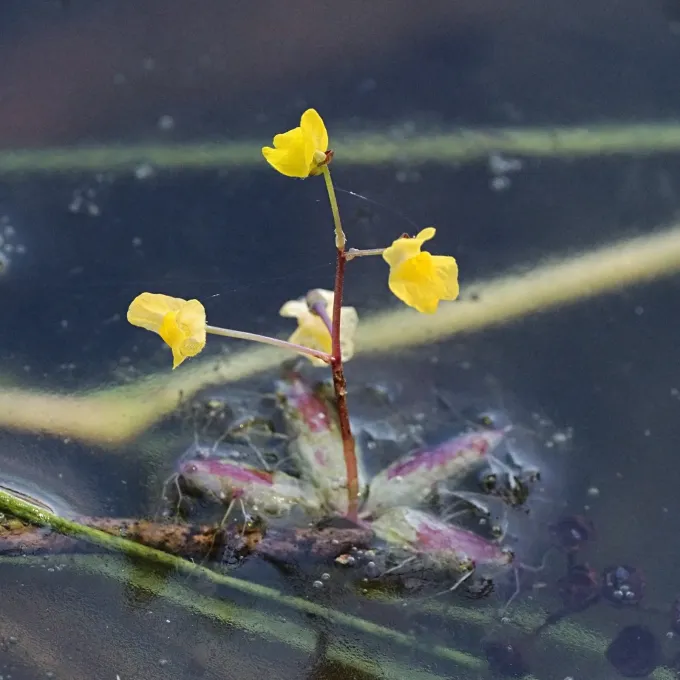
Description
Growing requirements
Utricularia muelleri is a fascinating species belonging to the Lentibulariaceae family. Known primarily as a carnivorous aquatic plant, it has evolved unique survival strategies to thrive in nutrient-poor environments where standard photosynthetic plants struggle to survive.
Native to tropical regions, particularly in Australia, this plant is typically found in shallow pools and seasonally wet areas. It is biologically adapted to capture small aquatic invertebrates using specialized traps, which serve as its primary source of essential nitrogen and minerals.
The botanical structure of Utricularia muelleri consists of submerged, thin, branched stems equipped with numerous bladder-like traps. These bladders function as highly sensitive vacuum traps, capable of snapping shut in milliseconds when triggered by potential prey.
Optimal growth conditions require warm temperatures, typically between 20°C and 30°C. The plant flourishes in bright, indirect light, which promotes photosynthesis without overheating the small, shallow water volumes that this species prefers to inhabit.
In terms of cultivation, using pure, deionized, or reverse-osmosis water is critical. Standard tap water often contains minerals and chemical treatments that are detrimental to the delicate equilibrium of this aquatic carnivorous plant, preventing its traps from functioning correctly.
Main diseases and pests
Environmental degradation, specifically water pollution from agricultural runoff, poses the greatest threat to wild populations of Utricularia muelleri. Nitrogen-rich fertilizers in runoff facilitate algal blooms that block sunlight and destroy the specific ecological niche required by the plant.
In controlled environments, the plant is susceptible to various pests such as aphids, which can infest emergent flower stalks. Furthermore, poor water circulation can lead to the rapid development of pathogenic bacteria and fungi, which can quickly rot the fragile plant tissue.